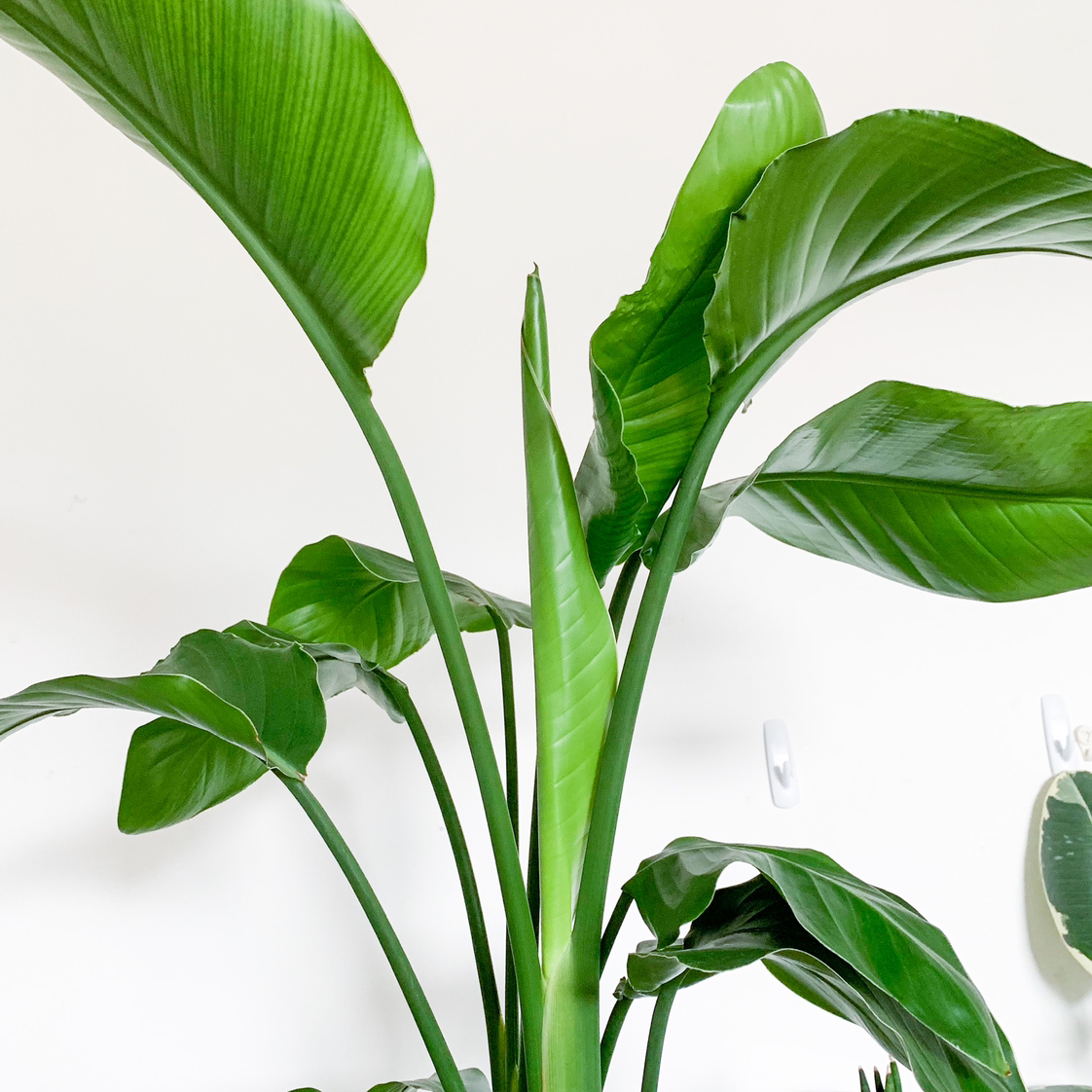
Bird of Paradise

How to Fertilize Bird of Paradise

Strelitzia reginae
Reviewed by Kiersten Rankel M.S.
Quick Answer
Feed your Bird of Paradise with a balanced liquid fertilizer (10-10-10) at full strength every 2 weeks during spring and summer. Taper to monthly in fall, and stop in winter. This heavy feeder needs consistent nutrients to push out those big, dramatic leaves.

When Should I Start Feeding My Bird of Paradise?

Start fertilizing your Bird of Paradise when new leaves begin unfurling in spring, which happens earlier in warm southern regions and later where winters are long and cold.

US feeding regions map
Pacific Feb–Nov
Mountain May–Sep
Midwest Apr–Oct
Northeast Apr–Oct
Southeast Mar–Nov
Stay on top of plant care
Get seasonal reminders for watering and fertilizing — personalized for your plants.
Try Greg Free

How Often Should I Fertilize My Bird of Paradise?

During the active growing season (spring through summer), fertilize every two weeks at full strength. Bird of Paradise is one of the few houseplants that can handle this frequency without salt buildup issues, as long as you water thoroughly between feedings.

In early fall, reduce to once a month. By late fall, stop entirely and let the plant rest through winter. Even under grow lights, the lower ambient humidity and shorter days of winter slow growth enough that feeding becomes counterproductive.

Signs of underfeeding include smaller-than-usual new leaves and slow unfurling. If you see brown leaf tips or white crust on the soil, you are likely overfeeding.

Feeding Calendar
Spring & Summer
Full-strength balanced liquid every 2 weeks
Early Fall
Half-strength monthly
Late Fall & Winter
No feeding

What Is the Best Fertilizer for Bird of Paradise?

Bird of Paradise is a heavy feeder that does best with a balanced fertilizer around 10-10-10 or a slightly higher nitrogen formula like 3-1-2. The nitrogen drives the large leaf production this plant is known for, while phosphorus supports blooming in mature plants.

A liquid fertilizer applied every two weeks during the growing season gives the most consistent results. Bird of Paradise can handle full-strength applications, unlike many tropical houseplants.

If you are growing yours outdoors in the ground, a granular slow-release fertilizer applied once in early spring and again in midsummer is a convenient alternative. For potted plants, stick with liquid for better dose control.

Synthetic
Reliable balanced formula that dissolves cleanly. Use at half the label rate for a gentle 10-10-10 equivalent, or full strength for established plants.
Complete liquid formula with all 16 essential nutrients. Great for pushing large leaf growth. Mix 1/4 tsp per gallon.
Organic
Pre-mixed organic liquid with beneficial soil microbes. No measuring needed, just pump and water.
Excellent nitrogen source for driving big leaf growth. The smell dissipates quickly outdoors, but use indoors with caution.
Gentle top-dressing that improves soil biology over time. Spread a half-inch layer on the soil surface every couple of months.

How Do I Fertilize My Bird of Paradise?

1
Water thoroughly first
Soak the soil completely and let it drain. Bird of Paradise has thick, fleshy roots that store water but are still vulnerable to fertilizer burn on dry soil.
2
Mix at full strength
Unlike most houseplants, Bird of Paradise can handle the full dose listed on the label. Mix your balanced liquid fertilizer (10-10-10) according to the package directions.
3
Pour evenly over the soil
Apply the fertilizer solution slowly and evenly across the entire soil surface. For large pots, work your way around the plant to make sure all roots get fed.
4
Let excess drain out
Allow the solution to run through the drainage holes completely. Empty the saucer after 30 minutes to prevent root rot.
5
Flush the soil once a month
Between feedings, give the plant one deep watering with plain water to wash out accumulated salts. This is especially important for potted Bird of Paradise that cannot spread its roots beyond the container.

Got More Questions?

Can I use banana peels to fertilize my Bird of Paradise?
Banana peels break down very slowly in potting soil and do not deliver meaningful nutrients to your plant. You are better off using a balanced liquid fertilizer for reliable results.
What happens if I over-fertilize my Bird of Paradise?
Brown, crispy leaf edges are the first sign. In severe cases, you may see yellowing leaves or white salt deposits on the soil surface. Flush the soil with plain water several times and skip feeding for a month.
Why won't my Bird of Paradise bloom indoors?
Indoor plants rarely bloom because they need intense direct sunlight, maturity (5+ years from division), and a slight root-bound state. Regular feeding helps but is not the limiting factor. Light is almost always the bottleneck.
Should I fertilize my Bird of Paradise in winter?
No. Even under grow lights, the lower humidity and shorter days of winter slow growth significantly. Fertilizer applied during dormancy just accumulates as salts in the soil.
Can I use slow-release pellets instead of liquid?
Yes, especially for outdoor plants. Apply slow-release granules in early spring and midsummer. For indoor potted plants, liquid gives you more control over the dose and is easier to flush out if you overdo it.
Stay on top of plant care
Get seasonal reminders for watering and fertilizing — personalized for your plants.
Try Greg Free

About This Article

Kiersten Rankel M.S.
Botanical Data Lead at Greg · Plant Scientist
About the Author
Kiersten Rankel holds an M.S. in Ecology & Evolutionary Biology from Tulane University. A certified Louisiana Master Naturalist, she has over a decade of experience in science communication, with research spanning corals, cypress trees, marsh grasses, and more. At Greg, she curates species data and verifies care recommendations against botanical research.
See Kiersten Rankel's full background on LinkedIn.
Editorial Process
Fertilizer recommendations verified against Strelitzia reginae growth data from Greg's botanical database, cross-referenced with USDA hardiness zone data and published horticultural research.
3,955+ Greg users growing this plant
USDA hardiness zones 10a–11b