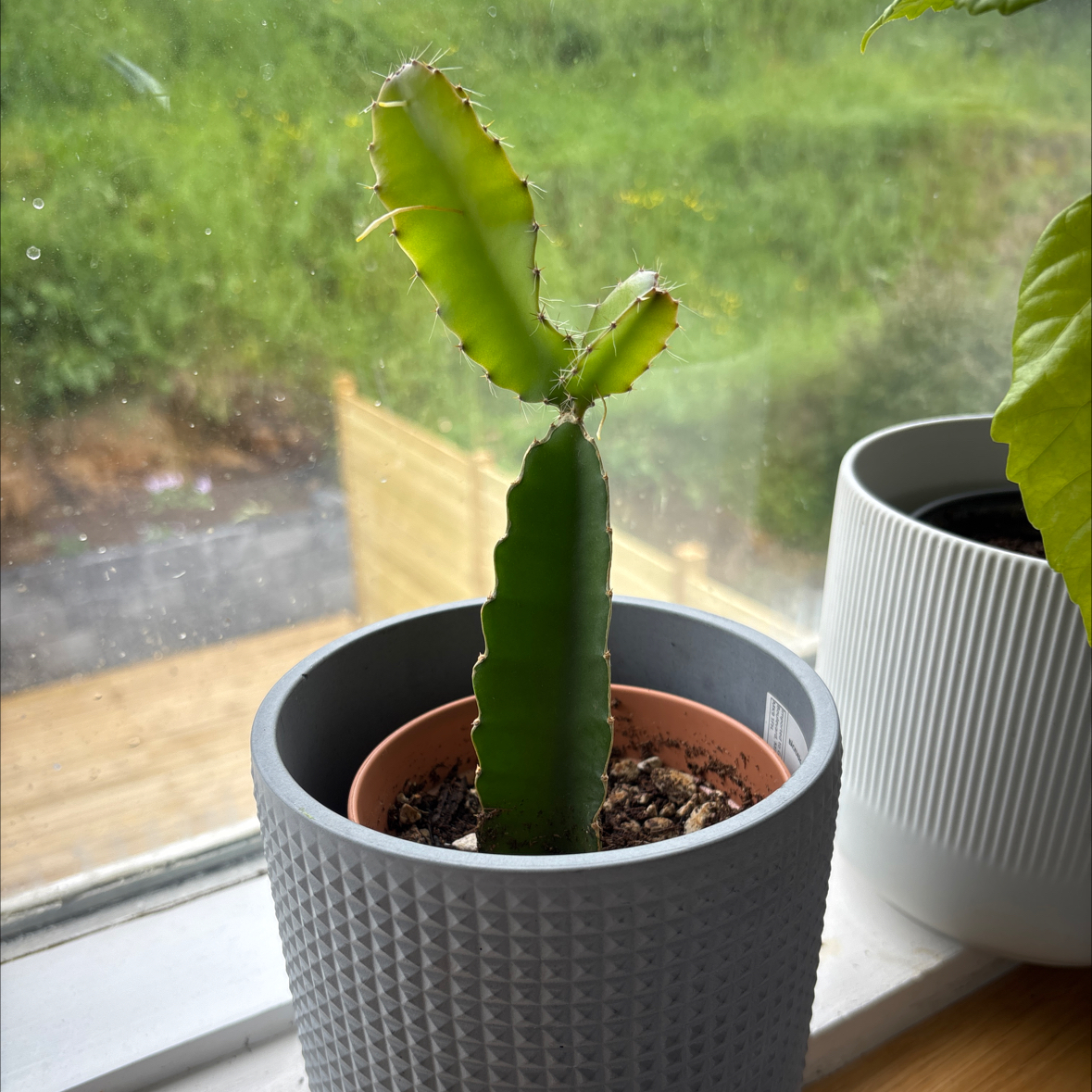
Dragonfruit

How to Fertilize Dragonfruit

Selenicereus undatus
Reviewed by Kiersten Rankel M.S.
Quick Answer
Dragonfruit is a heavy feeder for a cactus. Use a balanced fertilizer like 10-10-10 or one slightly higher in phosphorus and potassium (like 6-6-6 or 8-4-12) every four to six weeks during the growing season. Stop feeding in late fall and winter.

When Should I Start Feeding My Dragonfruit?

Dragonfruit feeding timing depends heavily on your climate zone since this tropical cactus only grows actively when nighttime temperatures stay consistently above 60°F.

US feeding regions map
Pacific Mar–Oct
Mountain Jun–Aug
Midwest May–Sep
Northeast May–Sep
Southeast Mar–Oct
Stay on top of plant care
Get seasonal reminders for watering and fertilizing — personalized for your plants.
Try Greg Free

How Often Should I Fertilize My Dragonfruit?

Feed dragonfruit every four to six weeks during the active growing season, from spring through early fall. Young plants that are still building their vine structure benefit from slightly more frequent feeding, about once a month.

Taper off in early fall as growth slows. Stop feeding entirely in late fall and winter. Dragonfruit goes semi-dormant in cooler months and will not use the nutrients.

Signs of under-feeding include slow growth and pale or yellowing stems. Over-fertilized dragonfruit may develop soft, mushy new growth that is vulnerable to rot. If you see this, flush the soil and skip a couple of feeding cycles.

Feeding Calendar
Spring & Summer
Balanced or high-P/K granular every 4–6 weeks
Early Fall
One final light feeding, then taper off
Late Fall & Winter
No feeding

What Is the Best Fertilizer for Dragonfruit?

Dragonfruit is unusual among cacti because it is a vigorous, climbing vine that produces large flowers and heavy fruit. It needs more nutrients than a typical cactus, especially phosphorus for blooming and potassium for fruit development.

A balanced granular fertilizer like 6-6-6 or 10-10-10 works well for general feeding. When the plant approaches its flowering season (typically late spring through summer), switching to a formula with higher phosphorus and potassium, like 8-4-12, encourages more blooms and better fruit set.

Organic options like aged manure, compost, and fish emulsion are excellent for dragonfruit. Many growers use a combination of compost mulch and periodic liquid feeds for the best results.

Synthetic
Balanced slow-release granules that feed for up to 4 months. One application in spring covers the early growing season. Use about 3 tablespoons per plant.
High-phosphorus formula to encourage flowering and fruit set. Use during the bloom period at half strength every 2 weeks.
Organic
Gentle organic formula with mycorrhizae designed for cacti and tropical plants. Apply every 4-6 weeks during the growing season.
Organic liquid that provides balanced nutrition with a good phosphorus component. Mix at full strength for dragonfruit and apply monthly.
Spread a 2-inch layer around the base of the plant twice a year in spring and midsummer. Provides slow-release nutrients and improves soil structure.

How Do I Fertilize My Dragonfruit?

1
Water the root zone first
Soak the soil around your dragonfruit the day before fertilizing. Moist soil helps distribute nutrients evenly and protects roots from salt burn.
2
Measure the right amount
For granular 10-10-10, use about one-quarter cup per plant for a mature vine. Young plants in their first year need half that. For liquid fertilizer, dilute to the label rate since dragonfruit can handle full strength during active growth.
3
Spread around the drip line
Scatter granular fertilizer in a ring about 6 to 12 inches from the base of the stem. Avoid piling it directly against the trunk, which can cause rot.
4
Water in thoroughly
Give the area a good soaking to dissolve the granules and carry nutrients down to the root zone. This also prevents surface salt buildup.
5
Add compost mulch
Spread a 2-inch layer of compost or aged manure around the base a couple of times per season. This feeds the soil biology and provides slow-release nutrients between granular applications.

Got More Questions?

Can I use coffee grounds on my dragonfruit?
In moderation, yes. Dragonfruit tolerates slightly acidic to neutral soil, and coffee grounds add a small amount of nitrogen as they break down. Mix them into compost rather than piling them directly on the soil to avoid mold.
What happens if I over-fertilize my dragonfruit?
Over-fertilized dragonfruit develops soft, pale new growth that is prone to rot and sunburn. You may also see salt crust on the soil surface. Flush the root zone with plain water and skip the next one or two scheduled feedings.
Why is my dragonfruit not flowering even though I fertilize?
Dragonfruit needs both age (usually 2-3 years from cutting) and the right conditions to bloom. If the plant is mature, try switching to a fertilizer with higher phosphorus and potassium during the bloom season. Also check that it gets enough light and cool nighttime temperatures, which trigger flowering.
Should I fertilize dragonfruit cuttings right after planting?
Wait at least three to four weeks after planting a cutting before fertilizing. The cut end needs time to callous and root. Feeding too early can introduce salts to fresh tissue and cause rot.
Is dragonfruit a heavy feeder compared to other cacti?
Yes. Dragonfruit is a tropical climbing cactus that produces large fruit, so it has significantly higher nutrient needs than a typical desert cactus. Treat it more like a fruiting vine than a windowsill cactus when it comes to feeding.
Stay on top of plant care
Get seasonal reminders for watering and fertilizing — personalized for your plants.
Try Greg Free

About This Article

Kiersten Rankel M.S.
Botanical Data Lead at Greg · Plant Scientist
About the Author
Kiersten Rankel holds an M.S. in Ecology & Evolutionary Biology from Tulane University. A certified Louisiana Master Naturalist, she has over a decade of experience in science communication, with research spanning corals, cypress trees, marsh grasses, and more. At Greg, she curates species data and verifies care recommendations against botanical research.
See Kiersten Rankel's full background on LinkedIn.
Editorial Process
Fertilizer recommendations verified against Selenicereus undatus growth data from Greg's botanical database, cross-referenced with USDA hardiness zone data and published horticultural research.
2,336+ Greg users growing this plant
USDA hardiness zones 10a–11b