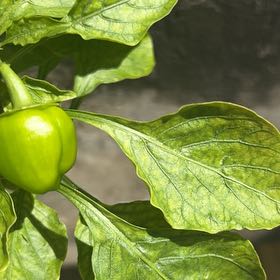
Pepper Plant

What's Wrong with My Pepper Plant?

Capsicum annuum
Reviewed by Kiersten Rankel M.S.
Quick Answer
1.
Blossom-end rot is a watering problem.
Calcium can't move into developing fruit when soil swings between wet and dry. Water consistently and the dark patches stop.
2.
Heat or cold snaps drop the flowers.
This is the plant protecting itself, not dying. Flowers return when temperatures come back into range.
3.
Direct afternoon sun scalds the fruit.
The plant's own leaf canopy is the best shade. Avoid heavy pruning once fruit has set.
Stay on top of plant care
Get seasonal reminders for watering and fertilizing — personalized for your plants.
Try Greg Free

Common Pepper Plant Problems

Blossom-end rot

Uneven watering

Calcium travels into pepper fruit dissolved in water, and it moves poorly once it reaches the developing end of the fruit. When soil dries out and then gets soaked, the pulse of growth outruns the calcium supply and the tissue at the blossom end collapses into a dark sunken patch. Container peppers and sandy beds show it most because they dry out fast between waterings.

1. Remove affected fruit so the plant stops spending energy on them
2. Water deeply once or twice a week instead of light daily sprinkles
3. Mulch 2–3 inches deep with straw to buffer moisture swings
4. Keep watering steady through the rest of the season to protect the next flush

Flowers dropping

Heat above 90°F

Pepper pollen turns sterile when daytime highs push past 90°F. The plant aborts flowers it can't set rather than waste energy. This is why midsummer plants look healthy but produce nothing for weeks, then restart when temperatures ease in late summer.

Drape 30% shade cloth over plants during peak afternoon heat and water deeply in the morning so plants go into the hottest part of the day fully hydrated. Wait it out -- fruit set resumes when nights drop back below 75°F.
Cool nights below 55°F

Peppers are warm-season tropical plants that stall below 55°F at night. Flowers open but pollen never activates and the blossom drops. Early transplants set into cool soil often lose every bloom for weeks until the weather catches up.

Wait until nights are reliably above 55°F before transplanting outdoors. Cover plants with row cloth on unexpectedly cold nights. Mulch with black plastic early in the season to warm the root zone faster.

Sunscald on fruit

Exposed fruit in direct sun

Bell pepper skin is thin and gives little UV protection on its own. The plant relies on its own leaf canopy to shade developing fruit. When leaves drop from pests or pruning, exposed fruit bleaches to pale yellow or white, then the tissue beneath collapses and goes papery.

Stop pruning foliage once fruit has set. Drape 30% shade cloth loosely over the plants during heat waves. Harvest sunscalded fruit and use it -- the rest of the pepper is still edible.

Yellow leaves

Nitrogen deficiency

Peppers are heavy feeders with a shallow fibrous root system that depletes the top few inches of soil fast. When nitrogen runs short during peak fruiting, the plant pulls it back from the oldest leaves first. Yellowing starts at the base of the plant and works upward while the top stays green.

1. Side-dress with a balanced vegetable fertilizer or compost
2. Water it in deeply so nutrients reach the root zone
3. Repeat every 3–4 weeks through the growing season
Overwatering or poor drainage

Pepper roots sit shallow and rot quickly in waterlogged soil. When they suffocate, the plant can't pull up nutrients even though the soil is wet. Yellowing spreads across the whole plant rather than progressing neatly from the bottom.

1. Let the top 2 inches of soil dry out before watering again
2. Check that containers have drainage holes and beds aren't pooling after rain
3. Amend heavy clay soil with compost before next season

Curling leaves

Heat and water stress

Peppers roll their leaves inward on hot afternoons to cut down on water loss. It looks alarming but is often temporary and reverses by evening. If leaves are still curled in the cool of the morning, the plant is running a real water deficit.

1. Check soil moisture first thing in the morning before heat builds
2. Water deeply if the top few inches are dry
3. Mulch heavily to keep the root zone cooler and retain moisture
Aphids

Dense colonies on the undersides of young leaves cause leaf edges to curl and pucker. Pepper plants push soft new growth all season, giving aphids a continuous supply of fresh tissue to target. Look for sticky honeydew residue and pale distorted growing tips.

1. Knock aphids off with a strong blast of water from the hose, focusing on leaf undersides
2. Follow up with insecticidal soap if colonies return
3. Repeat every 3–4 days until the infestation is gone

Pests

Hornworms

Tomato hornworms can strip a pepper plant's foliage in a day or two. They're bright green and nearly invisible against leaves. Look for large ragged holes and dark pellet frass on the soil below before you find the caterpillar itself.

1. Inspect plants in the morning or evening and pick hornworms off by hand
2. Spray Bt (Bacillus thuringiensis) on the foliage in the evening
3. Reapply Bt in 3–4 days if new damage appears
Flea beetles

Tiny black beetles that jump when disturbed and leave a scatter of small round holes across pepper leaves. They hit transplants hardest in spring and can stunt young plants before the leaves have enough area to outgrow the damage.

1. Cover young transplants with floating row cover until plants are well established
2. Dust leaves with diatomaceous earth or kaolin clay as a deterrent while plants are small
3. Remove garden debris at season's end to reduce overwintering adult populations
Spider mites

Stippled, dusty-looking leaves with fine webbing on the undersides. Hot dry weather and drought-stressed peppers invite them fast. Damage can look like early yellowing before you notice the webbing or mites themselves.

1. Hose the undersides of leaves hard to knock mites off
2. Spray insecticidal soap or neem oil every 5–7 days until stippling stops spreading
3. Keep plants consistently watered since drought stress makes mite outbreaks worse

Preventing Pepper Plant Problems

A few consistent habits prevent most of what goes wrong with peppers.
Weekly Check
1
Water deeply once or twice a week and mulch 2–3 inches deep.
Consistent soil moisture is the single biggest lever on pepper health. It prevents blossom-end rot, fruit cracking, and drought wilt in one move.
2
Wait until nights are reliably above 55°F before transplanting.
Cold nights at planting time cause immediate flower drop and stall establishment. Patience here pays off in faster early fruiting.
3
Feed with a balanced vegetable fertilizer, not a high-nitrogen one.
Too much nitrogen pushes leafy growth and starves fruit of calcium. A balanced formula supports steady fruiting and reduces blossom-end rot risk.
4
Leave foliage intact over developing fruit.
The plant's own leaves are the best shade for ripening peppers. Avoid pruning hard once fruit has set to prevent sunscald.
5
Check leaf undersides weekly for aphids, mites, and caterpillar eggs.
Pepper pests hide on leaf backs and build up fast in warm weather. Catching them early means a hose rinse or handpick fixes what weeks of waiting will not.
Stay on top of plant care
Get seasonal reminders for watering and fertilizing — personalized for your plants.
Try Greg Free

About This Article

Kiersten Rankel M.S.
Botanical Data Lead at Greg · Plant Scientist
About the Author
Kiersten Rankel holds an M.S. in Ecology & Evolutionary Biology from Tulane University. A certified Louisiana Master Naturalist, she has over a decade of experience in science communication, with research spanning corals, cypress trees, marsh grasses, and more. At Greg, she curates species data and verifies care recommendations against botanical research.
See Kiersten Rankel's full background on LinkedIn.
Editorial Process
Every problem and fix in this article was verified against Greg's botanical database, cross-referenced with USDA hardiness zone data and horticultural research from Cornell Cooperative Extension, the University of Minnesota Extension, and NC State Extension. The Capsicum annuum care profile reflects documented nightshade-family biology, common regional pest and disease patterns, and years of community grower feedback in Greg.
13,349+ Greg users growing this plant
USDA hardiness zones 9a–11b