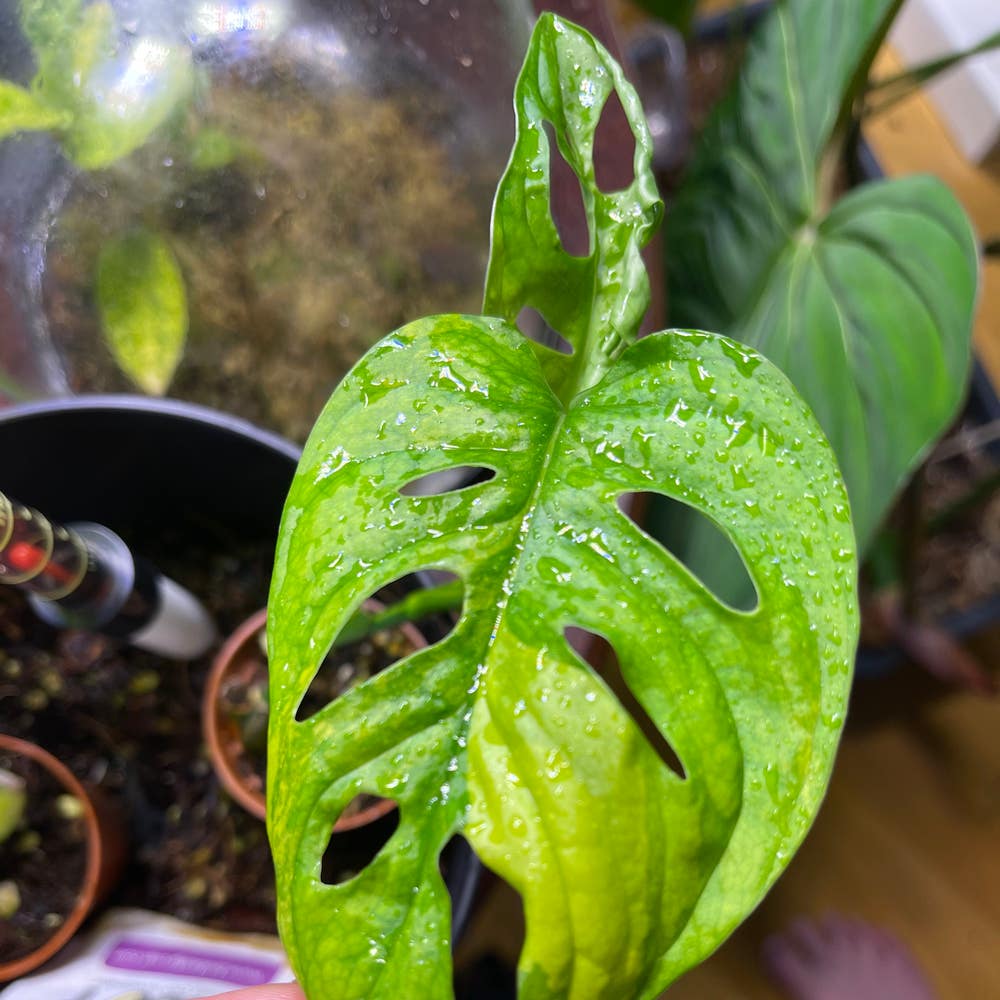
7 Beautiful Types Of Monstera Adansonii Variegata To Grow
Monstera adansonii 'Variegata'
By the Greg Editorial Team
Dec 16, 2023•8 min read
This article was created with the help of AI so we can cover more plants for you. May contain errors. See one? Report it here.
Transform your space with the rare beauty of Monstera Adansonii Variegata—seven types to captivate any plant lover. 🌱✨
- Variegation makes each Monstera unique, with stunning green and white marbling.
- Bright, indirect light is crucial for maintaining variegation and plant health.
- Propagation methods vary, including water, soil, air layering, and root division.
Significance of Variegation in Monstera Adansonii
Variegation in plants is like nature's own brand of artistry, creating unique patterns of green and non-green tissue on the leaves. In Monstera Adansonii, these patterns aren't just for show; they're a collector's dream, elevating the plant's aesthetic and market value.
🌟 What Makes Variegated Monsteras Special?
The variegation in Monstera Adansonii is due to a lack of chlorophyll in some cells, resulting in striking white or yellow patterns. These patterns are as unpredictable as they are beautiful, making each variegated Monstera Adansonii a one-of-a-kind specimen.
🎨 Aesthetic Appeal
The Swiss Cheese Vine's variegated leaves are a visual treat, with their green and white marbling standing out in any plant collection. It's a living piece of decor that commands attention and conversation.
💰 Rarity and Value
Due to its rarity, a variegated Monstera Adansonii can come with a hefty price tag. It's a plant lover's luxury item, and authenticity is key—buy from reputable sources to avoid counterfeits and support ethical sourcing.
Care Considerations
Variegated Monsteras need more light to compensate for the reduced chlorophyll, so bright, indirect light is a must. Care for them well, and they won't just survive; they'll thrive and maintain their stunning variegation.
General Care Tips for Monstera Adansonii Variegata
🌞 Light and Location
Bright, indirect light is your plant's best pal; direct sunlight is its frenemy. Keep it in a spot where it can bask in the sun's glow without getting a sunburn. Think of it like placing a vampire in a room with sheer curtains – enough light to keep it happy, but not enough to turn it to dust.
💧 Watering Woes
Overwatering is the quickest way to send your Monstera to an early grave. Let the topsoil dry out before you give it a drink. Imagine you're buying rounds for a friend who can't hold their liquor; moderation is key.
🌡️ Humidity and Heat
These tropical beauties love a bit of a steam room vibe. If your home is drier than a British comedy, consider a humidifier or a pebble tray. And keep it warm, but not "middle of the Sahara" hot.
🍽️ Feeding Frenzy
Feed your Monstera a light fertilizer once a month during the growing season, but don't go overboard. It's like giving vitamins to a child; a little is beneficial, but you don't want to overdo it.
🏜️ Soil and Drainage
Well-draining soil is non-negotiable. Mix in some perlite or orchid bark to keep those roots breathing easy. It's like wearing breathable fabric on a hot day – comfort is crucial.
🐜 Pests and Cleanliness
Inspect those leaves like you're looking for Waldo. Pests love to lurk under them. Keep the foliage clean, because dust is the enemy of photosynthesis. It's like trying to sunbathe with a blanket over you – not very effective.
🔄 Rotation and Growth
Rotate your plant occasionally to ensure it doesn't become the Leaning Tower of Pisa. Balanced growth is what we're aiming for, not a lopsided mess.
By following these tips, your Monstera Adansonii Variegata will be less of a diva and more of a grateful roommate.
Propagation of Monstera Adansonii Variegata
Propagation of Monstera Adansonii Variegata is a rewarding DIY project for plant enthusiasts. Let's dive into the methods that can turn a single plant into a verdant collection.
💧 Water Propagation: The Beginner's Choice
Snip and Dip: Cut a section of the vine just below a node, ensuring at least one leaf is attached. Submerge the node in water, changing it regularly to prevent bacterial growth. Once roots hit the one-inch mark, it's time to pot.
🌱 Soil Propagation: For the Patient Gardener
Rooting in Terra Firma: After cutting below a node, dip it in rooting hormone for an extra boost. Plant it in moist, well-draining soil. Patience is key—new growth might take a while as the cutting acclimates.
🪴 Air Layering: The Low-Risk Strategy
Surgical Precision: Make an upward cut about one-third into a stem with a node. Insert a toothpick to keep it open and pack with moist sphagnum moss. Wrap with plastic to create a mini greenhouse. Once roots develop, cut below the node and pot.
🌿 Root Division: For the Overgrown Jungle
Divide and Conquer: Gently separate the root system of an established plant, ensuring each division has ample roots. Repot and water, avoiding direct sunlight as the new plants settle in.
Propagation Care Tips
New Roots, New Routines: Keep the soil moist but not soggy for the first few weeks. Bright, indirect light will help cuttings thrive without scorching them. And remember, a humidifier can be your secret weapon for mimicking tropical bliss.
Common Pests and Diseases
🕷️ Identifying the Culprits
Spider mites and mealybugs are the sneakiest of pests, often going unnoticed until they've thrown a party on your Monstera Adansonii Variegata. Spider mites are tiny acrobats spinning fine webs, while mealybugs look like they've rolled in powdered sugar. Both love to feast on your plant's sap, leaving behind telltale yellowing or stippled leaves.
🍄 Fungal Foes
Anthracnose and root rot are fungal diseases that thrive in the VIP lounge of overwatered soil. They leave behind a trail of destruction, with yellowing edges and soft, mushy stems. If your plant's soil smells like a forgotten gym locker, it's time to suspect root rot.
🦟 The Fly Guys
Fungus gnats are more than just annoying—they're a sign that your plant's soil is the "it" spot for larvae. These tiny flies can damage roots, leading to a weakened Monstera.
🛡️ Prevention: The Best Medicine
Keep your Monstera Adansonii Variegata healthy with well-draining soil and adequate light. Overcrowding is a no-no; it's like inviting pests to a buffet. Quarantine new plants to prevent an undercover pest operation from infiltrating your plant collection.
💪 Combat Strategies
When pests RSVP, show them the door with a blast of water or introduce their natural enemy, the ladybug. For a fungal rave, cut out the infected parts with sterile shears. Insecticidal soaps and horticultural oils can be your bouncers, keeping pests in check. Remember, always read the label before you turn to chemical solutions.
🦗 Scale and Whiteflies: The Sticky Situation
Scale insects and whiteflies are the clingy types, latching onto your plant and refusing to let go. They can be evicted with a cotton swab dipped in alcohol or by using sticky traps that lure them in with a sweet scent.
🚨 The Last Resort
If your plant looks like it's been through a plant apocalypse, it might be time to say goodbye. Heavily infested plants should be removed to protect the rest of your indoor jungle. It's tough love, but sometimes it's necessary.
Monstera Adansonii Variegata Varieties
🎨 The Allure of Variegation
Variegation in Monstera Adansonii is like a fingerprint; each plant boasts a unique pattern of light and dark, creating a stunning visual effect. This natural mosaic not only enhances the plant's beauty but also its value, making variegated varieties highly sought after by collectors and enthusiasts.
🧀 The Classic Swiss Cheese Vine
The Swiss Cheese Vine is renowned for its iconic fenestrations. These leaf holes are not just for show; they allow light to pass through to the lower leaves in its natural rainforest habitat. In your living room, they're a conversation starter.
🌿 Wide Form vs. Narrow Form
Wide Form Adansonii flaunts heart-shaped leaves with large, pronounced holes. It's the more dramatic of the two, often drawing comparisons to the lush leaves of a Pothos Manjula. On the flip side, the Narrow Form keeps it sleek with elongated leaves and more subtle fenestrations. Both forms climb with gusto, thanks to their aerial roots.
🌟 Rare and Ravishing: The Variegated Types
- Monstera Adansonii 'Aurea Variegated' sports a luxurious mix of deep green and yellow, making it a showstopper. It's a bit of a diva with its light requirements but is surprisingly easy to care for.
- The Thai Constellation is a cosmic wonder, with its creamy-white variegation scattered like stars across its foliage. It's less demanding than its cousin, the Monstera Albo, but just as mesmerizing.
- Speaking of the Monstera Albo BMonstera Albo Borsigianais the wild card. With variegation that's unpredictable, you might get a leaf that's half white, half green, or a full canvas of either. It's a high-maintenance beauty that demands attention to keep its variegation vibrant.
🌱 Care Tips: Keep It Simple
These plants aren't gluttons for fertilizer; a balanced, all-purpose feed once a month during the growing season will do. They're also not sunbathers; indirect light is their jam to avoid leaf burn. And when it comes to watering, think Goldilocks—not too much, not too little. Just right.
🕰 Patience Is a Virtue
If you're unsure about the type of Adansonii you've got, patience is key. Young plants are like teenagers; they haven't grown into their features yet. Give them time, and they'll reveal their true leaf shape and variegation pattern.
🍍 A Fruitful Surprise
Here's a fun fact: with the right care, your Monstera might just reward you with an edible fruit. It's a rare indoor occurrence, but it's a testament to how happy your plant can be under your care.
⚠️ Safety First
This content is for general information and may contain errors, omissions, or outdated details. It is not medical, veterinary advice, or an endorsement of therapeutic claims.
Always consult a qualified healthcare professional before using any plant as food, medicine, or supplement.
Never eat any plant (or feed one to pets) without confirming its identity with at least two trusted sources.
If you suspect poisoning, call Poison Control (800) 222-1222, the Pet Poison Helpline (800) 213-6680, or your local emergency service immediately.
Spotted an error? Please report it here.
Embrace the beauty and rarity of variegated Monstera Adansonii ✨ with Greg's tailored care reminders and expert pest solutions, ensuring your unique greenery flourishes.