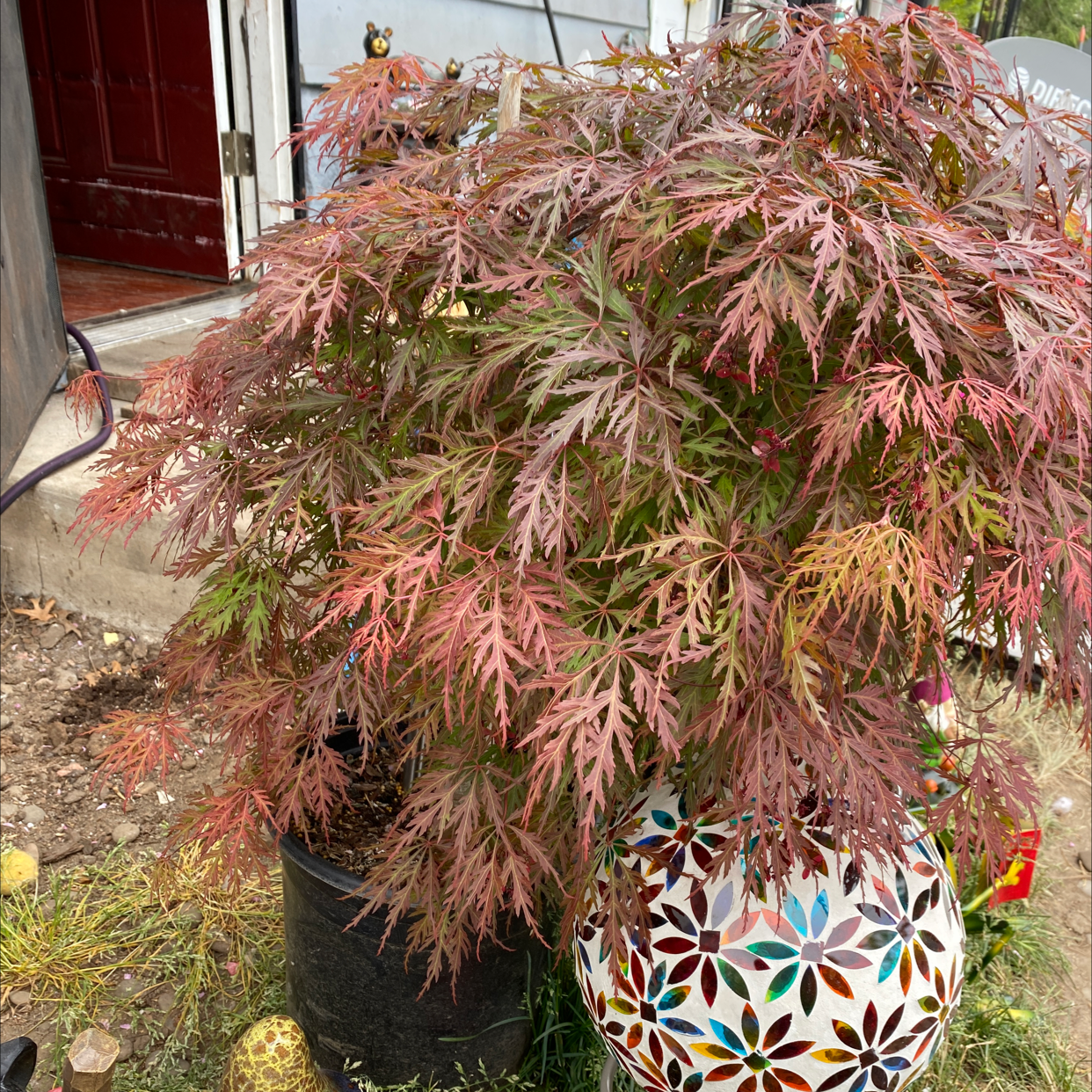
What's Wrong with My Japanese Maple?

Common Japanese Maple Problems
Leaf scorch
Japanese Maple evolved as an understory tree beneath larger canopy, so its thin, deeply lobed leaves have almost no built-in protection against harsh direct sun. When afternoon sun hits the leaf surface at the same time the soil is dry and wind is pulling moisture out of the leaves, the edges and tips cook faster than the roots can replace the water. The damage shows up first on the outer margins of each lobe and spreads inward.
Wilting branches
Japanese Maple has a shallow, fibrous root system that dries out faster than deep-rooted trees. When the soil dries completely, the whole tree wilts together and leaves may roll or droop uniformly. Wilting that affects the entire canopy at once almost always traces back to drought.
Verticillium is a soil fungus that invades through the roots and clogs the vessels that carry water up the stem. Japanese Maple is particularly susceptible. Unlike drought, which wilts the whole canopy evenly, verticillium wilts one branch or one whole side of the tree first because the fungus blocks individual vessel bundles before spreading. If you cut a wilting branch you will often see dark olive or brown streaking in the wood just under the bark.
Yellow leaves mid-season
Japanese Maple performs best in slightly acidic soil and struggles to absorb iron and manganese when the pH is too high. The symptom is yellowing between the leaf veins while the veins themselves stay green, showing up on the newest leaves first. This interveinal yellowing pattern is distinct from the browning caused by drought or scorch.
Japanese Maple's fibrous roots suffocate quickly in soil that stays saturated. Waterlogged roots rot and can no longer take up nutrients, so leaves yellow and the tree loses vigor even when the soil looks wet. Poor drainage is the main culprit, especially in clay-heavy soils.
Early leaf drop
When a Japanese Maple runs short of water in midsummer, it drops leaves early as a survival response. The tree sheds canopy to reduce the surface area losing water. The remaining leaves often show scorch before they fall. This is different from normal autumn drop, which is gradual and even across the canopy.
Early and sudden leaf drop on one branch or one section of the canopy points to a vascular problem rather than drought. Verticillium wilt, physical root damage from digging or construction, or severe root rot can all cause the affected part of the canopy to drop leaves weeks ahead of the rest of the tree.
Dead branches
Japanese Maple's thin bark and slender branch tips are vulnerable to late-frost damage and to hard freezes when the wood has not hardened off fully in autumn. The outermost branch tips die first. In spring the dead wood is obvious because healthy branches leaf out while dead ones stay bare.
Canker fungi enter through wounds or stressed bark and girdle individual branches, cutting off water flow. On Japanese Maple, the thin bark makes it easy for canker to encircle a branch quickly. The branch above the canker dies while wood below looks healthy. Look for sunken, darkened, or cracked bark at the point where the branch stopped leafing out.
Pests
Soft-bodied aphids cluster on the undersides of new growth and on tender leaf stems. Japanese Maple's fresh spring flush draws them because the new leaves are thin-skinned and easy to pierce. Affected leaves curl, and a sticky residue called honeydew coats the surface below the colony.
Spider mites thrive on Japanese Maple in hot, dry summer conditions. They feed on the undersides of the delicate lobed leaves, causing fine stippling and a dull, washed-out color across the canopy. Fine webbing between leaf lobes confirms mites rather than a disease.
Preventing Japanese Maple Problems
About This Article
