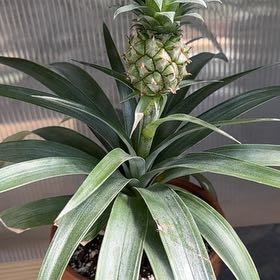
How to Repot a Pineapple
Repot a Pineapple every 2 to 3 years into a pot that's 1 to 2 inches wider than the current pot. Pineapples have small root systems, so don't oversize the new pot. Use a chunky bromeliad or cactus mix and wait about a week before the first watering.

How to Know It's Time to Repot
Pineapples grow slowly and stay happy in surprisingly small pots, so the signs of a truly outgrown container are subtle. Watch for two or more of these four signals before reaching for a new pot.
-
1Roots have pushed up above the soil and lifted the base of the rosette.
-
2The plant has roughly doubled in size since you last potted it up.
-
3Pups are crowding the parent plant with no room to spread.
-
4The plant has tipped because the rosette is wider than the pot.
Pineapples tolerate a snug pot well, so don't repot just because the pot looks small. Most plants need a new pot every 2 to 3 years, sometimes longer for slow-growing varieties.
The Best Time of Year to Repot
Pineapples recover fastest from repotting in warm conditions, when the small root system regrows quickly. Late spring through summer is the window.
Avoid repotting in cool months, when the plant slows down and the freshly cut roots are slow to heal. Use the map below to find your window.

How to Choose a Pot and Soil Mix
Pot Size
Move up to a pot that's 1 to 2 inches wider than the current pot. Pineapples have surprisingly small root systems, so don't be tempted to oversize. Too much wet soil around the small roots is the easiest way to rot them.
Pot Material
Terracotta is a great match for Pineapples. The walls breathe, so the chunky mix dries evenly between waterings instead of staying soggy at the bottom of the pot.
Plastic and glazed ceramic work too, especially if you tend to forget to water. Whichever material you pick, make sure the pot has drainage holes. Pineapple roots rot fast in standing water.
Soil Mix
Use a pre-mixed bromeliad or cactus soil, or mix your own from one part standard potting soil, one part orchid bark, and one part perlite. The chunky, fast-draining blend matches what Pineapples have in their native sandy soils.
Skip moisture-control formulas, peat-heavy mixes, and standard potting soil on its own. All three hold too much water for these roots.
How to Repot a Pineapple, Step by Step
-
1Let the soil dry out. Stop watering a week or two before you plan to repot. Dry soil falls away from the small roots cleanly, makes any rot easier to spot, and gives the freshly cut roots a chance to callus before they meet new soil.
-
2Pick the new pot. Choose a pot that's 1 to 2 inches wider than the current pot, with drainage holes. Layer an inch of fresh chunky mix in the bottom so the rosette will sit at the same height it did before.
-
3Slide the plant out. Tip the pot onto its side and gently work the root ball loose. The leaves have sharp edges, so wear gloves or wrap the rosette in a towel before handling. If the plant is stuck, run a butter knife around the inside edge of the pot to release it.
-
4Inspect the roots. Gently brush away the old soil so you can see the roots clearly. Trim away any sections that are black, mushy, or smell sour, using a clean knife. Healthy Pineapple roots are firm and tan or white.
-
5Set it in the new pot. Center the plant at the same depth it was growing before, with the base of the rosette right at the soil line. Fill in around the sides with fresh chunky mix, pressing gently as you go to keep the plant upright.
-
6Wait a week, then water. Do not water immediately. Let the freshly cut roots callus over in dry soil for about a week, then give the plant a thorough drink. Both in the soil and into the central cup of the rosette.
What to Expect After Repotting
Weeks 1 to 2
Pineapples are slow to show change after a repot. The outer leaves may look slightly paler than usual while the small root system reestablishes.
Keep the soil dry for the first week, then water normally and refill the central cup. Give the plant bright light, including a few hours of direct sun if possible.
Months 1 to 3
A new leaf rising from the center of the rosette is the clearest signal that the plant has settled in. With this species, that can take several weeks to a month or more.
Resume your normal watering rhythm and start light fertilizing once the next active season arrives. Pineapples appreciate occasional weak liquid fertilizer in the central cup during summer.
Got More Questions?
About This Article
