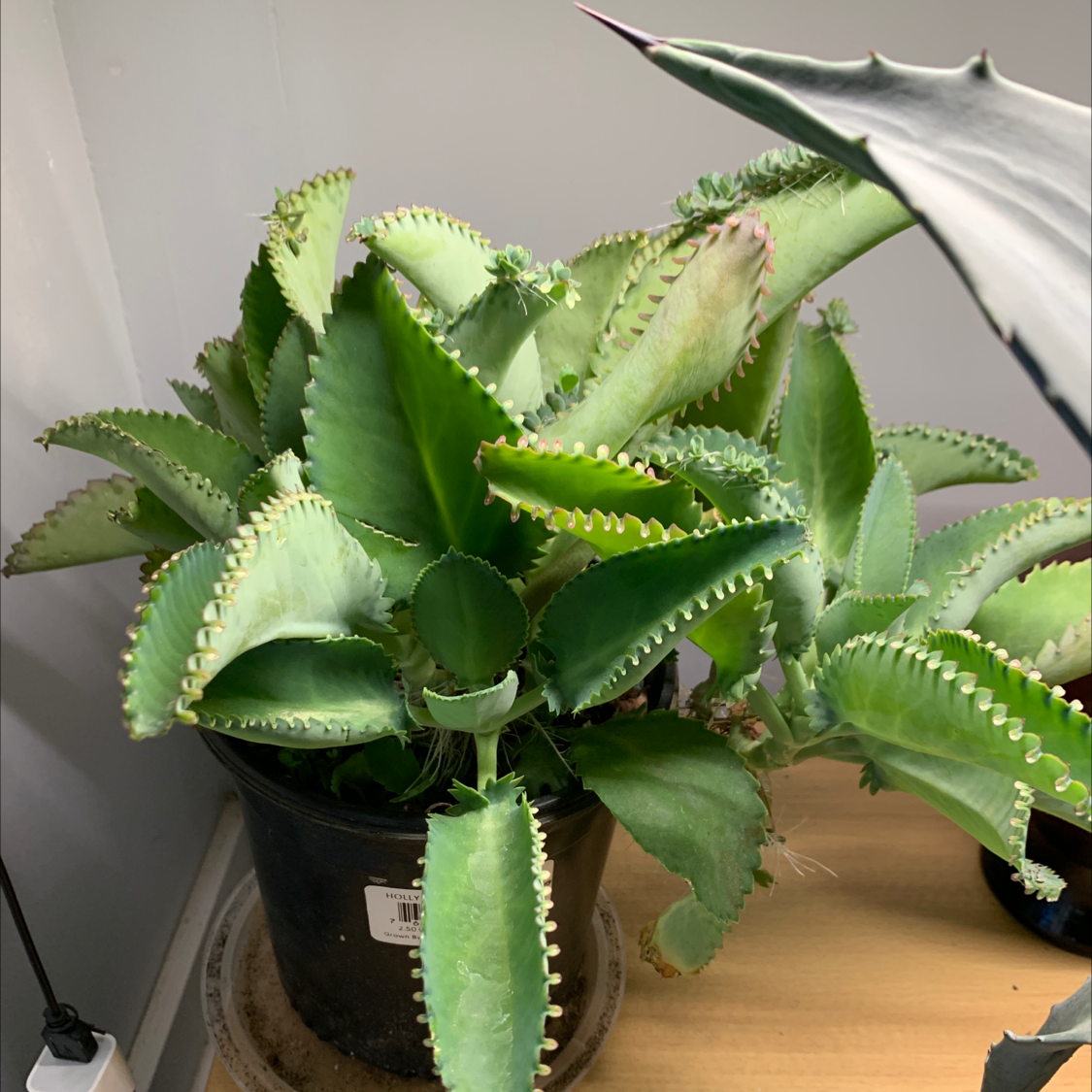
How to Repot a Devil's Backbone
Repot a Devil's Backbone every 2 to 3 years into a pot that's 1 to 2 inches wider than the current pot. Use a gritty, fast-draining cactus or succulent mix. Wait about a week after repotting before the first watering so the cut roots can callus.

How to Know It's Time to Repot
Devil's Backbone is a fast-growing succulent that drops plantlets all around the parent, and a too-small pot starts to crowd quickly. Here are four signals to watch for.
-
1Roots circle the bottom of the pot or push out through the drainage holes.
-
2The plant has roughly doubled in size since you last potted it up.
-
3Tiny plantlets along the leaf edges are crowding the surface of the soil.
-
4The plant has started leaning or tipping because the top is heavy for the pot.
One sign on its own isn't enough to act on, but two or more together means it's time. Most Devil's Backbone plants need a fresh pot every 2 to 3 years, partly to give the parent fresh soil and partly to clear out the carpet of plantlets that drop from the leaves.
The Best Time of Year to Repot
Devil's Backbone recovers fastest when it's in active growth, which kicks in once daylight is long and warm. Late spring through summer is the best window.
Avoid repotting in winter, when the plant slows down and freshly cut roots take much longer to callus. Use the map below to pin down your window.

How to Choose a Pot and Soil Mix
Pot Size
Move up to a pot that's 1 to 2 inches wider than the current pot. Devil's Backbone prefers a snug fit, so resist the urge to jump several sizes up. Too much wet soil around the roots is the easiest way to rot them.
Pot Material
Terracotta is the best choice for Devil's Backbone. The unglazed walls breathe, so the soil dries evenly between waterings instead of staying soggy at the bottom of the pot.
Plastic and glazed ceramic work too, but you'll need to water less often to compensate for the slower drying. Whichever material you pick, make sure the pot has drainage holes. Devil's Backbone rots fast in standing water.
Soil Mix
Use a pre-mixed cactus or succulent soil, or mix your own from one part standard potting soil and one part coarse perlite or pumice. The gritty blend matches the dry, rocky ground this plant comes from in Madagascar.
Skip moisture-control formulas and dense peat-heavy mixes. Both hold too much water for these roots and lead to rot.
How to Repot a Devil's Backbone, Step by Step
-
1Let the soil dry out. Stop watering a week before you plan to repot. Dry soil falls away from the roots cleanly and gives the freshly cut roots a chance to callus before they meet new soil. Brushing off dry soil also makes it easier to see and clean up the plantlets dropping from the leaves.
-
2Pick the new pot. Choose a pot that's 1 to 2 inches wider than the current pot, with drainage holes. Layer an inch of fresh gritty mix in the bottom so the plant will sit at the same height it did before.
-
3Slide the plant out. Tip the pot onto its side and gently work the root ball loose, supporting the base of the stem. The leaves snap off easily, so handle the stem rather than the leaves. If the plant is stuck, run a butter knife around the inside edge of the pot to release it.
-
4Inspect the roots. Brush away the old soil so you can see the roots clearly. Trim away any sections that are black, mushy, or smell sour, using a clean knife. Healthy Devil's Backbone roots are firm and pale tan.
-
5Set it in the new pot. Center the plant at the same depth it was growing before. Fill in around the sides with fresh gritty mix, pressing gently as you go to keep the plant upright. Pick off any plantlets that fell into the new soil unless you want a forest of seedlings in the same pot.
-
6Wait a week, then water. Do not water immediately. Let the freshly cut roots callus over in dry soil for about a week, then give the plant a thorough drink. Watering wet wounds is the fastest way to rot a Devil's Backbone after a repot.
What to Expect After Repotting
Week 1
Devil's Backbone is slow to show change in its first week. A few lower leaves may yellow and drop, which is normal as the plant redirects energy to the roots.
Keep the soil dry for the first week, then water normally. Give the plant a sunny window and skip fertilizer for now.
Weeks 2 to 4
Fresh growth at the top of the stem and new plantlets forming along leaf edges are the signal that the plant has settled in and is ready for normal care.
Resume your normal watering rhythm, letting the soil dry between drinks. Start half-strength liquid fertilizer once you see clear new growth, and build up to full strength over the next two or three feedings.
Got More Questions?
About This Article
