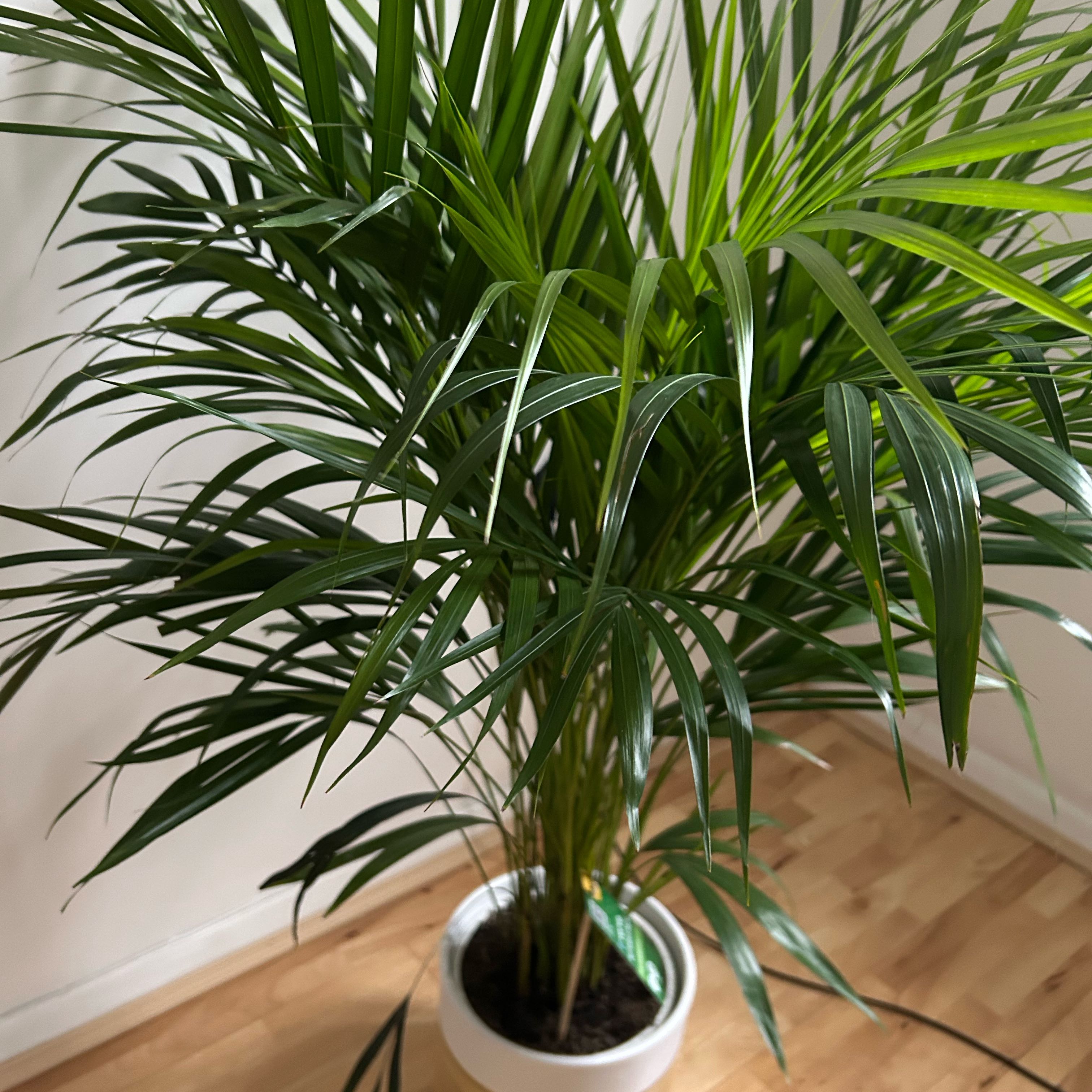
Areca Palm

How to Prune Areca Palm

Dypsis lutescens
Reviewed by Kiersten Rankel M.S.
Quick Answer
Prune your Areca Palm in spring or summer by removing only fronds that are completely brown and dry. Never remove fronds that are still green or even partially yellow, as the plant reabsorbs nutrients from them before they die. Cutting green fronds causes the plant stress and can trigger yellowing in adjacent stems.

When is the best time to prune?

Areca Palm is a tropical species from zones 10–11 that grows year-round in warm climates, so most pruning happens in spring and summer when new fronds are actively emerging.

US pruning regions map
Pacific
Mar–Sep
Mountain
May–Aug
Midwest
Apr–Sep
Northeast
Apr–Sep
Southeast
Mar–Oct
Stay on top of plant care
Get seasonal reminders for watering and fertilizing — personalized for your plants.
Try Greg Free

Why Should I Prune My Areca Palm?

Areca Palms are self-cleaning in the sense that old fronds turn brown and die naturally as new ones emerge. Pruning is mainly cosmetic: removing dead fronds keeps the plant looking tidy and prevents the build-up of dry, brittle material.

The most important rule for palm pruning is to never cut green fronds. Even a frond that looks slightly yellow is still sending nutrients back into the plant. Removing it prematurely stresses the palm and can contribute to a nutrient deficiency that yellows even more fronds.

When a frond is fully brown and dry, cut it as close to the trunk as possible without cutting into the trunk itself. Leave a short stub of about an inch. Over time the stub will dry and fall away on its own.

For indoor plants, remove dead fronds as they appear rather than saving them for a big annual prune. Indoor palms are more sensitive to stress from irregular care, so steady maintenance beats occasional hard cleanups.

Know Before You Cut

Difficulty Easy
Max removal Only fully dead fronds — never green or partly yellow
Growth pattern Clumping palm
Tools Pruners or loppers

What Should I Remove?

Remove only fully brown, completely dry fronds
Cut as close to the trunk as possible without nicking it
Don't cut green or partly yellow fronds
Don't pull fronds off — always cut cleanly
Don't remove more fronds than have fully died
Don't cut all lower fronds at once — only what is truly dead

How Do I Prune Step by Step?

1
Check which fronds are fully dead
Only prune fronds that are entirely brown and dry from tip to base. A frond that is yellow or partially green is still alive and should stay.
2
Cut at the base of the frond stem
Use clean pruners and cut the frond stem close to the trunk. Leave about an inch of stub so you don't accidentally wound the trunk.
3
Work around the whole plant
Remove dead fronds from all sides rather than stripping one side at a time. This keeps the plant balanced and avoids removing more than necessary.
4
Remove dead flower stalks if present
If the plant has produced small yellow flower clusters that have since dried out, cut the stalks back to their base as well.
5
Wipe down tools after use
Clean your pruner blades with rubbing alcohol after finishing. Palm diseases can spread through unclean tools.

Got More Questions?

Can I trim yellow fronds off my Areca Palm?
No. Yellow fronds are still alive and reabsorbing nutrients back into the plant. Cutting them removes those nutrients permanently and can cause more yellowing. Wait until a frond is fully brown and dry before removing it.
What if I already cut some green fronds by mistake?
The plant will recover, but go slowly. Give it time to stabilize before doing any more pruning. Make sure it's getting adequate light, consistent moisture, and a balanced fertilizer to help it recover.
Why does my Areca Palm have so many yellow fronds?
Yellow fronds on Areca Palm most often point to overwatering, low humidity, or nutrient deficiency. Pruning won't fix the cause. Adjust your watering and check if the plant is getting enough magnesium and potassium.
Can I cut back the whole top of my Areca Palm to keep it shorter?
No. Areca Palms grow from a single crown at the top of each cane. Cutting the crown kills that cane entirely. There is no safe way to shorten an Areca Palm cane once it has reached its height.
Stay on top of plant care
Get seasonal reminders for watering and fertilizing — personalized for your plants.
Try Greg Free

About This Article

Kiersten Rankel M.S.
Botanical Data Lead at Greg · Plant Scientist
About the Author
Kiersten Rankel holds an M.S. in Ecology & Evolutionary Biology from Tulane University. A certified Louisiana Master Naturalist, she has over a decade of experience in science communication, with research spanning corals, cypress trees, marsh grasses, and more. At Greg, she curates species data and verifies care recommendations against botanical research.
See Kiersten Rankel's full background on LinkedIn.
Editorial Process
Pruning guidance verified against Dypsis lutescens growth data from Greg's botanical database, cross-referenced with USDA hardiness zone data and published horticultural research.
3,858+ Greg users growing this plant
USDA hardiness zones 10a–11b
Grow plants with confidence