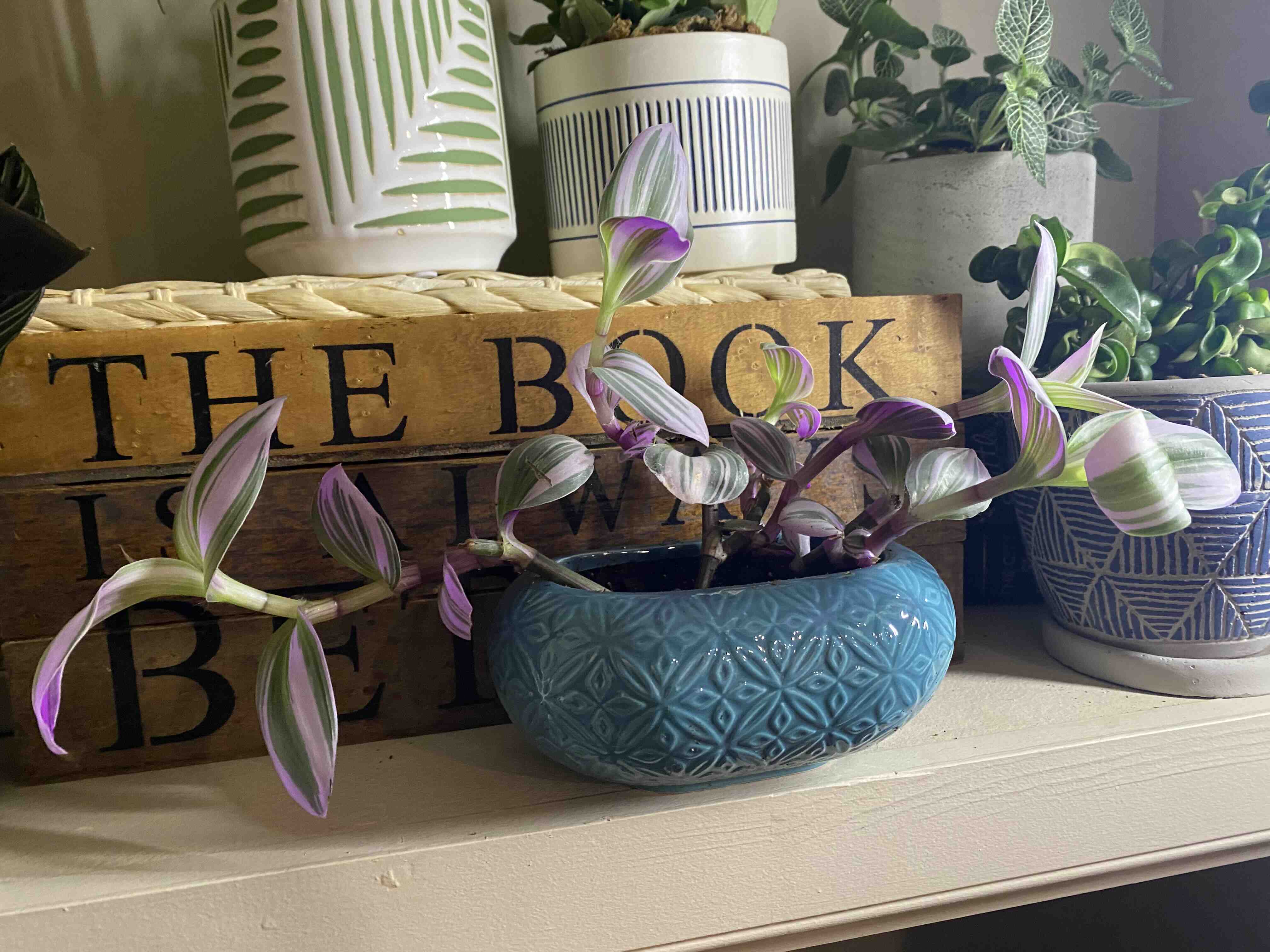
When And Where Should I Trim My Tradescantia Nanouk?
Tradescantia fluminensis 'Nanouk'
By the Greg Editorial Team
Jun 17, 2024•11 min read
This article was created with the help of AI so we can cover more plants for you. May contain errors. See one? Report it here.
Transform your Tradescantia Nanouk into a lush, blooming masterpiece with strategic snips. 🌿🎨
- Prune in spring/early summer for health and to prevent legginess.
- Trim above nodes to shape and encourage bushier growth.
- Post-prune care is crucial for recovery and robust regrowth.
Why Pruning is Essential
Pruning your Tradescantia Nanouk isn't just about keeping up appearances; it's a vital workout for your plant. Think of it as plant yoga—stretching and strengthening to promote a bushier, more robust form. Trimming back those long, wandering stems encourages the plant to sprout new, fuller growth, fighting off that awkward leggy phase that screams neglect.
🌿 The Aesthetics of Pruning
Let's be real: no one wants a scraggly plant. Pruning is the secret to that lush, vibrant look everyone craves. It's like giving your Nanouk a haircut to boost its confidence. Plus, a well-groomed plant is a happy plant, and happy plants are more likely to reward you with flowers. It's a win-win.
🩺 Health and Vigor
Beyond beauty, pruning keeps your plant healthy. It's a chance to remove dead or dying foliage, which can be a magnet for pests and diseases. Think of it as a preventative health measure—like eating your veggies or getting enough sleep. And let's not forget, a dense plant is a stronger plant, better able to resist the occasional mishap or pest invasion.
📏 Size Control
Unless you're trying to recreate the Amazon in your living room, you'll want to keep your Tradescantia Nanouk in check. Pruning lets you play boss, dictating the size and shape of your green companion. Without it, you might just find your plant taking over your space like some kind of botanical supervillain.
🔄 Rejuvenation Station
Older plants can get a bit, well, tired. Pruning is like a spa day for your Tradescantia Nanouk, rejuvenating and encouraging new growth. It's the plant equivalent of a relaxing retreat, coming back refreshed and ready to grow with renewed vigor.
💐 Flower Power
Yes, your Tradescantia Nanouk can bloom, and pruning can help coax out those shy flowers. By trimming back overzealous growth, you allow your plant to focus its energy on flower production. It's like telling your plant, "Hey, let's see some color!" And with the right care, it'll listen.
Remember, pruning isn't just a chore; it's an investment in the future of your plant. So grab those shears and get snipping. Your Tradescantia Nanouk will thank you—with growth.
When to Prune Tradescantia Nanouk
Spring into action during the spring and early summer months; this is when your Tradescantia Nanouk is in its prime growth phase. It's the ideal time to prune, as the plant is soaking up energy and ready to burst forth with new growth.
🌱 Identifying the Right Time
Look for signs of leggy growth or foliage that's starting to wilt. These are your plant's way of waving a white flag, signaling it's time for a trim. Yellowing leaves are giving back to the mother plant before taking their final bow—let them go pale, then snip them away.
🌿 Pruning and Plant Health
Use pruning as an opportunity for a health checkup. Tradescantia Nanouk might be tough as nails, but it's not invincible. Check for pests, funky leaves, or other signs of distress. Remember, only trim up to 1/4 of the plant to avoid a botanical breakdown.
🌙 The Dormancy Clause
Got a few stragglers during the off-season? Light maintenance won't hurt. Think of it as removing a splinter; it helps your plant focus on the good stuff. Just don't go Edward Scissorhands on it—gentle is the keyword here.
Where to Trim for Optimal Results
🌱 Identifying the Nodes
Nodes are the key to a successful trim. Picture them as the checkpoints of growth on your Tradescantia Nanouk's stems. To spot them, look for little knobs or lines along the stem—these are your plant's growth potential goldmines. When pruning, make your cut just after these nodes, leaving a small segment of stem intact. This is where your plant will hustle out some fresh, bushy growth.
♟️ Strategic Pruning
To shape your Tradescantia Nanouk like a pro, think like a chess player—strategic moves lead to victory. Aim to prune above the nodes at the desired height to encourage branching. This not only keeps your plant compact but also opens up opportunities for more flowers to show up to the party. Remember, it's not just about cutting back; it's about guiding future growth.
🌿 Encouraging New Growth
Want to turn your Tradescantia Nanouk into a fuller, more voluptuous specimen? It's all about encouraging new shoots to form. By snipping just above a node, you're sending a signal: "Hey, it's time to branch out!" This is how you get that lush, enviable bushiness that makes other plant parents green with envy.
💐 Flower Power
If you're after blooms, your pruning shears might just be your best friend. Strategic cuts can lead to more flowering, as the plant redirects energy from extending vines to popping out those pretty little flowers. So, if you want your Tradescantia Nanouk to put on a floral show, give it a trim and watch it work its magic.
Pruning Techniques
Pruning your Tradescantia Nanouk is like giving it a strategic haircut for optimal health and aesthetics. Here's how to do it right:
✂️ Tools You'll Need
- Sharp pruning shears or scissors
- Sterilizing agent (isopropyl alcohol or bleach solution)
🧼 Sterilizing Your Tools
Before you start, dunk your tools in a sterilizing solution. This step is non-negotiable—clean cuts mean a lower risk of infections.
📝 Step-by-Step Pruning
- Inspect your Tradescantia Nanouk. Look for long, leggy stems or areas where you want to encourage fuller growth.
- Identify the nodes—these are the points on the stems where leaves and buds form.
- Cut just above a node at a 45-degree angle. This angle prevents water from pooling, which can invite bacteria and fungi to the party (and not the good kind).
- Limit your enthusiasm—never remove more than one-third of the plant's foliage at a time. Over-pruning can send your plant into shock, and not the electric kind.
🌱 Post-Pruning Care
After pruning, give your plant some TLC. Ensure it has adequate light, water it judiciously, and maybe even whisper some words of encouragement. Your Tradescantia Nanouk will thank you with lush, vibrant growth.
Propagation Potential through Pruning
🌱 The Joy of Multiplication
Pruning isn't just about keeping your Tradescantia Nanouk in check; it's a gateway to more plants. Those cuttings you snip off? They're potential new Nanouks waiting to unfurl. It's like getting free plants with every trim, and who doesn't love a good freebie?
✂️ Cuttings: The First Step to New Growth
When you prune, aim for sections with healthy nodes—these are the gold mines for propagation. Submerge the cut end in water, ensuring at least one node is underwater. Patience is key here; Nanouk stems can be slow to root, but the wait is worth it.
💧 Soil vs. Water: Propagation Showdown
You've got options. Water propagation is like a science experiment on your windowsill—watch roots develop in real-time. Soil propagation, on the other hand, is a plant-and-forget affair. Just ensure the soil is moist when you plant your cuttings, or they'll throw a tantrum and wither.
🌱 Propagate Like a Pro
Here's a pro tip: after watering your Nanouk, that's the perfect time to prune and stick those cuttings straight into the moist soil. It's like giving them a cozy bed to sleep in—except they'll wake up with roots.
🎁 Sharing is Caring
Got more cuttings than you know what to do with? Spread the love. Tradescantia Nanouk cuttings make for unexpectedly delightful gifts. Just pop them in a cute jar of water, and you're the plant fairy, delivering green joy to friends and family.
🌿 Keep It Bushy
Want a fuller Nanouk? Replant those cuttings back into the mother pot. It's like giving your plant a volume boost without the need for hairspray. Plus, you get to enjoy a lusher plant without shelling out more cash.
Remember, with every snip, you're not just pruning; you're creating new life. It's the circle of plant life, right there on your windowsill.
Common Mistakes to Avoid
🌿 Over-Pruning
Overzealous cuts can leave your Tradescantia Nanouk struggling to recover. It's a fine balance—trim enough to encourage growth but not so much that the plant can't sustain itself. Aim to remove no more than one-third of the plant at a time.
✂️ Cutting Technique
Sharpness is key. Dull blades can damage stems, hindering regrowth. Always use clean, sharp tools to make precise cuts. This minimizes stress on the plant and reduces the risk of infection.
🎋 Cutting Location
Cut just above a node, the point on the stem where leaves emerge. This encourages new shoots to grow. Cutting too far from a node can result in a long, bare stem that's less likely to sprout.
🌱 Plant Health
Don't prune a sickly plant. Pruning diverts energy to regrowth, energy that a struggling plant doesn't have to spare. Address health issues before you start snipping.
🌞 Environmental Conditions
Post-pruning, your Tradescantia Nanouk needs the right conditions to thrive. Ensure it has adequate light, warmth, and humidity to support new growth. Neglecting these can stunt recovery.
🐜 Pests and Disease
Keep an eye out for pests and disease. Pruning can sometimes expose plants to new threats. If you spot trouble, act fast to mitigate damage and prevent spread.
🌱 Propagation
Pruning offers a chance for propagation. But remember, not every cutting will take root. Use healthy plant sections and the right soil mix to increase your odds of success.
By avoiding these pitfalls, you'll keep your Tradescantia Nanouk looking lush and full. Remember, informed pruning is as much about what you don't cut as what you do.
Potential Challenges and Problem-solving
🐛 Pest Infestations
Pests are like uninvited guests at a garden party—annoying and potentially destructive. When pruning your Tradescantia Nanouk, you might uncover aphids, spider mites, or thrips trying to crash the scene. Act fast; these critters multiply quicker than bunnies. A neem oil solution or insecticidal soap can be your bouncer, showing these pests the door.
🍄 Fungal Infections
Fungi are the silent assassins of the plant world. If you spot any unusual spots or powdery substances on your plant while pruning, it's time to play detective. Isolate the infected plant to prevent a fungal free-for-all. Remove affected areas with sterilized shears and treat with a fungicide. Remember, fungi love moisture, so keep those leaves dry and provide good air circulation.
✂️ Pruning Damage
Pruning can sometimes go wrong—snip in the wrong place, and you've given your plant an unwanted haircut. To avoid this, always prune just above the leaf nodes; that's where new growth will spring from. If you do make a mistake, don't panic. Plants are resilient, and your Tradescantia Nanouk will likely bounce back with proper care.
🌿 Environmental Stress
Post-pruning, your plant may experience stress—think of it as a plant version of post-workout soreness. Give your plant a pep talk (metaphorically speaking) by ensuring it has optimal light, water, and nutrients to recover. If your plant could talk, it would probably ask for a spa day. Since it can't, pamper it with ideal growing conditions instead.
🛡️ Proactive Measures
An ounce of prevention is worth a pound of cure, especially in gardening. Keep your tools sharp and clean to avoid spreading diseases. And don't forget to monitor your plant regularly. Catching problems early is the key to keeping your Tradescantia Nanouk in tip-top shape.
Maintenance After Pruning
After giving your Tradescantia Nanouk a trim, post-pruning care is crucial to ensure it bounces back with vigor.
💧 Watering Needs
Keep the soil consistently moist but not waterlogged. Overwatering can lead to root rot, especially when the plant is in a vulnerable state after pruning. Allow the top inch of soil to dry out before watering again.
🌞 Light Requirements
Provide your Tradescantia Nanouk with bright, indirect light. This will help it recover and grow new foliage. Too much direct sunlight can scorch the leaves, while too little light can cause legginess.
🌱 Fertilization Strategy
Hold off on fertilizing immediately after pruning. Your plant needs time to heal. Once you see new growth, feed it with a balanced, half-strength liquid fertilizer every month during the growing season.
🕵️ Monitoring and Adjustments
Watch for signs of stress, such as yellowing leaves or stunted growth. If you notice any issues, reassess your care routine. It might need more light, less water, or a break from fertilizers.
🧼 Cleanliness and Hygiene
Keep the leaves clean to promote efficient photosynthesis. Wipe them down with a damp cloth to remove dust and potential pests.
🌱 Propagation Considerations
If you've saved some healthy cuttings, why not try propagating them? Place the cuttings in water or soil and watch as they grow into new plants.
Remember, patience is key. Your Tradescantia Nanouk won't rejuvenate overnight. But with the right care, it'll be back to its lush, vibrant self in no time.
⚠️ Safety First
This content is for general information and may contain errors, omissions, or outdated details. It is not medical, veterinary advice, or an endorsement of therapeutic claims.
Always consult a qualified healthcare professional before using any plant as food, medicine, or supplement.
Never eat any plant (or feed one to pets) without confirming its identity with at least two trusted sources.
If you suspect poisoning, call Poison Control (800) 222-1222, the Pet Poison Helpline (800) 213-6680, or your local emergency service immediately.
Spotted an error? Please report it here.