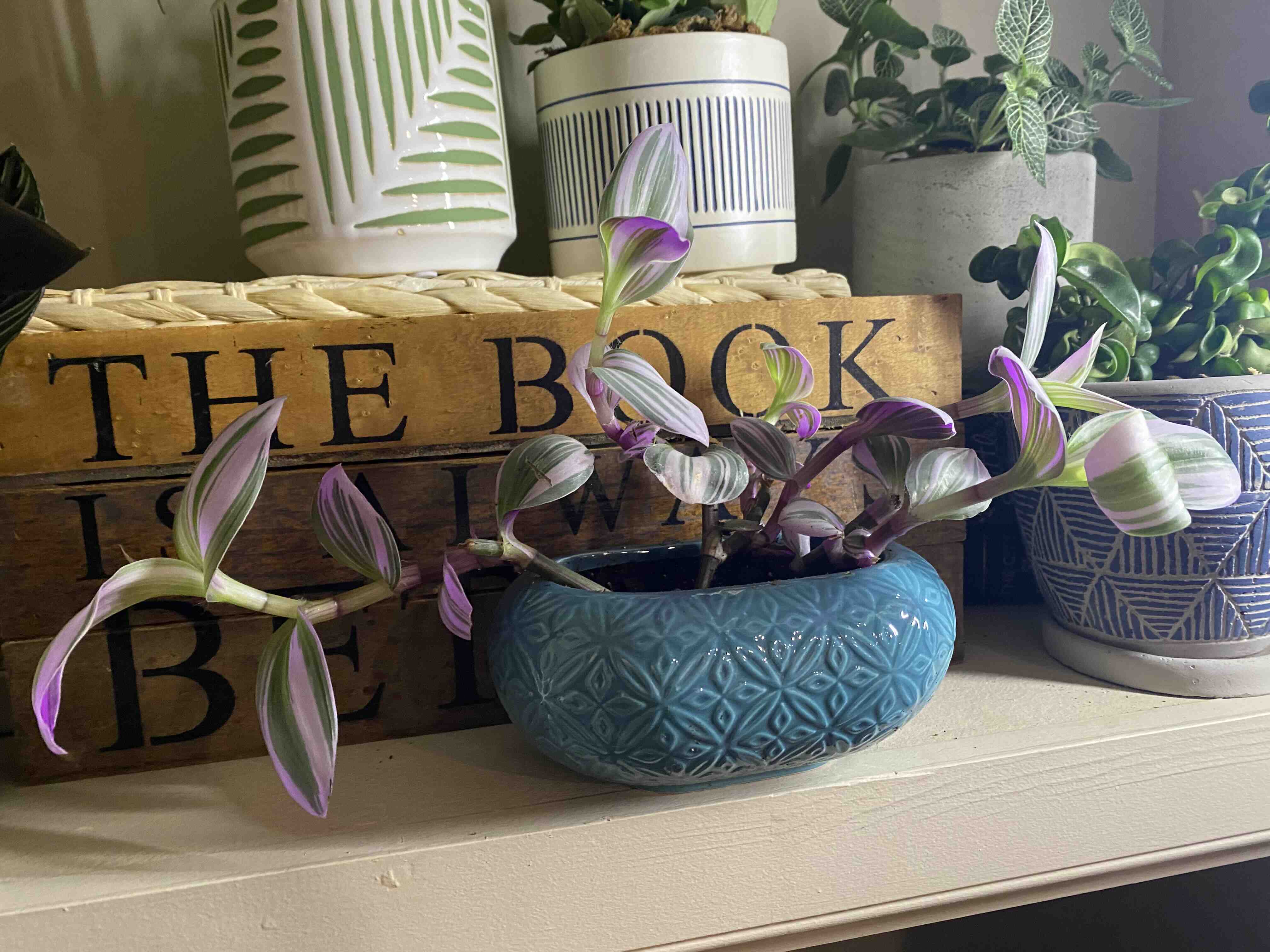
How to Water Tradescantia Nanouk
Tradescantia fluminensis 'Nanouk'
Reviewed by Kiersten Rankel M.S.
Quick Answer
Water your Tradescantia Nanouk every 4–6 days in spring and summer when the top inch of soil feels dry. Stretch to every 7–10 days in cooler months.
Nanouk is thirsty for a houseplant. The succulent-looking leaves trick people into treating it like a jade. The stems crisp fast if the soil goes bone-dry.

Stay on top of plant care
Get seasonal reminders for watering and fertilizing — personalized for your plants.
How Often and How Much to Water
Adjust the sliders below for your pot size, light, and setting. The numbers assume a rich moisture-retaining mix and a pot with drainage.
Setting
Every
9days
Use
1cup
Your Watering Rhythm Across the Year
Soil dries faster in the growing season, which varies by region. Slow down watering in the off-season to avoid overwatering.
Pacific
Mountain
Midwest
Northeast
Southeast
JFMAMJJASOND
Growing season
Growing season
9days
Resting season
3–4weeks
How to Water Your Tradescantia Nanouk
Soak the soil and let it drain. Nanouk recovers quickly from missed waterings but rots fast if water stays around the base of the stems.
1
Pour room-temperature water at the soil line, around the trailing stems. Water that pools at a node where a stem meets soil can rot the cane.
2
Keep pouring until water flows from the drainage holes. That tells you the rootball is fully soaked.
3
Empty the saucer after 10 minutes so the bottom roots aren’t standing in water.
4
Trim back leggy stems if growth gets too sparse. New growth comes in fuller after a haircut and the plant uses water more evenly.
Should You Water Your Tradescantia Nanouk Today?
Always check before you pour. Nanouk wilts dramatically when thirsty and bounces back fast, but staying soggy will collapse a stem at its base within days.
Hold off
Leaves held flat and feel firm
Trailing stems standing out crisp
Top inch of soil still feels damp
Soil sits tight against the pot wall
Pot feels heavy when lifted
Ready for water
Top inch of soil dry and crumbly
Leaves curling slightly along the edges
Trailing stems flattening out and softening
Visible gap between soil and pot wall
Pot feels noticeably light
If Something Looks Off
Crisp leaves mean dry. Mushy stem bases mean wet. Read both before deciding which way to go.
Underwatered
Soil
Bone-dry and pulled away from the pot wall
Leaves
Curled along the edges and crispy at the tips
Pace
Quick decline that bounces back within a day of a deep soak
Next steps
Set the pot in a basin of room-temperature water for 15 to 20 minutes so the rootball rehydrates from below
Drain fully and return to its bright spot
Expect leaves to lift back up within 12 to 24 hours
Wait for new growth before fertilizing
Overwatered
Soil
Stays dark and damp for days with a sour smell
Stem
Soft mushy or blackening at the soil line
Leaves
Yellowing all over and feel limp not crisp
Pace
Sudden collapse that worsens even after you stop watering
Next steps
Stop watering and move to a bright airy spot
If you see fungus gnats hovering around the soil, the mix has stayed too wet
Take cuttings from any healthy stem tips. Nanouk roots in water within a week and saves the plant if the base rots out
Repot the rooted cuttings in fresh moisture-retaining mix in a clean pot with drainage holes
Wait until the top inch of soil is dry before the next watering
Got More Questions?
Why are my Nanouk’s lower stems leggy and bare?
Tradescantia of all kinds get leggy in lower light or when they go too long between trims. The stems stretch toward the light and drop their lower leaves.
Move to a brighter spot and trim leggy stems back to a few inches. Each cut triggers branching and the plant fills out within weeks.
Can I propagate Nanouk in water?
Yes, easily. Snip a 4 to 6 inch stem just below a node, pull off the lower leaves, and drop it in a glass of water.
Roots appear within a week and the cutting is ready to pot up in 2 to 3 weeks. This is the easiest backup if your main plant ever rots from overwater.
Why are my Nanouk’s pink colors fading?
Fading variegation is almost always low light, not water. Nanouk needs bright indirect light or a few hours of soft morning sun to keep its pink and purple stripes vivid.
Move closer to a window or under a grow light. New growth in better light should come in with stronger color within a few weeks.
Can I use tap water on a Nanouk?
Yes. Nanouk is unfussy about water quality and tolerates normal tap water without browning or burning.
Softened water from a whole-house softener is the only kind to avoid, since the added sodium will damage roots over time.
How long can I leave a Nanouk while I’m on vacation?
About a week. Nanouk uses water fast in summer and starts dropping leaves and crisping if the soil goes bone-dry too long.
Deep-water the morning you leave, move slightly out of bright light to slow evaporation, and ask someone to check it after 5 to 7 days for longer trips.
Are self-watering pots a good idea for Nanouk?
They can work but are easy to overdo. Nanouk wants moisture but the stem bases rot fast in saturated soil.
Use a chunky moisture-retaining mix and let the reservoir run dry for a day or two between fills. A regular pot with attentive watering tends to work better long-term.
Stay on top of plant care
Get seasonal reminders for watering and fertilizing — personalized for your plants.
About This Article

Kiersten Rankel M.S.
Botanical Data Lead at Greg · Plant Scientist
Editorial Process
Watering guidance verified against Tradescantia fluminensis 'Nanouk' growth data from Greg's botanical database, cross-referenced with USDA hardiness zone data and published horticultural research.
9,837+ Greg users growing this plant
USDA hardiness zones 10a–12a