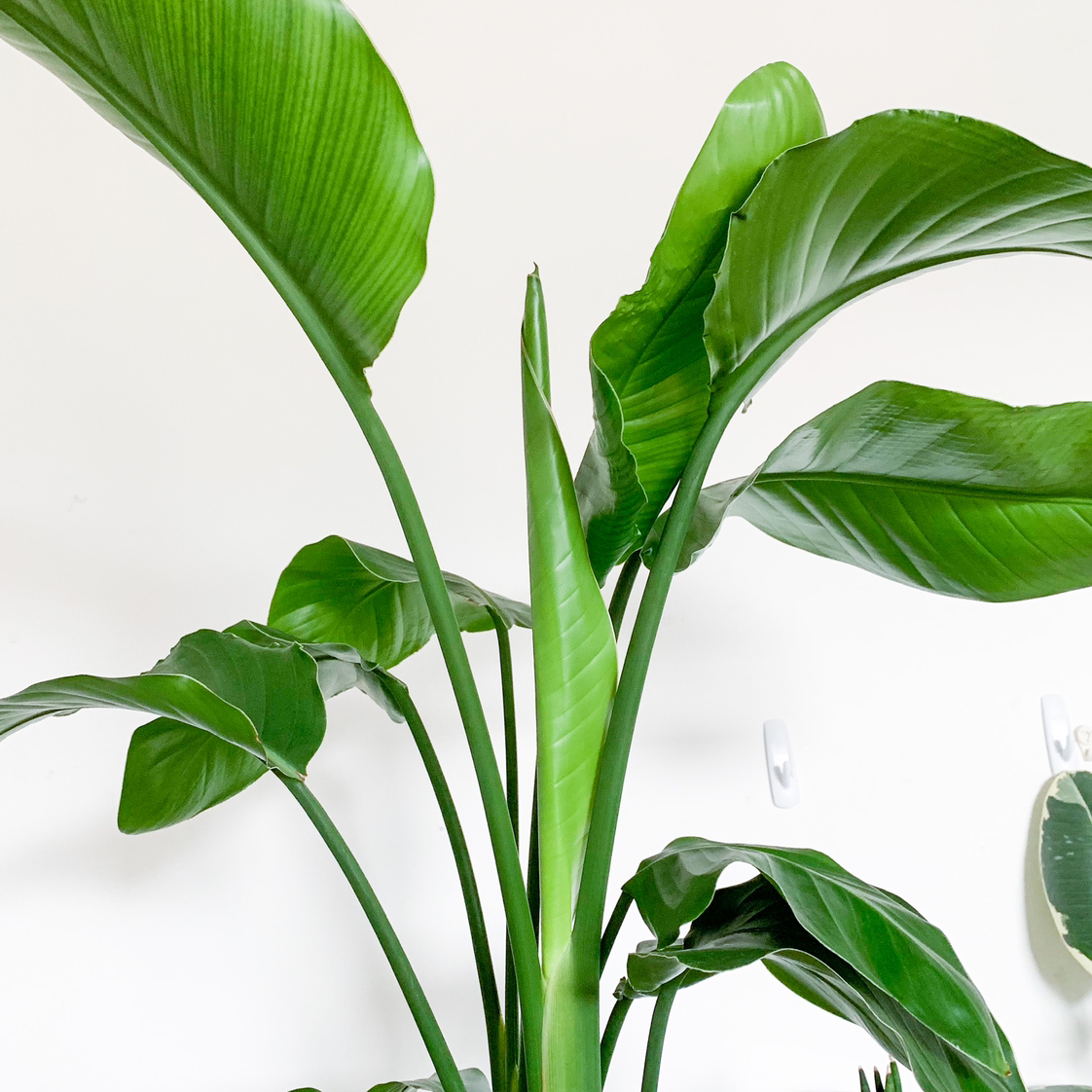
Bird of Paradise

How to Prune Bird of Paradise

Strelitzia reginae
Reviewed by Kiersten Rankel M.S.
Quick Answer
Prune your bird of paradise in early spring before the growing season begins. Remove dead, damaged, or yellowing leaves by cutting them at the base of the stalk. Cut spent flower stalks down to the ground. Avoid removing healthy green leaves, since each leaf fuels the next bloom.

When is the best time to prune?

Bird of paradise is a warm-season grower that pushes new leaves and flowers from spring through fall, so pruning in early spring clears the way for fresh growth.

US pruning regions map
Pacific
Feb–Apr
Mountain
May–Jun
Midwest
Apr–May
Northeast
Apr–May
Southeast
Feb–Apr
Stay on top of plant care
Get seasonal reminders for watering and fertilizing — personalized for your plants.
Try Greg Free

Why Should I Prune My Bird of Paradise?

Bird of paradise doesn't need much pruning, but a yearly cleanup makes a real difference. Old leaves naturally die back and hang on the plant, looking ragged and blocking light from reaching new growth at the center of the clump.

The main job is removing dead and damaged leaves. Cut each one at the base where the leaf stalk meets the main stem, as close to the ground as you can. Don't tear leaves off by hand because that can rip the stem and create an entry point for disease.

Spent flower stalks should also come out. Once a flower has finished, the stalk won't bloom again, so cut it all the way down. This is purely cosmetic but it also stops the plant from putting energy into seed production.

Resist the urge to remove healthy green leaves just because they look a little tattered from wind. Every leaf feeds the plant, and bird of paradise is slow to replace them. A plant that gets over-pruned may skip blooming for a season or more.

Know Before You Cut

Difficulty Easy
Max removal Dead and damaged leaves only
Growth pattern Upright clumping perennial
Tools Pruners or loppers for thick stalks

What Should I Remove?

Cut dead or brown leaves at the base
Remove spent flower stalks to ground level
Clear debris from the center of the clump
Trim split or wind-damaged leaf edges if desired
Don't remove healthy green leaves
Don't tear leaves off by hand
Don't cut into the main growing crown

How Do I Prune Step by Step?

1
Identify dead and damaged leaves
Walk around the plant and flag any leaves that are fully brown, yellow, or badly torn. Leave green leaves alone even if they have minor cosmetic damage.
2
Cut dead leaves at the base
Use pruners or loppers to cut each dead leaf stalk as close to the ground or main stem as possible. Make a clean, angled cut.
3
Remove spent flower stalks
Cut finished flower stalks down to the base. They're thick and woody, so loppers work better than hand pruners here.
4
Clear the center of the clump
Pull out any fallen leaf litter or debris trapped in the center. Good airflow at the base reduces the chance of fungal problems.
5
Clean your tools
Bird of paradise sap is sticky and mildly irritating. Wipe your blades with rubbing alcohol after pruning to prevent spreading any disease between plants.

Got More Questions?

Can I cut back a bird of paradise that's gotten too tall?
You can remove the tallest leaves, but the plant will eventually grow back to its natural height. If it's too big for the space, dividing the clump is a better long-term solution.
Why hasn't my bird of paradise bloomed after I pruned it?
Bird of paradise can take a season to recover if too many healthy leaves were removed. Each leaf supports future blooms, so only remove dead foliage and let the plant build up energy.
Should I cut the leaves that have split down the middle?
Leaf splitting is normal for bird of paradise. It's how the plant reduces wind resistance. Only remove a split leaf if it's mostly dead or unsightly.
How do I prune a bird of paradise growing indoors?
The same way as outdoors. Remove dead leaves at the base and any spent flowers. Indoor plants grow more slowly, so be even more conservative about removing healthy foliage.
Is the sap from bird of paradise toxic?
The plant is mildly toxic if ingested and the sap can irritate skin. Wear gloves when pruning and keep cuttings away from pets and children.
Stay on top of plant care
Get seasonal reminders for watering and fertilizing — personalized for your plants.
Try Greg Free

About This Article

Kiersten Rankel M.S.
Botanical Data Lead at Greg · Plant Scientist
About the Author
Kiersten Rankel holds an M.S. in Ecology & Evolutionary Biology from Tulane University. A certified Louisiana Master Naturalist, she has over a decade of experience in science communication, with research spanning corals, cypress trees, marsh grasses, and more. At Greg, she curates species data and verifies care recommendations against botanical research.
See Kiersten Rankel's full background on LinkedIn.
Editorial Process
Pruning guidance verified against Strelitzia reginae growth data from Greg's botanical database, cross-referenced with USDA hardiness zone data and published horticultural research.
4,011+ Greg users growing this plant
USDA hardiness zones 10a–11b
Grow plants with confidence