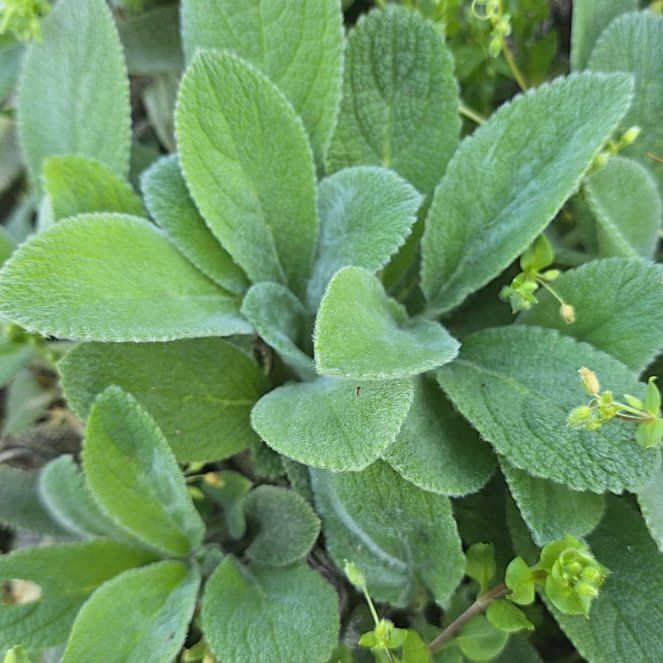
Lamb's Ear

How to Prune Lamb's Ear

Stachys byzantina
Reviewed by Kiersten Rankel M.S.
Quick Answer
Prune Lamb's Ear in early spring (March–April) before new growth emerges, and again after flowering in summer if you want to tidy it up. Focus on removing dead or brown leaves from the center of the mat and cutting back spent flower stalks at the base. Never remove more than a third of the plant at once, and avoid cutting into the crown.

When is the best time to prune?

Pruning timing for Lamb's Ear shifts by a few weeks depending on your region, since this cold-hardy perennial (zones 4–9) breaks dormancy earlier in warmer climates.

US pruning regions map
Pacific
Feb–Mar
Mountain
Apr–May
Midwest
Mar–Apr
Northeast
Apr–May
Southeast
Feb–Mar
Stay on top of plant care
Get seasonal reminders for watering and fertilizing — personalized for your plants.
Try Greg Free

Why Should I Prune My Lamb's Ear?

Lamb's Ear spreads quickly, and its mat-forming habit means the center tends to die out over time. Regular pruning keeps the plant looking full and healthy rather than patchy and brown in the middle.

In early spring, pull away or cut back any leaves that were damaged over winter. This lets new silver-gray growth come in cleanly without competing with dead material. If your plant has gotten thick and congested, you can divide it at the same time.

Lamb's Ear sends up tall flower stalks in early summer. These are fine to leave if you like them, but removing them after blooming redirects the plant's energy back into the foliage and keeps the mat fuller. Cut them all the way down to where they emerge from the leaves.

Avoid pruning in fall or late summer. The foliage provides some insulation over winter, and cutting it back late in the season can stress the plant before it goes dormant.

Know Before You Cut

Difficulty Easy
Max removal Up to 1/3 of foliage at once
Growth pattern Spreading mat
Tools Garden scissors or hand pruners

What Should I Remove?

Remove dead or brown leaves from the center of the mat
Cut spent flower stalks down to the base after blooming
Pull away any mushy, rotted leaves in humid conditions
Divide congested patches to restore vigor
Don't cut back foliage in fall before winter
Don't remove more than a third of the mat at once
Don't cut into the crown at the base of the plant

How Do I Prune Step by Step?

1
Wait for the right time in spring
Start when you see new silver growth emerging from the base, typically March–April depending on your region. Pruning too early before new growth appears can set the plant back.
2
Clear out dead and brown foliage
Use your hands or scissors to remove any leaves that are brown, mushy, or clearly dead. Work from the outside edges toward the center where die-out is most common.
3
Remove spent flower stalks
After the plant flowers in early summer, cut the tall stalks all the way down to where they emerge from the foliage. This keeps the plant tidy and encourages more leaf growth.
4
Thin the mat if it has become congested
If the center looks hollow or crowded, use a garden fork to lift and divide sections. Replant healthy outer portions and compost the worn-out center.
5
Clean up and water in
Dispose of removed material and give the plant a light watering if conditions are dry. Avoid overhead watering on the fuzzy leaves, which can hold moisture and invite rot.

Got More Questions?

Can I cut Lamb's Ear back hard in summer?
Yes, if the plant looks ragged after flowering you can cut it back by about a third in midsummer. It will push new growth quickly. Avoid doing this in late summer or fall when you want the foliage intact for winter.
What if I accidentally removed too much?
Lamb's Ear is resilient. As long as you left the crown and some healthy leaves, it will recover. Keep the soil lightly moist and avoid any more pruning until you see new growth coming in.
Do I need to remove the flower stalks?
It's optional. The flowers are attractive to bees, but leaving the stalks can make the plant look messy and reduces energy going to the foliage. Most gardeners remove them after blooming.
Why does the center of my Lamb's Ear keep dying out?
This is normal for mat-forming perennials. The center ages out while the edges stay vigorous. Regular division every 2–3 years solves it: remove the worn-out center and replant fresh sections from the outer edges.
Stay on top of plant care
Get seasonal reminders for watering and fertilizing — personalized for your plants.
Try Greg Free

About This Article

Kiersten Rankel M.S.
Botanical Data Lead at Greg · Plant Scientist
About the Author
Kiersten Rankel holds an M.S. in Ecology & Evolutionary Biology from Tulane University. A certified Louisiana Master Naturalist, she has over a decade of experience in science communication, with research spanning corals, cypress trees, marsh grasses, and more. At Greg, she curates species data and verifies care recommendations against botanical research.
See Kiersten Rankel's full background on LinkedIn.
Editorial Process
Pruning guidance verified against Stachys byzantina growth data from Greg's botanical database, cross-referenced with USDA hardiness zone data and published horticultural research.
979+ Greg users growing this plant
USDA hardiness zones 4a–9a
Grow plants with confidence