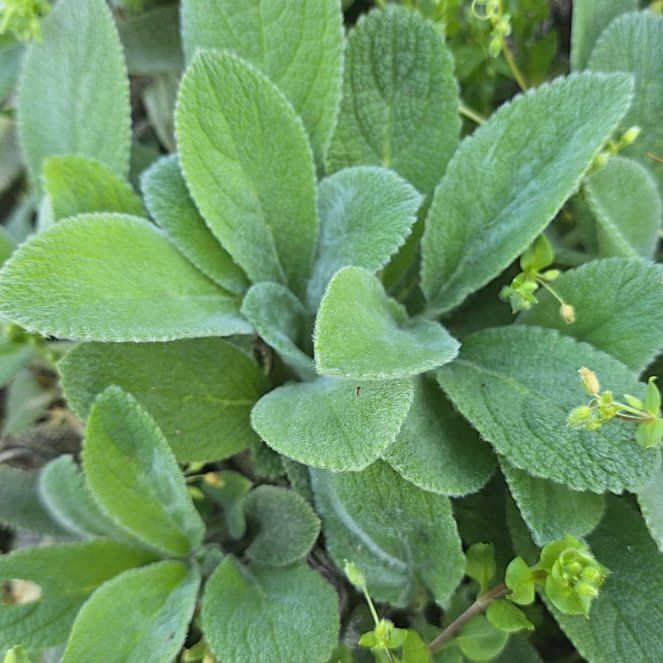
Lamb's Ear

What's Eating Your Lamb's Ear?

Stachys byzantina
Reviewed by Kiersten Rankel M.S.
Quick Answer

For lamb's ear, the most likely culprit is slugs chewing ragged holes in the lower felted leaves on damp ground. Spider mites flare up in heat-stressed dry patches, leaving pale specks on the silver fuzz. Aphids cluster on the unfuzzy bloom stalks during summer flowering. The dense woolly leaf coating blocks most other pests, including deer.

Stay on top of plant care
Get seasonal reminders for watering and fertilizing, personalized for your plants.
Try Greg Free

What does the damage look like?

Tap the closest match to jump straight to the fix.

Pests, ranked by impact

Large red-brown slug (Arion rufus) crawling on a rhubarb leaf

Slugs

Damage
Medium
Removal
Moderate
What it looks like

Soft brown or gray slimy mollusks, 1 to 3 inches long, hiding under the spreading lamb's ear mat during the day. Most active overnight on damp ground. Leave silvery slime trails across the silver-gray felted leaves and on nearby pavers or mulch.

What the damage looks like

Ragged irregular holes chewed in the lower woolly leaves where they touch the soil. Damage worse after rainy stretches. Silvery slime trails confirm slugs over caterpillars or beetles. Heavy populations strip the lower mat and expose bare crowns.

How to get rid of them
Option 1

Iron phosphate bait around the mat at dusk

Scatter iron phosphate slug bait (Sluggo or Garden Safe Slug & Snail Bait, ~$15) around the edge of the lamb's ear mat at dusk after watering. Iron phosphate is safe for pets, kids, and beneficial insects. Reapply every 2 weeks through wet weather. Sweep up any leftover pellets before they reach soil under the woolly leaves.

Option 2

Beer trap and hand-pick at night

1

Sink a shallow tuna can or yogurt cup so the rim sits flush with the soil at the edge of the mat.

2

Fill with cheap beer to half an inch from the rim. Slugs crawl in and drown overnight.

3

Empty and refill every other evening. Walk the bed an hour after sunset with a flashlight and drop any visible slugs into soapy water.

Option 3

Lift damp mulch and trim ground-touching leaves

Pull mulch back 2 to 3 inches from the lamb's ear crowns so the soil dries faster between rains. Snip off any felted leaves resting flat on damp ground. The lifted airflow ends the dark wet shelter slugs need to feed and breed under the mat.

Spider mite infestation on a stem with fine silk webbing and pale speckled leaf damage

Spider mites

Damage
Medium
Removal
Moderate
What it looks like

Almost invisible without a hand lens. Yellow-green to red-orange specks on the underside of the silver-gray felted leaves. The dense woolly hairs slow them down, but heat-stressed plants in dry summer patches lose that protection and flare up fast.

What the damage looks like

Tiny pale yellow dots scattered across the felted leaf surface, then a faded bronze cast that dulls the iconic silver. Fine webbing strung between leaf hairs in heavy infestations. Patches in the driest, hottest part of the bed go off-color first while shaded areas stay healthy.

How to get rid of them
Option 1

Hose the foliage hard, every 3 days for 2 weeks

Hold a hose nozzle 12 inches from the affected mat and spray firmly under and over the woolly leaves at midday. The fuzzy coating holds water briefly, then sheds it. Mites can't reattach quickly when knocked off. Repeat every 3 days for 2 weeks. Stop the program once the bronze fades and new growth comes in clean.

Option 2

Insecticidal soap at dusk, every 5 days for 3 rounds

1

Spray ready-to-use insecticidal soap (Safer or Bonide, ~$10) on the underside of the felted leaves at dusk.

2

Soak through the woolly hairs until the leaf glistens. The fuzz blocks light contact, so wet thoroughly.

3

Repeat every 5 days for 3 rounds. That covers the full egg-to-adult mite life cycle in summer heat.

Option 3

Water deeply at the base in dry stretches

Lamb's ear handles dry soil but cracks under sustained heat-drought stress, which is exactly when mites breed. Soak the bed at the crown line once a week through summer dry spells. Skip overhead watering at midday because the woolly leaves trap moisture and rot underneath.

Dense colony of aphids clustered on a plant stem

Aphids

Damage
Low
Removal
Easy
What it looks like

Tiny pear-shaped insects 1 to 3 mm long, in shades of green or pink. Cluster densely on the unfuzzy flower spikes that rise above the silver mat in summer. The felted leaves below stay clean because the woolly coating blocks aphid feeding, so damage stays on the bloom stalks alone.

What the damage looks like

Soft clusters wrap the upper bloom stalks during peak flowering. The pink-purple flower whorls droop and brown early. A sticky shiny film coats the flower stems. Heavy clusters cut the bloom display short by a week or two. The silver mat below stays untouched.

How to get rid of them
Option 1

Pinch off bloom stalks at the first cluster

Many lamb's ear gardeners cut the bloom stalks anyway to keep the silver mat tidy. Snip stalks at the base as soon as aphid clusters appear. The plant redirects energy back into spreading and the aphids leave with the cut stems. Bag and bin. Do not compost stems with active clusters.

Option 2

Strong water blast on stalks every 2 to 3 days

If you want to keep the flowers, hold a hose nozzle 12 inches from the bloom stalks and spray at high pressure. Most aphids dislodge and don't make it back up the stem. Aim only at the bloom stalks because the felted mat doesn't need it. Repeat every 2 to 3 days for a week.

Stay ahead of all of them

Four habits that keep lamb's ear pests rare in a healthy spreading mat.
1

Lift the mat edges every Sunday in wet weather

Slugs shelter in the dark damp pocket under the spreading woolly leaves. A weekly peek under the mat edges catches active slugs and slime trails before holes appear in the felted leaves above.

2

Thin crowded crowns every 2 to 3 years

Lamb's ear spreads fast and the inner mat goes airless and damp. Dig and divide crowns in early spring to open airflow. The thinned mat dries faster after rain, ends the slug shelter, and stops the mid-summer rot that often gets blamed on pests.

3

Pinch bloom stalks before the aphids arrive

The unfuzzy flower spikes are the only aphid-friendly part of the plant. Snip them at the base in early summer if you grow lamb's ear for the silver foliage. The mat keeps spreading and aphids skip the patch entirely.

4

Plant in full sun with sharp drainage

Heat-stressed dry patches are where spider mites flare and damp shaded crowns are where slugs and rot start. Full sun, gritty soil, and a clear breeze through the bed give lamb's ear the dry-warm conditions its woolly leaves were built for.

Stay on top of plant care
Get seasonal reminders for watering and fertilizing, personalized for your plants.
Try Greg Free

About This Article

Kiersten Rankel M.S.
Botanical Data Lead at Greg · Plant Scientist
About the Author
Kiersten Rankel holds an M.S. in Ecology & Evolutionary Biology from Tulane University. A certified Louisiana Master Naturalist, she has over a decade of experience in science communication, with research spanning corals, cypress trees, marsh grasses, and more. At Greg, she curates species data and verifies care recommendations against botanical research.
See Kiersten Rankel's full background on LinkedIn.
Editorial Process
Pest identification and treatment guidance verified against Stachys byzantina field reports from Greg's botanical database, cross-referenced with university extension sources and published horticultural research.