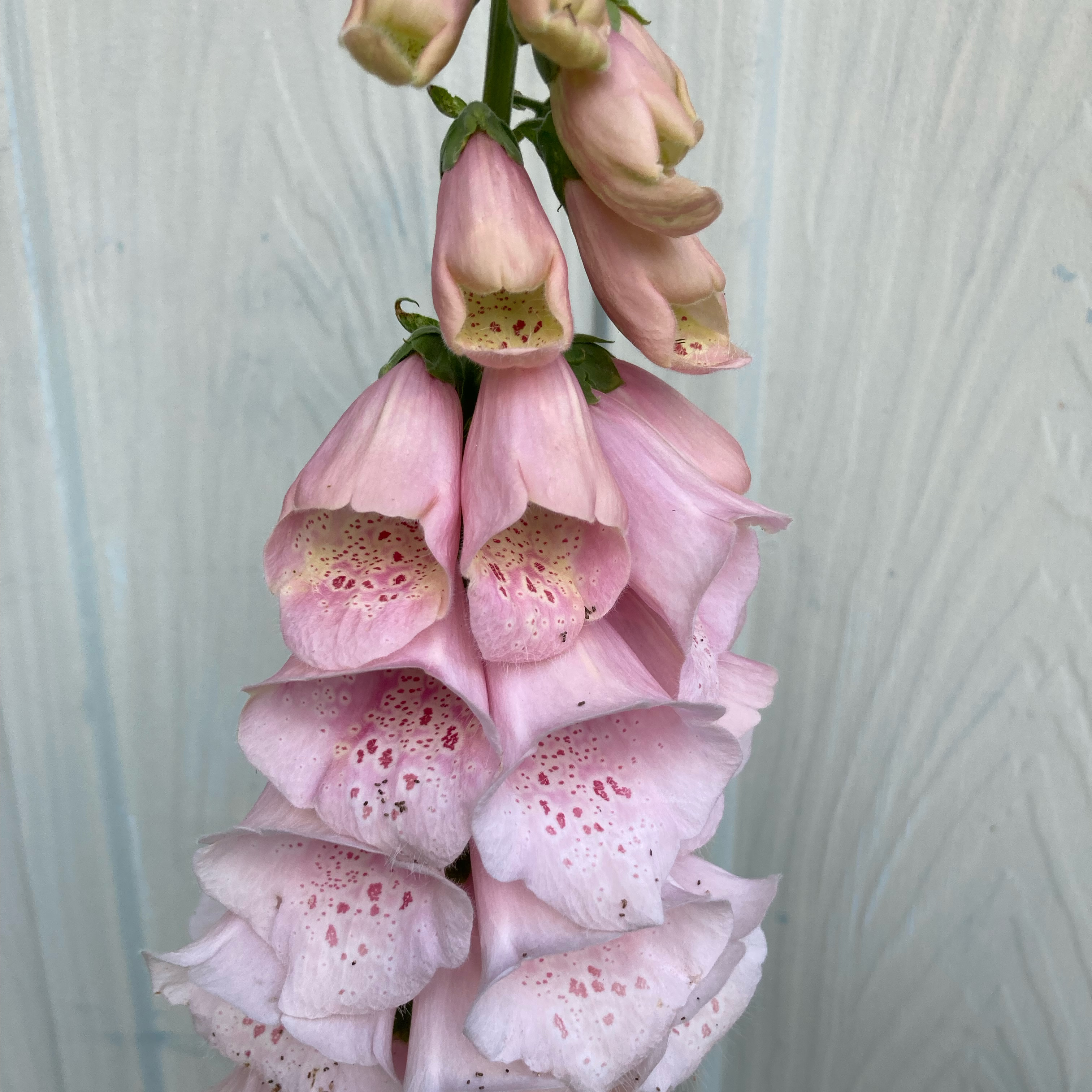
Common Foxglove

How to Prune Common Foxglove

Digitalis purpurea
Reviewed by Kiersten Rankel M.S.
Quick Answer
Cut the main flower spike down to the base after the flowers fade in early summer to encourage smaller secondary spikes on side branches. If you want the plant to self-seed, leave one spike to mature fully before cutting it. Foxglove is biennial and the flowering plant will die after setting seed, so removing spent plants after they finish is normal cleanup, not a loss.

When is the best time to prune?

Common Foxglove blooms in its second year, so pruning timing is tied to when it flowers in your region, typically late spring to early summer across zones 4–9.

US pruning regions map
Pacific
May–Jun
Mountain
Jun–Jul
Midwest
Jun–Jul
Northeast
Jun–Jul
Southeast
Apr–May
Stay on top of plant care
Get seasonal reminders for watering and fertilizing — personalized for your plants.
Try Greg Free

Why Should I Prune My Common Foxglove?

Foxglove is a biennial plant, which means it grows leaves in its first year and then flowers and dies in its second year. Understanding this life cycle changes how you approach pruning.

The main reason to deadhead is to get a second wave of smaller flower spikes. When the tall central spike finishes blooming, cutting it down near the base encourages the plant to push side branches with new flower buds. These are smaller than the main spike but extend your display by several weeks.

If you want foxglove to come back in your garden year after year, leave at least one spent flower spike on the plant and let it dry completely. The seed capsules will open and scatter thousands of tiny seeds. Collect them or let them fall where they are.

Once the plant has finished and is fully brown, cut the whole thing to the ground. New self-seeded rosettes will appear the following season and flower the year after. All parts of foxglove are toxic, so wash your hands after handling the plant.

Know Before You Cut

Difficulty Easy
Max removal Entire plant once it finishes its biennial cycle
Growth pattern Upright clumping
Tools Hand pruners or scissors

What Should I Remove?

Cut the main flower spike to the base after blooms fade
Leave one spike to self-seed if you want future plants
Remove the entire plant once it browns out after seeding
Wash hands after handling — all parts are toxic
Don't cut down all spikes before seeds form if you want self-seeding
Don't deadhead the first-year leaf rosettes — they're not ready to bloom
Don't expect the same plant to return next year — it is biennial

How Do I Prune Step by Step?

1
Wait for the main spike to finish blooming
The flowers open from the bottom of the spike upward. Once the topmost flowers have faded and the lower seed capsules are swelling, the spike is done.
2
Cut the main spike to the base
Cut the central flowering stem down to just above the basal leaves, about 2–3 inches from the ground. This redirects energy to the side branches that will produce smaller secondary spikes.
3
Allow secondary spikes to bloom
Small side branches will push out new flower buds over the next few weeks. Let these bloom normally.
4
Decide on self-seeding
Before cutting the final secondary spikes, decide if you want the plant to self-seed. If yes, leave one or two spikes to dry completely on the plant. The seed capsules turn brown and open on their own.
5
Remove the spent plant
Once the plant has finished and turned brown, cut it to the ground and dispose of it. Wear gloves and wash hands afterward, as foxglove is toxic to people and animals.

Got More Questions?

Will my foxglove come back next year if I deadhead it?
No. Foxglove is biennial: it flowers in its second year and then dies. Deadheading extends the current season's display but does not make the plant perennial. To have foxglove every year, let it self-seed or start new plants from seed each season.
Can I collect foxglove seeds?
Yes. Let the seed capsules dry on the plant until they turn brown and begin to split open. Collect them into a paper bag and store in a cool, dry place. Sow the following spring directly in the garden.
What if I cut down all the spikes before they seeded?
The plant will still die at the end of its second year, and without seed set you won't get new plants from self-seeding. You can still start new plants from purchased seed. No harm was done to this year's plant.
Is foxglove safe to handle when pruning?
All parts of foxglove are toxic if ingested, and the plant can cause skin irritation in sensitive people. Wear gloves when pruning and wash your hands thoroughly afterward. Keep children and pets away from cut material.
Stay on top of plant care
Get seasonal reminders for watering and fertilizing — personalized for your plants.
Try Greg Free

About This Article

Kiersten Rankel M.S.
Botanical Data Lead at Greg · Plant Scientist
About the Author
Kiersten Rankel holds an M.S. in Ecology & Evolutionary Biology from Tulane University. A certified Louisiana Master Naturalist, she has over a decade of experience in science communication, with research spanning corals, cypress trees, marsh grasses, and more. At Greg, she curates species data and verifies care recommendations against botanical research.
See Kiersten Rankel's full background on LinkedIn.
Editorial Process
Pruning guidance verified against Digitalis purpurea growth data from Greg's botanical database, cross-referenced with USDA hardiness zone data and published horticultural research.
812+ Greg users growing this plant
USDA hardiness zones 4a–9b
Grow plants with confidence