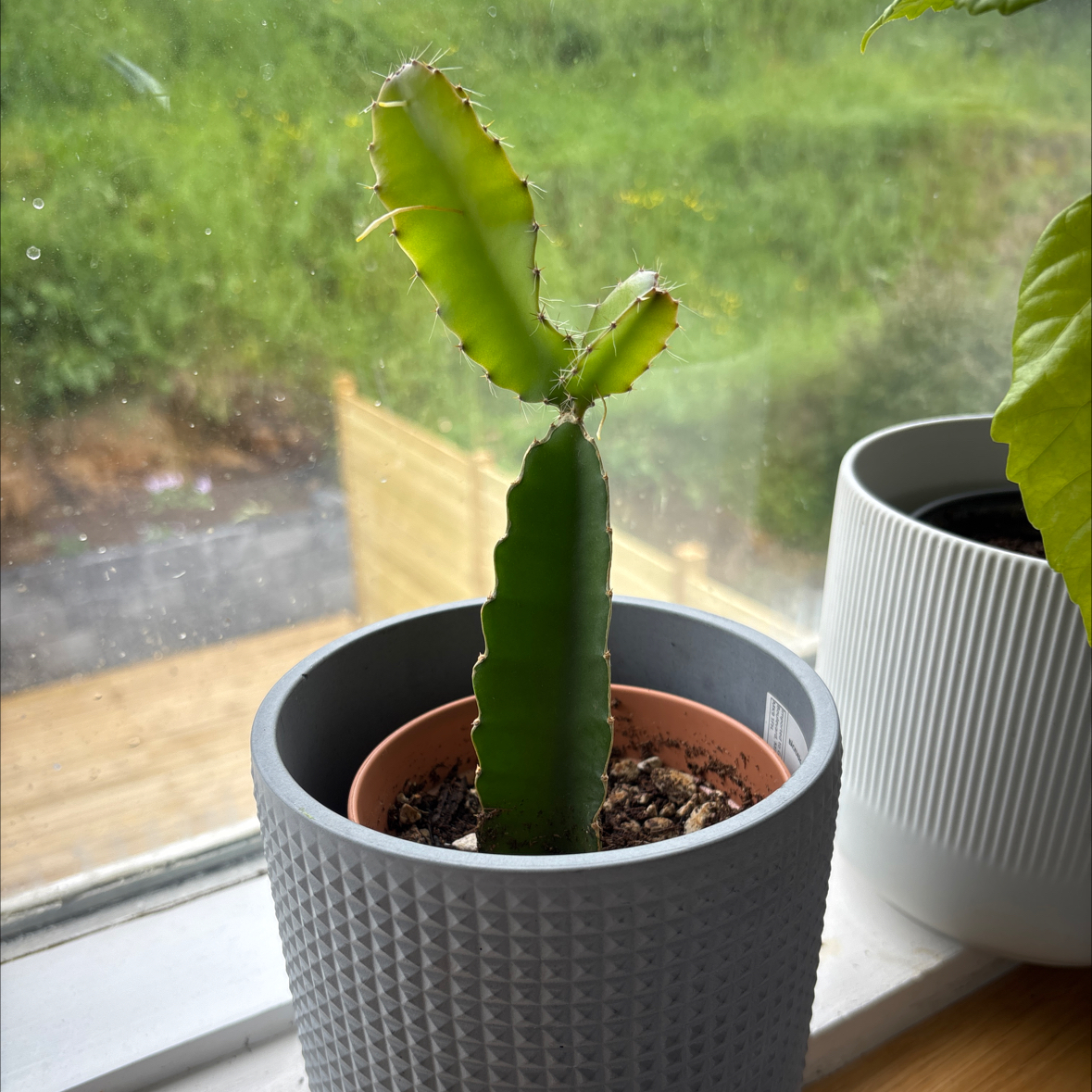
Dragonfruit

How to Prune Dragonfruit

Selenicereus undatus
Reviewed by Kiersten Rankel M.S.
Quick Answer
Prune Dragonfruit in spring through summer when the plant is actively growing and cuts heal quickly. Remove overcrowded stems, damaged sections, and any growth that makes the canopy too dense for air and light to reach through. Never remove more than a quarter of the cactus at once, as it relies on its succulent stems to store water and nutrients.

When is the best time to prune?

Dragonfruit is a tropical cactus that is best pruned during its active growing season in spring and summer, timed to its warm-climate zone requirements.

US pruning regions map
Pacific
Apr–Sep
Mountain
Not hardy outdoors
Midwest
Not hardy outdoors
Northeast
Not hardy outdoors
Southeast
Apr–Oct
Stay on top of plant care
Get seasonal reminders for watering and fertilizing — personalized for your plants.
Try Greg Free

Why Should I Prune My Dragonfruit?

Dragonfruit (Selenicereus undatus) is a vining cactus that can produce dozens of long, trailing stems. Without any pruning, the plant becomes a tangled mass that is difficult to manage and may produce fewer fruits because the center of the canopy gets too shaded.

The goal of pruning is to open up the plant so light and air can reach all parts of the canopy. Start by removing stems that are clearly crossing, crowding, or hanging so low they touch the ground. Cut stems back to the joint where they connect to a main branch, or to the top of the support structure if they have grown well past it.

Dragonfruit flowers on current-year growth, so light pruning after the harvest season, in late summer or fall in warm climates, can help stimulate new stem growth for the next season's fruit. Avoid major pruning just before the flowering period begins, as this removes the growth that will carry flowers.

Handle all pruning with thick gloves. The stems have small spines, and the plant produces a milky sap that can irritate skin.

Know Before You Cut

Difficulty Moderate
Max removal No more than 1/4 of stems at once
Growth pattern Climbing vining cactus
Tools Pruners or loppers, thick gloves

What Should I Remove?

Remove crossing or crowded stems that shade the center
Cut dead or shriveled stem sections back to healthy tissue
Trim stems that have grown past the support structure
Let cut ends callus for a day before any wet weather
Don't prune heavily just before the flowering season starts
Don't remove more than a quarter of stems in one session
Don't touch stems without thick gloves due to spines and sap

How Do I Prune Step by Step?

1
Put on thick gloves before starting
Dragonfruit stems have small spines and the plant produces an irritating sap. Heavy gloves protect your hands throughout the process.
2
Assess the canopy from a distance
Step back and look for stems that are clearly overcrowded, crossing each other, or hanging so low they could root into the soil. Identify these for removal before making any cuts.
3
Remove crowded or crossing stems
Cut these stems back to the joint where they meet a main branch or the support structure. Make clean, straight cuts. The exposed cut surface will callus over within a day or two.
4
Cut out dead or rotting sections
Shriveled, brown, or soft sections indicate dead or diseased tissue. Cut back to firm, healthy green tissue and allow the cut surface to dry before any rainfall.
5
Trim for length and balance
Shorten any stems that have grown well past the support or trellis. Cut at an angle just above a joint or segment division. This keeps the plant compact and the weight manageable.

Got More Questions?

When is the best time to prune Dragonfruit?
Spring through summer, during active growth. Avoid pruning heavily right before flowering, which typically begins in early summer in warm climates, as you will remove the stems that would carry flowers.
Will cutting a Dragonfruit stem kill the plant?
No. Dragonfruit is resilient and cut stems callus quickly. Just avoid cutting into older, woody sections that have no healthy green growth below the cut.
Can I grow new plants from the cuttings?
Yes. Allow the cut end to dry and callus for 2–3 days, then plant it a few inches deep in well-draining cactus mix. Cuttings root readily in warm, bright conditions.
My Dragonfruit isn't fruiting. Will pruning help?
It can. Thinning a dense canopy improves light and airflow, which supports better flowering and pollination. Make sure the plant has a proper support structure and adequate sun as well.
Stay on top of plant care
Get seasonal reminders for watering and fertilizing — personalized for your plants.
Try Greg Free

About This Article

Kiersten Rankel M.S.
Botanical Data Lead at Greg · Plant Scientist
About the Author
Kiersten Rankel holds an M.S. in Ecology & Evolutionary Biology from Tulane University. A certified Louisiana Master Naturalist, she has over a decade of experience in science communication, with research spanning corals, cypress trees, marsh grasses, and more. At Greg, she curates species data and verifies care recommendations against botanical research.
See Kiersten Rankel's full background on LinkedIn.
Editorial Process
Pruning guidance verified against Selenicereus undatus growth data from Greg's botanical database, cross-referenced with USDA hardiness zone data and published horticultural research.
2,339+ Greg users growing this plant
USDA hardiness zones 10a–11b
Grow plants with confidence