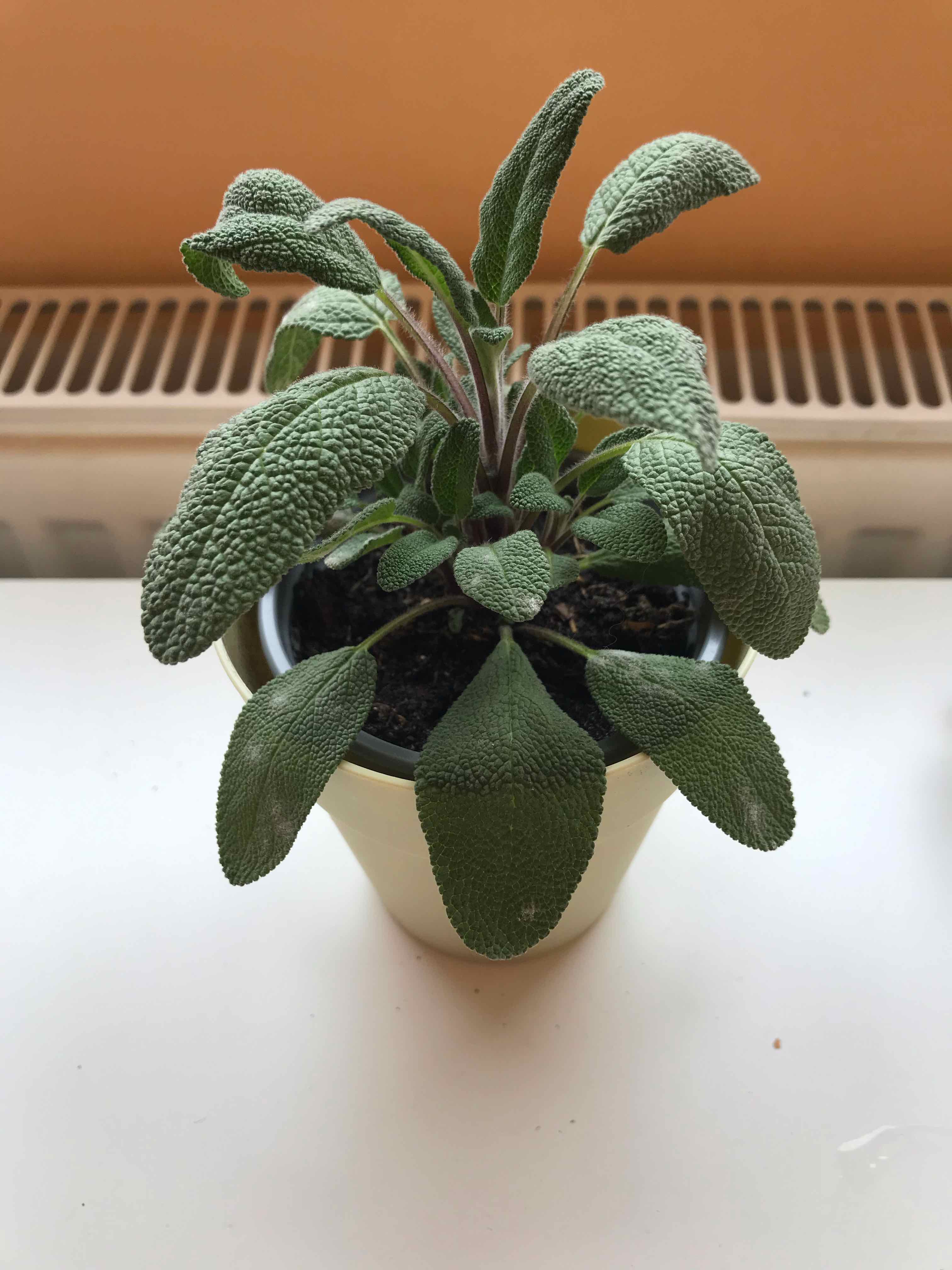
How to Prune Common Sage
When is the best time to prune?
Common Sage is cold-hardy in zones 4-9, so spring pruning timing shifts by several weeks between the cold Mountain region and the mild Pacific coast.


Why Should I Prune My Common Sage?
Common Sage forms a mounding, woody-based shrub that becomes increasingly woody and sprawling over time. Regular pruning keeps it compact, stimulates fresh growth with the best flavor, and extends the productive life of the plant considerably.
The key is pruning while there is still green growth to cut into. Sage stems have a limited ability to push new growth from old brown wood. Cut back by about a third in spring, just as new leaves are emerging, to encourage bushy new growth from further down the stem.
After the plant finishes its lavender-blue flowers in early summer, cut it back again by about a third. This post-flower trim prevents the plant from putting energy into seeds and triggers a new flush of flavorful leaves for summer harvesting.
If a plant has been neglected and is mostly woody with sparse foliage, it may be better to replace it rather than try to revive it. Attempting a hard rejuvenation cut on a very woody sage often results in dieback. Annual light trims from an early age prevent this.
Know Before You Cut
What Should I Remove?
How Do I Prune Step by Step?
Got More Questions?
About This Article
