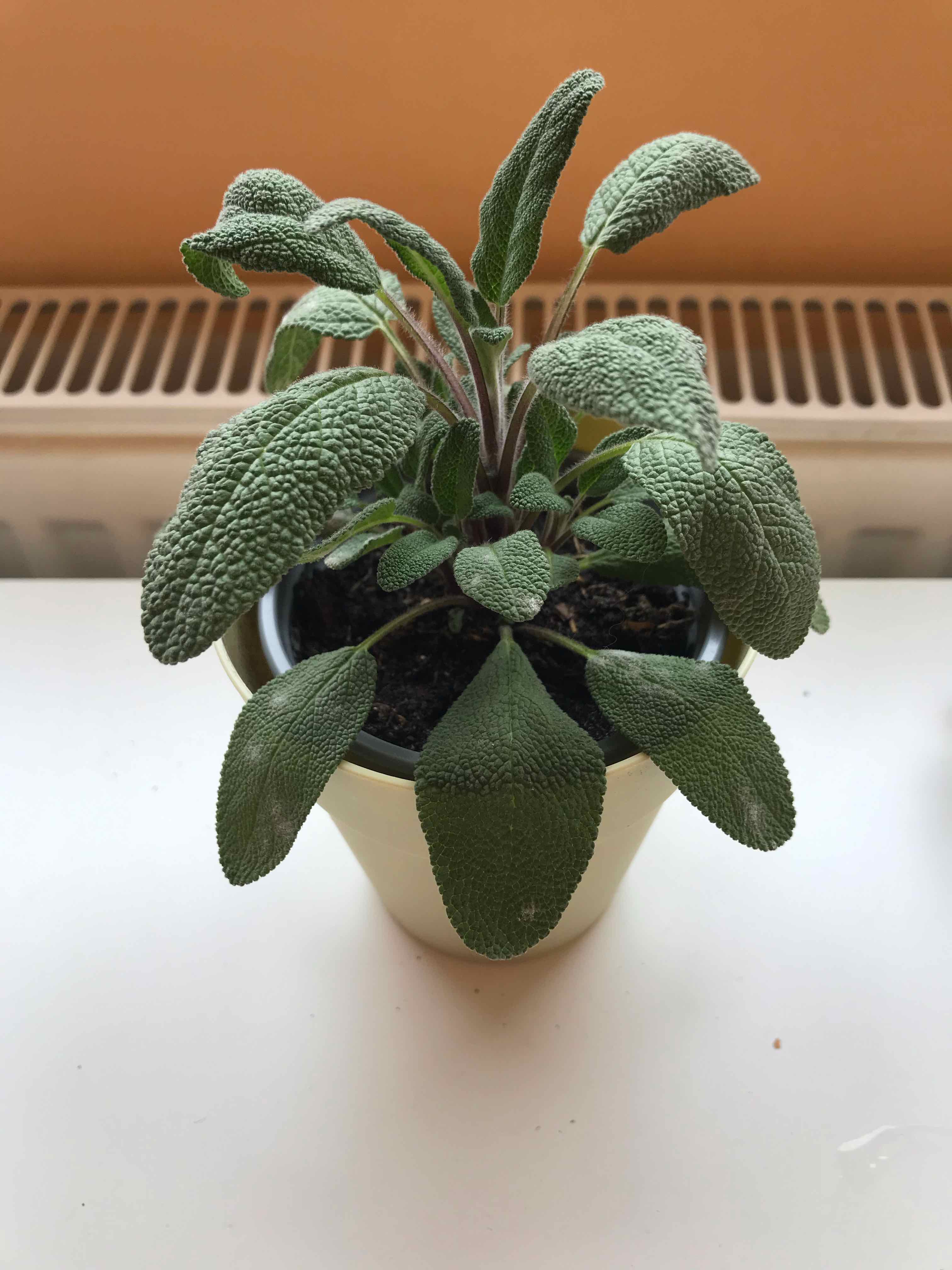
Common Sage

What's Eating Your Common Sage?

Salvia officinalis
Reviewed by Kiersten Rankel M.S.
Quick Answer

Common sage is one of the more pest-resistant herbs because its strong oils repel most insects and deer. The few real culprits are spider mites on heat-stressed container sage in dry summers, aphids clustering on tender spring growth, and slugs on young transplants before the woody base develops.

Stay on top of plant care
Get seasonal reminders for watering and fertilizing, personalized for your plants.
Try Greg Free

What does the damage look like?

Tap the closest match to jump straight to the fix.

Pests, ranked by impact

Spider mite infestation on a stem with fine silk webbing and pale speckled leaf damage

Spider mites

Damage
High
Removal
Moderate
What it looks like

Almost invisible without a hand lens. Yellow-green to red-brown specks on the underside of sage's silver felted leaves. The fuzz that gives sage its color also hides early colonies. Hot dry summer air and drought stress on container sage trigger population booms.

What the damage looks like

Tiny pale dots tiny pale dots the upper leaf surface, then dull bronze patches that spread across whole leaves. Fine webbing strung between leaves and along the square stems in heavy infestations. Stressed container sage can defoliate in 2 to 3 weeks once mites take hold.

How to get rid of them
Option 1

Shower the foliage weekly for 3 weeks

Take container sage to the shower or hose it down outside. Spray cool water on the underside of every leaf for 30 seconds. The felted leaf surface holds moisture briefly, which mites hate. Repeat weekly for 3 weeks. Skip this on in-ground sage in cool weather, the leaf fuzz takes a long time to dry and can hold humidity against the woody base.

Option 2

Neem oil at dusk, every 5 days for 3 rounds

1

Mix 2 tablespoons cold-pressed neem oil and 1 teaspoon dish soap per gallon of water.

2

Spray the underside of every leaf at dusk. Sage's felted leaves need a full coat to reach mites hiding in the fuzz.

3

Repeat every 5 days for 3 rounds. That covers the full egg-to-adult life cycle. Wait 24 hours after spraying before harvesting leaves for cooking, then rinse well.

Option 3

Move container sage out of reflected heat

Spider mites breed fastest on drought-stressed sage in 90F+ air. Move pots off hot patios and away from south-facing walls during heat waves. Water deeply at the base when the top inch of soil dries. Sage tolerates drought well, but baking heat plus dry roots is exactly the condition mites need to explode.

Dense colony of aphids clustered on a plant stem

Aphids

Damage
Medium
Removal
Easy
What it looks like

Tiny pear-shaped insects 1 to 3 mm long, in shades of green or black. Cluster on the soft new growth at the tips of square stems and on the underside of young silver-green leaves before they fully felt over. Spring flush is peak aphid season for sage.

What the damage looks like

New leaves curl, twist, and stay small as aphids drain sap from tender tips. A sticky shiny film coats the leaves below the cluster. Mature felted leaves lower on the woody base usually stay untouched because the fuzz makes feeding harder. Damage is mostly cosmetic on established plants.

How to get rid of them
Option 1

Strong water blast every 2 to 3 days for 2 weeks

Hold a hose nozzle 12 inches from the affected stem tips and spray at high pressure. Most aphids dislodge and don't make it back. Sage's woody base stands up to a hard rinse well. Repeat every 2 to 3 days for 2 weeks. The fastest fix and keeps the leaves food-safe.

Option 2

Insecticidal soap on the new growth, weekly for 2 weeks

Spray ready-to-use insecticidal soap (Safer Brand, ~$10) on the affected stem tips and the underside of young leaves at dusk. Avoid drenching the woody base. Rinse leaves with plain water 24 hours later before harvesting for cooking. Repeat weekly for 2 weeks.

Option 3

Pinch off the most heavily infested tips

If only a few stem tips are loaded with aphids, snip them off with clean shears and bag for trash. Sage's cut-and-come-again habit means new growth replaces the lost tips within 2 to 3 weeks. The woody base never minds being pruned.

Large red-brown slug (Arion rufus) crawling on a rhubarb leaf

Slugs

Damage
Medium
Removal
Easy
What it looks like

Soft brown or gray mollusks 1 to 4 inches long. Hide under mulch, pots, and stones during the day. Active at night and after rain. Mainly target young sage transplants and tender new shoots before the woody base develops. Established plants with mature pubescent leaves are usually skipped.

What the damage looks like

Ragged irregular holes chewed through young leaves overnight. Silver dried slime trails on stems, the soil surface, and pot rims confirm slugs over caterpillars. Whole young transplants can be reduced to stubs in one wet night. Mature felted leaves on woody plants stay untouched.

How to get rid of them
Option 1

Iron phosphate slug bait around new transplants

Scatter a thin ring of iron phosphate pellets (Sluggo or Monterey Sluggo Plus, ~$15) on the soil surface 6 inches out from each young sage plant. Reapply after heavy rain. Iron phosphate is safe around pets, kids, and pollinators, and breaks down into fertilizer. Stop once the plants form a woody base, mature sage rarely needs ongoing protection.

Option 2

Beer trap among young plants for 2 weeks

1

Sink a small jar or yogurt cup into the soil so the rim sits flush with the surface, within 12 inches of the affected plants.

2

Fill halfway with cheap beer at dusk. Slugs are drawn in and drown overnight.

3

Empty and refill every 2 to 3 days for 2 weeks. By then the new transplants have firmed up enough to be unappealing.

Option 3

Pull mulch back from the woody base

Slugs hide under thick wet mulch during the day. Pull mulch back 6 inches from each sage plant so the woody base sits on bare soil. Sage prefers a dry root zone anyway and the bare ring also reduces fungal pressure on the stems. The barrier alone solves most slug problems on established plantings.

Stay ahead of all of them

Three habits that keep common sage's already-low pest pressure even lower.
1

Spring-flush check, every Sunday in April and May

Aphids cluster on tender new growth at the tips of square stems before the leaves fully felt over. A weekly 30-second scan of the new shoots through spring flush catches colonies while a quick water blast still solves them.

2

Hard prune in early spring

Cut sage back by a third in early spring before new growth pushes. The hard prune renews the plant, removes overwintering pest hiding spots in the woody base, and produces a flush of vigorous oil-rich leaves that resist pests better than tired old wood.

3

Water at the base, never on the leaves

Sage's pubescent leaves hold moisture and invite spider mites and powdery mildew if they stay wet overnight. Water deeply at the soil line when the top inch of soil dries. The dry leaf surface is one of sage's biggest pest defenses.

4

Skip the deer fence, sage's oils handle that one

Common sage is reliably deer-resistant. The same volatile oils that flavor the leaves smell off-putting to deer and rabbits. Plant sage along bed edges and near roses or hostas. The strong scent helps mask more vulnerable plants nearby.

Stay on top of plant care
Get seasonal reminders for watering and fertilizing, personalized for your plants.
Try Greg Free

About This Article

Kiersten Rankel M.S.
Botanical Data Lead at Greg · Plant Scientist
About the Author
Kiersten Rankel holds an M.S. in Ecology & Evolutionary Biology from Tulane University. A certified Louisiana Master Naturalist, she has over a decade of experience in science communication, with research spanning corals, cypress trees, marsh grasses, and more. At Greg, she curates species data and verifies care recommendations against botanical research.
See Kiersten Rankel's full background on LinkedIn.
Editorial Process
Pest identification and treatment guidance verified against Salvia officinalis field reports from Greg's botanical database, cross-referenced with university extension sources and published horticultural research.