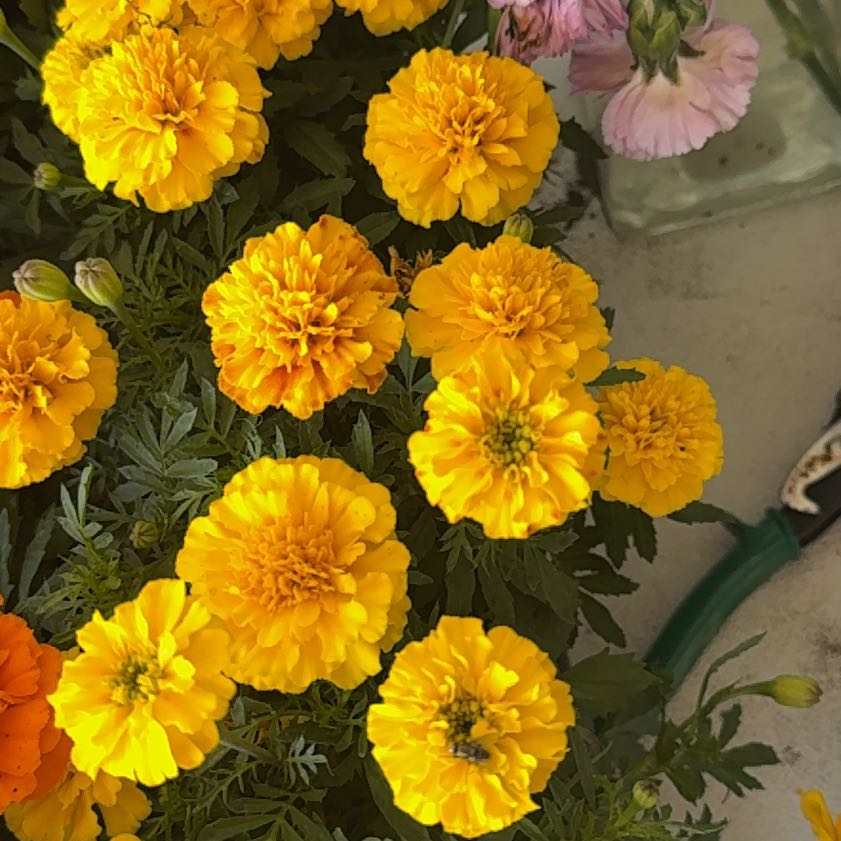
African Marigold

How to Prune African Marigold

Tagetes erecta
Reviewed by Kiersten Rankel M.S.
Quick Answer
Deadhead African Marigolds throughout the growing season, from planting time through late summer, to keep them blooming. Remove spent flower heads back to the nearest set of leaves or side bud. Never remove more than a third of the plant at once, and pinch back leggy stems early in the season to encourage a bushier shape.

When is the best time to prune?

Pruning timing for African Marigold follows the frost-free growing season, which starts earlier in warm southern regions and later in cooler northern zones.

US pruning regions map
Pacific
Mar–Oct
Mountain
Jun–Sep
Midwest
May–Sep
Northeast
May–Sep
Southeast
Mar–Nov
Stay on top of plant care
Get seasonal reminders for watering and fertilizing — personalized for your plants.
Try Greg Free

Why Should I Prune My African Marigold?

African Marigolds bloom best when you remove their spent flowers regularly. Once a bloom fades, the plant shifts energy toward making seeds. Deadheading redirects that energy back into making new flowers, so you get a much longer display from the same plant.

Beyond deadheading, a light pinch early in the season pays off later. When plants are about 6 inches tall, pinch the growing tip off each stem. This encourages the plant to branch out rather than grow tall and floppy, giving you a fuller, sturdier plant with more blooms.

Late in the season, if plants look exhausted and stems have become woody, you can cut the whole plant back by about a third. This sometimes triggers a fresh flush of growth and flowers before the first frost ends the season.

Avoid removing large amounts of foliage at once. African Marigolds are annuals and do not have the reserves of a perennial shrub, so heavy pruning mid-season can set them back more than it helps.

Know Before You Cut

Difficulty Easy
Max removal 1/3 of plant at once
Growth pattern Clumping annual
Tools Pruners or fingers

What Should I Remove?

Remove spent blooms as soon as petals fade
Pinch growing tips when seedlings reach 6 inches
Cut back leggy stems to a leaf node or side bud
Clear fallen petals to reduce disease pressure
Don't wait until seed heads form to deadhead
Don't remove more than a third of the plant at once
Don't prune when plants show signs of disease without disinfecting tools first

How Do I Prune Step by Step?

1
Pinch new transplants early
When plants reach about 6 inches tall, pinch off the topmost growing tip just above a set of leaves. This one cut encourages multiple side stems to develop, giving you a bushier plant.
2
Deadhead spent blooms throughout the season
Snap or snip the flower stem back to the nearest set of leaves or a visible side bud. Do this every week or two as flowers fade. Regular removal is more effective than waiting and doing it all at once.
3
Cut back leggy stems mid-season
If a stem has grown long with few leaves, cut it back by half to a healthy set of leaves. New growth will emerge from just below the cut.
4
Do a late-season rejuvenation cut if needed
In late summer, if the whole plant looks tired and blocky, cut all stems back by about a third. Water well after and the plant may push a final flush of blooms before frost.
5
Clean up at season's end
Pull or cut the entire plant after the first frost kills it. Compost healthy material but bag and discard any plants that showed disease during the season.

Got More Questions?

Can I prune African Marigolds in the heat of summer?
Yes. Unlike some plants, African Marigolds benefit from pruning throughout the entire growing season. Deadheading in midsummer heat is fine and will keep blooms coming.
What if I forget to deadhead and the plant sets seed?
Remove the seed heads and cut the stem back to a leaf node. The plant will usually push new flower buds, though it may take a couple of weeks to recover the flush of blooms.
Can I save seeds from African Marigolds?
Yes. Let a few of the last blooms of the season dry fully on the plant, then collect the seeds. Just know that hybrid varieties may not grow true to the parent plant from saved seed.
My plant is getting very tall and floppy. What should I do?
Cut the tallest stems back by about a third to a set of leaves. Staking with a bamboo cane can also help support the plant while new side growth fills in.
Stay on top of plant care
Get seasonal reminders for watering and fertilizing — personalized for your plants.
Try Greg Free

About This Article

Kiersten Rankel M.S.
Botanical Data Lead at Greg · Plant Scientist
About the Author
Kiersten Rankel holds an M.S. in Ecology & Evolutionary Biology from Tulane University. A certified Louisiana Master Naturalist, she has over a decade of experience in science communication, with research spanning corals, cypress trees, marsh grasses, and more. At Greg, she curates species data and verifies care recommendations against botanical research.
See Kiersten Rankel's full background on LinkedIn.
Editorial Process
Pruning guidance verified against Tagetes erecta growth data from Greg's botanical database, cross-referenced with USDA hardiness zone data and published horticultural research.
5,808+ Greg users growing this plant
USDA hardiness zones 2a–11b
Grow plants with confidence