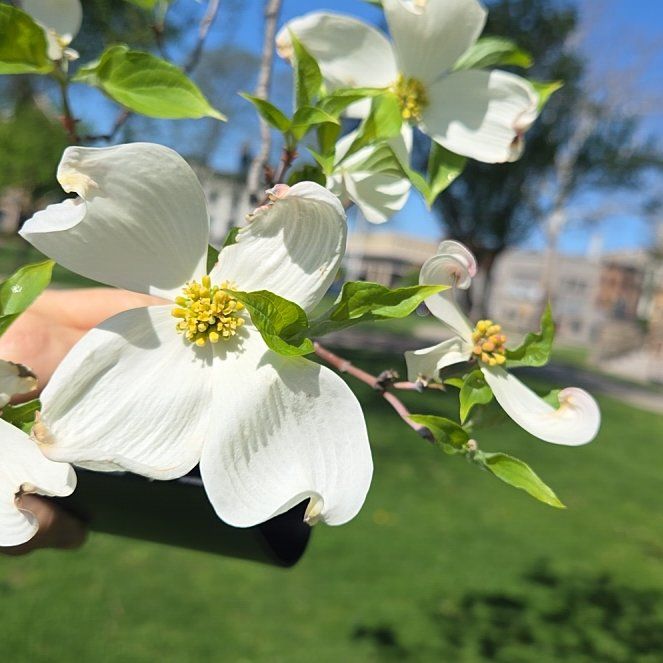
How to Plant a Dogwood
Plant a Dogwood in early spring or fall, in a hole twice as wide as the root ball but no deeper. The root flare must sit at or just above the soil line, since burying it is the leading cause of slow tree decline. Choose a spot with morning sun and afternoon shade, in acidic well-drained soil. A mature tree reaches 15 to 25 feet tall and wide within ten years.

When and where to plant
Dogwoods are understory trees in the wild. They want four to six hours of dappled or morning sun, with shade through the hottest part of the afternoon. Planting in full hot sun stresses the tree every summer and often leads to scorched leaves and dieback.
The two best windows are early spring after the soil thaws but before bud break, and early fall once daytime highs drop below 80 degrees Fahrenheit. Both give the roots two to three months to settle before the tree is asked to push leaves or weather a freeze. Avoid summer planting since heat compounds transplant shock.
Soil should be slightly acidic, pH 5.5 to 6.5, and well-drained. Plant at least 15 feet from any structure or other large tree, since a mature Dogwood reaches 15 to 25 feet wide. Avoid spots where water pools after rain, since standing water rots the shallow root system.
Planting a container-grown Dogwood
Most Dogwoods come home from the garden center in a one-, three-, or seven-gallon pot. The single most important rule when planting is depth. The root flare, where the trunk widens into the roots, must sit at or just above the finished soil line. Trees buried below the flare slowly suffocate and rarely show signs for two to five years. Inspect the nursery pot before you buy and walk away from any tree where the flare is already covered with soil.
-
1Dig wide, not deep Dig a hole twice as wide as the root ball, but only as deep as the root ball is tall. A wide saucer-shaped hole encourages lateral roots to spread into the native soil instead of circling. Loosen the sides of the hole so new roots push outward easily.
-
2Find the root flare and set the depth Tip the tree out of the pot and brush soil off the top of the root ball until you see the trunk widen into the roots. The flare must end up at or just above the finished soil line. Measure hole depth against the flare, not the top of the pot's soil, since nurseries often bury the flare an inch or two during potting.
-
3Score the root ball Use a sharp knife or your fingers to make three or four vertical slices down the sides of the root ball, an inch deep. This severs any roots that have begun circling inside the pot and forces them to grow outward into the surrounding native soil.
-
4Backfill with native soil Fill in with the soil you dug out, not bagged amendments. Press lightly with your hands as you go to settle air pockets without compacting. Build a low rim of soil at the outer edge of the hole to hold water on the root ball for the first season.
-
5Water deeply and mulch in a doughnut Soak the root ball until water pools and slowly drains. Spread a two to three inch layer of bark or shredded leaf mulch in a doughnut shape around the tree. Never pile mulch against the trunk, since the moist bark rots and invites borer damage.
The first year
A newly planted Dogwood spends its first year putting almost all its energy into roots, not leaves. You may see fewer or smaller leaves than the tree had at the nursery. That is normal and means the tree is investing where it should.
Watering is the only thing you control that really matters in year one. The tree cannot yet pull moisture from the surrounding soil and relies on what falls within the root ball footprint. Plan for one inch of water per week from rain or hand-watering, more in summer heat.
Hold off on fertilizer for the entire first year. Established Dogwoods rarely need fertilizer at all, and pushing leaf growth at the expense of roots stunts the tree long-term. Year two onward, an inch of compost spread under the canopy in spring is usually enough.
What can go wrong
-
Buried root flare
The trunk goes straight down into the soil with no visible widening at the base. Either the nursery planted it too deep in the pot, or you set the root ball too low in the hole. Carefully scoop soil away from the trunk in a wide circle until the flare is exposed. Buried trees rarely recover after year three, so catch this early. -
Mulch piled against the trunk
A volcano of mulch covers the lower bark and traps moisture against the trunk. The bark rots over time, opening the way for borer insects and disease. Pull the mulch back to a doughnut shape, leaving two to three inches of bare soil around the trunk. The damaged bark heals in if you catch it within the first year. -
Wilting and dieback at branch tips
Drought stress in year one. The tree could not pull moisture from outside its original root ball, so the most distant branches starved first. Soak deeply once a week through dry stretches and continue into year two. New growth comes in below the dead tips once watering catches up. -
Scorched, browning leaves in summer
Too much hot afternoon sun for an understory tree. The leaves cannot transpire fast enough to cool themselves. Provide afternoon shade if possible, even temporarily with a shade cloth on a frame. Long-term fix is to plant the next one in a shadier spot, since the tree will only stress more as summers get hotter. -
Stunted in heavy clay
The tree sits in standing water after rain and roots suffocate. New growth is pale and small, leaves yellow early. If caught in the first season, dig the tree up and replant in a low mound 8 to 12 inches above grade. Do not add sand to clay, which sets like concrete, but mix in coarse organic matter and grit. -
Trunk damage from mower or string trimmer
A ring of nicks or torn bark around the lower trunk where a mower or trimmer has been working. Young Dogwood bark is thin and damages easily. The wound invites borers and disease into the trunk. Surround the tree with mulch out to three feet so no grass needs cutting near the trunk, and protect with a plastic tree guard for the first few years.
About This Article
