How to Plant a Hedge Apple
Plant Hedge Apple, also known as Osage Orange or bois d'arc, in early spring or fall in full sun with the root flare at or just above the soil surface. Dig a hole twice as wide as the root ball but no deeper. Set a single tree at least 30 feet from buildings and pavement. Water deeply once a week through the first year. The tree is hardy from zones 4 through 9 and settles in within two seasons.

When and where to plant
Hedge Apple, also sold as Osage Orange or bois d'arc, is one of the toughest shade trees in North America. The plant is hardy from zone 4 through zone 9, handles drought, poor soil, ice storms, and high wind once it is settled in. Pick the planting site with the mature tree in mind, not the small whip in your hand.
Give the tree full sun, six or more hours of direct light a day. Hedge Apple grows in almost any soil from heavy clay to sandy loam and tolerates a wide pH range, so the bigger concern at the site is drainage, not fertility. Avoid spots where water stands for more than a day after rain.
The single biggest siting mistake is underestimating mature spread. A full-grown tree reaches 30 to 40 feet tall and almost as wide, with a deep dense root system. Plant at least 30 feet from buildings, driveways, septic lines, and overhead wires. For a hedgerow or windbreak, space trees 8 to 12 feet apart in the row.
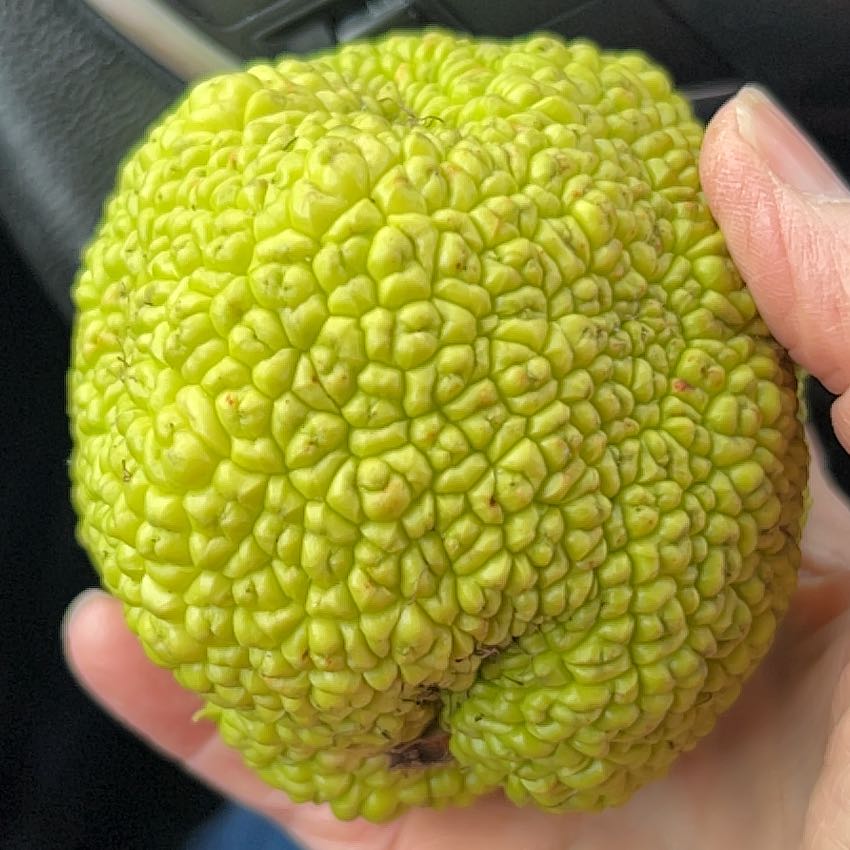
One honest note before you commit. Female trees drop softball-sized, inedible fruits, sometimes called hedge apples, horse apples, or monkey balls, every fall. The fruits are messy on lawns and driveways but harmless. If fruit drop matters, source a male tree from a nursery, since solitary males stay fruitless.
Planting a container-grown tree
The single most important rule for any tree, Hedge Apple included, is the root flare. The flare is the slight widening where the trunk transitions into the surface roots, and it must sit at or just above the finished soil level. Trees buried below the flare slowly suffocate over two to five years, often without any obvious early warning until the canopy starts to thin.
-
1Pick a cool planting day Aim for early spring after the last hard frost, or early fall about six weeks before your first hard freeze. Cool overcast weather gives the new roots time to settle before summer heat or winter cold tests them. Hot dry days pull moisture out of fresh foliage faster than disturbed roots can replace it.
-
2Dig the hole twice as wide Measure the root ball, then dig a hole twice as wide and the same depth, no deeper. The wide hole loosens soil so new roots can push out laterally into the native ground rather than circling. In heavy clay, rough up the sides of the hole with the shovel so the interface does not glaze over and trap water.
-
3Find and set the root flare Brush soil away from the top of the root ball with your fingers until you see the trunk widen into the major surface roots. Position the tree so the flare sits at or just above your finished soil level, even if that means the top of the root ball ends up an inch proud of the surrounding ground. Buried flares are the most common reason a young tree quietly fails years later.
-
4Backfill with native soil, water in Hold the tree upright as you backfill with the same soil you removed, firming gently with your foot to remove large air pockets. Skip the soil amendments. Rich backfill discourages roots from leaving the planting hole. Water slowly until the soil settles, then top off any sunken areas with more native soil.
-
5Mulch and stake only if needed Spread two to three inches of mulch in a ring out to the edge of the canopy, keeping the mulch at least four inches back from the trunk. Mulch piled against the bark holds moisture against living wood and invites rot. Most Hedge Apples do not need staking. Stake only on windy sites, with the ties loose enough that the trunk can flex, and remove the stakes after one growing season.
Planting a bareroot whip or seedling
Bareroot whips are the historical hedgerow method, the same way settlers planted thousands of miles of living fence across the Great Plains before barbed wire. The critical rule with bareroot stock is moisture. The roots have no soil around them, so even a few hours in open air can kill the fine feeder roots that drive establishment. Soak before planting and get the whip in the ground the same day it comes out of cold storage.
-
1Soak the roots before planting Submerge the bare roots in a bucket of cool water for one to two hours right before you plant, and never longer than overnight. Soaking rehydrates the fine feeder roots that have been in cold storage. If the roots have been exposed to sun or wind for more than half an hour on the way home, cut that air time into the soak and recheck for any dried-out tips.
-
2Dig a hole as deep as the longest root Make the hole deep enough that the longest root hangs straight down without curling at the bottom, and wide enough that the side roots fan out naturally. A common mistake is digging too shallow and J-rooting the tree, which sets up a weak anchor and slow establishment. If a root is too long for the hole, prune the tip cleanly rather than bending it.
-
3Set the whip at the original soil line Look at the trunk for a faint color change where the bark transitions from above-ground to below-ground. Set the whip so that line sits at your finished soil level, not deeper. Burying the trunk above the original line invites collar rot and the same slow decline you see with a buried root flare on a container tree.
-
4Backfill and firm gently Hold the whip upright while you work native soil down around the roots, pausing to firm each layer with your fingers so the soil makes contact with the root surfaces. Add a quart of water partway through to settle the soil around the lower roots, then finish backfilling. Skip rich amendments and skip fertilizer at planting.
-
5Protect the whip from deer and rabbits A bare Hedge Apple whip is easy browse for deer, and rabbits will girdle a young stem at the snow line. Slide a four-foot mesh tree tube or a wire cylinder over the whip the same day you plant. Leave the protection in place for at least two full growing seasons, until the trunk thickens past pencil width and develops the thorny side branches the species is known for.
The first year
The first year for a newly planted Hedge Apple is almost entirely an underground story. The plant is moving energy from top growth into pushing roots deep and wide into the native soil, building the anchor and foraging system that supports the next century of growth. You should not expect much visible top change in the first months.
The most common new-grower mistake is reading slow above-ground growth as a sign of trouble and overcompensating with extra water or fertilizer. Both can backfire. Soggy soil invites root rot in the only setting this drought-tolerant species cannot handle, and fertilizer pushes leafy growth that the young root system cannot yet support. Stick to one deep watering per week through the first year and skip the fertilizer entirely.
Healthy first-year growth looks like a clean leaf-out in spring, steady green color through summer with maybe a small flush of new tip growth in early summer, and a fully leafed canopy with no significant browning at the end of the season.
What can go wrong
-
Buried root flare (slow decline)
If the flare disappeared into the planting hole or under mulch piled against the trunk, the tree is slowly suffocating. Gently excavate the area around the trunk with your hands until you can see the trunk widening into roots, then pull soil and mulch back from that point out to the dripline. Caught within the first year, recovery is usually complete. Caught after several years of canopy thinning, the decline is often too far along to reverse. -
Bareroot whip leafing out late or not at all
Dried-out roots between cold storage and planting are the most likely cause. Scratch a small patch of bark with your thumbnail. Green tissue underneath means the whip is alive and just slow, so keep watering and give it the full season. Brown dry tissue under the bark means the whip did not survive transport. Replace it next dormant season and soak the roots longer this time before planting. -
Wilting and leaf scorch in the first summer
Drought stress shows up as crispy brown leaf edges and wilting on the hottest afternoons, especially in clay or shallow rocky soil where roots have not yet reached deep moisture. Water deeply at the base once a week, soaking the full root zone rather than sprinkling the surface. Refresh the mulch ring to two or three inches deep to slow evaporation. Established trees are exceptionally drought tolerant, but year one is the exception. -
Suckers shooting up around the base
Hedge Apple is famous for suckering, especially when the root system is disturbed at planting. Suckers are stems pushing up from the surface roots a foot or more from the trunk. Cut them off at ground level with sharp pruners as soon as you see them. Pulling them by hand often tears the surface root, which then pushes even more suckers in response. -
Mushy roots from waterlogged soil
Heavy clay or a low planting spot can pond water and starve roots of oxygen, leading to root rot in the only condition this otherwise tough species cannot handle. Lift the tree if the ground stays saturated for more than a day after rain, and replant on a six-inch mound or move to a better-drained site. Going forward, water based on whether the soil feels dry an inch down rather than on a fixed schedule. -
Deer browse or rabbit girdling on a young whip
Deer strip the tender top growth from unprotected whips, and rabbits chew a ring of bark off at the snow line during winter, which kills everything above the chewed band. A four-foot mesh tube or hardware-cloth cylinder around the whip stops both. Leave the protection up through at least two full growing seasons, until the trunk thickens past pencil width and the species's thorny side branches develop their own defense. -
Worry about the big inedible fruits
Female Hedge Apples drop softball-sized, lumpy green fruits every fall. The fruits are not toxic to people or pets but are bitter, latex-filled, and not worth eating, and they leave a sticky mess on lawns and driveways. If fruit drop is a concern, source a male tree, since solitary males never set fruit. Rake or mow fallen fruits before they soften, and compost them well away from foot traffic. -
Sluggish first-year growth in cold zones
In zones 4 and 5, expect very little above-ground growth in the first year. Cold soil delays root activity, and the tree puts what energy it has into building winter hardiness. As long as the leaves stay green through summer and you do not see dieback, the tree is doing what it should. Visible top growth picks up in year two and accelerates noticeably in year three.
About This Article
