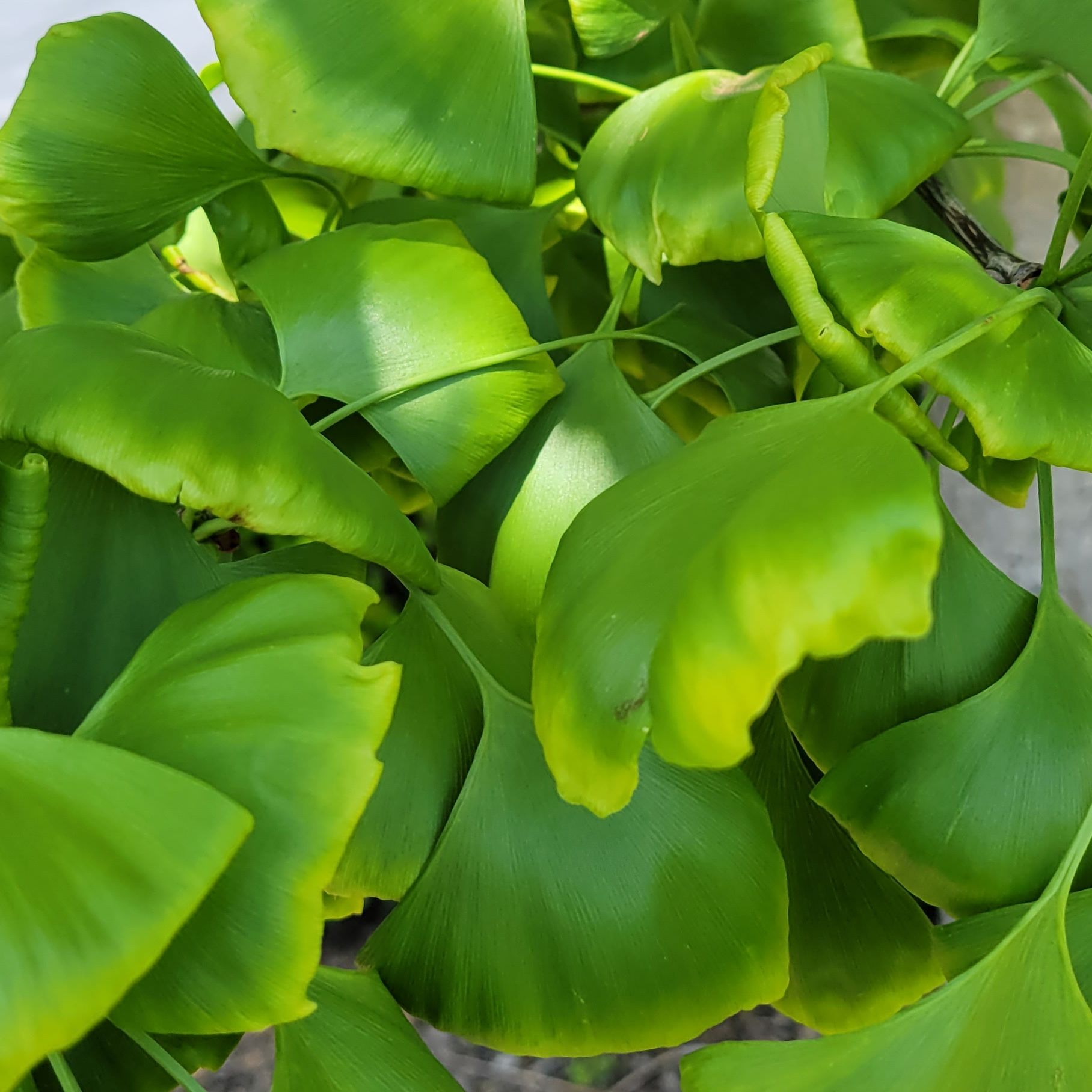
How to Plant a Ginkgo Biloba
Plant Ginkgo biloba in spring or fall in full sun with well-drained soil, the root flare sitting at or just above the soil surface. Dig a hole twice as wide as the root ball but no deeper. Always plant a named male clone like Autumn Gold or Princeton Sentry, because female trees drop foul-smelling seeds. Water deeply once a week through the first year. Expect slow steady growth and the signature gold fall color by year two.

When and where to plant
Ginkgo biloba is hardy in zones 3 through 8 and grows best in full sun, six or more hours of direct light each day. The tree tolerates urban air, road salt, and compacted city ground better than almost any other shade tree, which is why it lines so many streets. Light shade is fine but reduces the brilliance of the fall color show.
Plant in spring once the ground has thawed and warmed, or in early fall about six weeks before your first hard freeze. Either window gives the roots time to settle before the next stress season. The site needs well-drained soil. Heavy clay holds water and rots the roots of a young tree, so on poorly drained ground plant on a slight mound. Ginkgo handles a wide range of soil pH from acidic to slightly alkaline and does not need amendments for most yards.
Give Ginkgo room. A mature tree reaches 50 to 80 feet tall and 30 to 40 feet wide over many decades, so plant at least 20 feet from buildings, driveways, and overhead power lines. Roots are deep and well-behaved, but the canopy needs the sky.
Planting a container-grown tree
Two rules matter most for a young Ginkgo. The root flare, where the trunk widens into the surface roots, must sit at or just above the finished soil level, because trees buried below the flare slowly suffocate over two to five years. The second rule is to buy a named male clone like Autumn Gold, Princeton Sentry, or The President. Female Ginkgos produce seeds with a fleshy outer coat that smells like rancid butter when it falls and rots on the lawn, and a seed-grown tree is a coin flip on sex you will not know the answer to for twenty years.
-
1Pick a planting day and a male clone Aim for a cool, overcast day in spring after the last hard frost or in early fall about six weeks before your first hard freeze. Confirm the nursery tag names a male clone such as Autumn Gold, Princeton Sentry, The President, or Magyar. A tree sold as just Ginkgo biloba without a clone name is a gamble, and the cost of a female showing up at year twenty is having to remove the tree.
-
2Dig the hole twice as wide Measure the root ball, then dig a hole twice as wide and the same depth, not deeper. A wide saucer-shaped hole loosens the soil so new roots can push out laterally into native ground. Skipping the width is the most common reason a young Ginkgo struggles in clay or compacted urban soil.
-
3Find and set the root flare The root flare is the gentle trunk widening where the wood transitions into the major surface roots. Brush soil off the top of the root ball with your fingers until you can see this flare clearly, then position the tree so the flare sits at or just above your finished soil level. Trees buried below the flare suffocate slowly and often show no obvious sign until they decline two to five years later.
-
4Score the roots if they are circling Slide the tree out of the container and look at the sides of the root ball. If you see roots wrapping around in a tight spiral, use a clean knife to make three or four shallow vertical cuts down the sides, about half an inch deep. Scoring tells the roots to branch outward instead of continuing the circle, which they sometimes never break out of on their own.
-
5Backfill, water in, and mulch Hold the tree upright as you backfill with the same native soil you dug out, firming gently to remove large air pockets. Water the planting hole slowly until the soil settles, then top with two to three inches of mulch in a ring out to the edge of the canopy, keeping the mulch four inches back from the trunk. Mulch piled against the bark traps moisture against living wood and undoes the root flare work you just did.
The first year
The first year for a newly planted Ginkgo is mostly an underground story. The tree is moving energy away from top growth into pushing roots out into the native soil, building the foundation that supports the next 50 to 1000 years of slow steady growth. You should not expect much visible size change on top during this period, and that is normal.
The most common new-grower mistake is reading slow above-ground growth as a sign of trouble and overcompensating with extra water or fertilizer. Both can cause real problems. Soggy roots invite rot in the young tree's most vulnerable season, and fertilizer pushes weak leafy growth before the root system can support it. Stick to deep weekly watering and skip the fertilizer entirely for the first year.
A healthy first-year Ginkgo holds clean fan-shaped green leaves through summer, drops them in a sudden golden carpet over a few days in mid to late fall, and adds only a few inches of new shoot growth. Visible size change picks up from year three onward.
What can go wrong
-
Buried root flare (slow decline)
If the flare disappeared into the planting hole or under added mulch, the tree is slowly suffocating. Gently excavate around the trunk with your hands until you can see the trunk widening into roots, then pull soil and mulch back from that point. Caught within the first year, recovery is usually full. Caught after several years, the decline is often too far along to reverse and the tree never thrives. -
Stinky fallen seeds in fall
The tree turned out to be female. The fleshy seed coat smells like rancid butter or vomit when it rots on the ground, and there is no way to stop the seed drop on a mature female. The honest fix is to remove the tree and replant a named male clone, since female Ginkgos produce more seed each year as they age. Sex cannot be confirmed by leaf shape, so always start from a named male clone if you want to avoid this. -
Wilting or scorched leaves after planting
Transplant shock from heat or wind drying the foliage faster than the new roots can rehydrate it is the usual cause. Check that the root ball is staying moist, not soaked. Water deeply at the base of the trunk and avoid wetting the foliage during the hottest part of the day. Established Ginkgos shrug off heat and drought, but a first-year tree still needs steady moisture for the root ball to keep up. -
Mushy roots from waterlogged soil
Heavy clay or a low planting spot collects water and starves roots of oxygen, leading to rot in the most vulnerable year of the tree's life. Lift and replant on a 6-inch mound if the ground stays saturated for more than a day after rain, or move to a better-drained site entirely. Going forward, water based on whether the soil feels dry an inch down rather than on a fixed schedule. -
Brown crispy leaf edges in summer
Drought stress is the most common cause in the first year, especially in late summer when the tree has not yet built deep enough roots to find moisture on its own. Water deeply once a week and let the top inch of soil dry slightly between sessions. If the mulch ring has thinned, refresh it to 2 to 3 inches deep out to the canopy edge to slow evaporation and keep root temperatures steady. -
Mulch volcano against the trunk
Mulch piled in a cone against the bark traps moisture and invites rot, insects, and rodent damage to the lower trunk. Pull the mulch back so it forms a flat doughnut around the tree, four inches clear of the bark on all sides and 2 to 3 inches deep out to the canopy edge. This single fix prevents a slow trunk decline that can mimic the buried root flare problem from the outside. -
Crooked leader or no central trunk
Young Ginkgos in containers sometimes arrive with a weak or kinked central leader, and without correction the tree grows up lopsided for life. Stake the trunk to a single sturdy post for the first year only, tied loosely with a soft strap that lets the trunk flex slightly in wind. Remove the stake after one full growing season so the trunk continues to build wood strength on its own. -
Winter dieback on young branches
Cold dry winter wind pulls moisture from young twigs faster than frozen roots can replace it, leaving brittle brown tips by early spring. In zones 3 and 4, water deeply right before the ground freezes hard in late fall, and consider a temporary burlap windbreak on the first winter in a wind-exposed site. Most Ginkgos push fresh growth from buds below the damage in spring and recover their shape within a season.
About This Article
