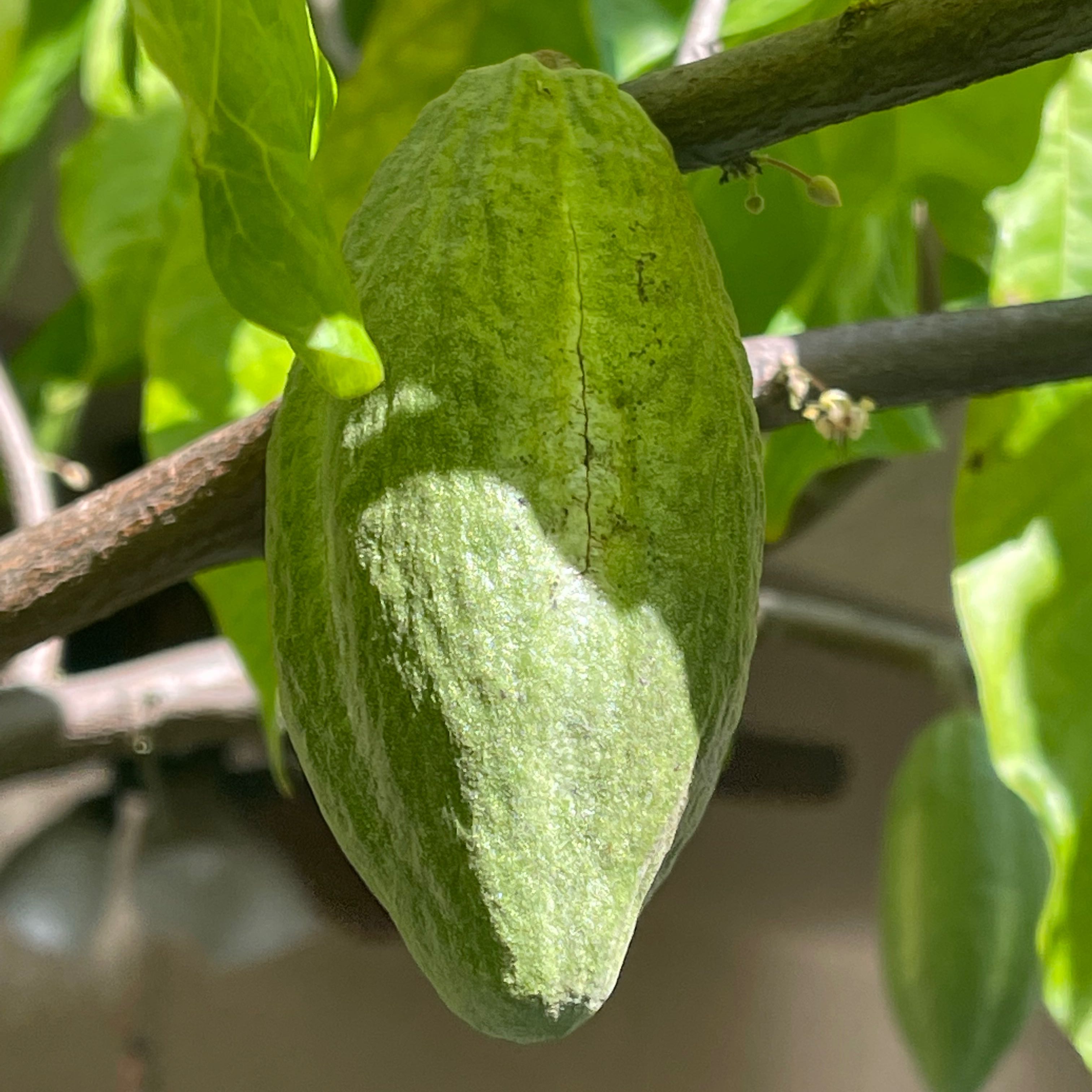
How to Plant a Cacao Tree
Plant a cacao tree in a 10 to 15 gallon container with a rich, loose, well-draining mix, in dappled shade and steady warmth above 60°F. Indoors or in a greenhouse for almost everyone outside south Florida, Hawaii, and Puerto Rico. Keep humidity at 70 percent or higher. Water when the top inch feels dry. Expect slow canopy growth the first year and small trunk flowers around year three.

Where to put it
Cacao is a tropical understory tree from Central and South American rainforests, which sets the rules for where it can live. It needs steady warmth above 60°F, dappled or filtered light, and humidity around 70 percent or higher. Below 60°F leaves start to drop, and a single night below 50°F can kill the plant outright.
Only zones 11 and 12 can grow cacao outdoors in the ground year round, which in the United States means south Florida, the warmest parts of Hawaii, and Puerto Rico. Anywhere else, plan for a large container that lives in a heated greenhouse, a sunroom, or near a bright window indoors, with summer trips outside to a shaded patio when nights stay above 60°F.
The right light is bright but never direct midday sun. Think of a spot 3 to 6 feet from an east or south-facing window, or under the dappled shade of a taller tree on a porch. Direct hot sun scorches the leaves within a day. Keep the plant well away from heating vents, air conditioning, and cold drafts.
Give a mature container plant room for a canopy that reaches 10 to 15 feet under indoor conditions. Outdoors in zone 11, allow 15 to 20 feet of clearance from buildings and other trees.
Planting a container-grown cacao tree
Look for a young plant with deep green leaves and a straight, unblemished trunk. The single most important rule for cacao is steady warmth and high humidity from the first day. A tree moved into a cool dry room within hours of planting will drop leaves before the roots have a chance to settle, so set up the spot before you open the nursery pot.
-
1Choose the right container Pick a pot at least 10 to 15 gallons with several large drainage holes in the bottom. Cacao roots resent both standing water and being cramped, so a tall pot with plenty of room for downward root growth works better than a wide shallow one. Glazed ceramic or plastic holds moisture longer than terracotta and matches the tree's humidity needs.
-
2Mix the right soil blend Combine two parts good quality potting soil, one part finished compost, and one part fine orchid bark or coarse perlite. The mix should feel rich and loose, holding moisture without packing down. A heavy garden soil or dense peat-only mix suffocates the fine feeder roots cacao depends on.
-
3Set the plant in the pot Add a 2 inch layer of mix to the bottom of the container, then slide the tree out of its nursery pot and place the root ball on top so the original soil line sits about an inch below the rim. Backfill around the sides with more mix, firming gently to remove air pockets without compacting. Do not bury the trunk above its original soil line, since cacao bark rots if kept wet against soil.
-
4Water in and place out of direct sun Water slowly until you see it run from the drainage holes, then let it drain fully. Set the pot in its prepared spot with bright filtered light and steady warmth, well away from any cold draft or heat vent. Mist the leaves once or twice in the first week to ease the move into a drier indoor environment.
-
5Set up humidity for the long term Group cacao with other tropical plants, run a small humidifier nearby, or set the pot on a pebble tray with water below the pebble line so the base of the pot stays dry. The goal is to hold the surrounding air around 70 percent humidity, which is far higher than typical indoor air. Crispy leaf edges within a few weeks are the first sign that humidity is too low to sustain the plant.
The first year
The first year for a newly planted cacao tree is mostly about quiet root growth and holding the existing canopy. Cacao is a slow tropical tree, and even in ideal warmth and humidity, dramatic above-ground change in the first months is not the norm. Most of the work is happening underground as the roots reach into the fresh mix.
The most common new-grower mistake is reacting to slow growth with extra water or fertilizer, both of which push the plant in the wrong direction. Soggy mix invites root rot, and fertilizer applied to a stressed plant burns the fine feeder roots that the tree needs most. Hold off on any feeding for the first two to three months, then a quarter-strength balanced liquid feed once a month is plenty.
Healthy first-year signs include leaves that hold their dark green color, occasional flushes of bronze-pink new growth from the branch tips, and a steady increase in trunk caliper. Real canopy size jumps and the first small white trunk flowers usually start in year three to five.
What can go wrong
-
Leaf drop after planting
A sudden drop in leaves within the first two weeks usually means the plant moved from a warm humid nursery into cooler or drier air. Check that room temperature stays above 65°F day and night, and that humidity is around 70 percent. Run a humidifier or group the tree with other plants, and keep it well clear of heating and cooling vents. New leaves typically push from the bare nodes once conditions stabilize. -
Scorched or bleached leaves
Direct midday sun burns cacao leaves fast, often in a single afternoon. The damage shows as pale, papery patches on the upper leaf surface that brown over a few days. Move the plant several feet back from the window, or filter the light with a sheer curtain. Damaged leaves do not recover, but new growth comes in healthy once the light is right. -
Crispy brown leaf edges
Low humidity is almost always the cause when otherwise healthy leaves turn crisp around the margins. Typical indoor air sits around 30 to 40 percent humidity, while cacao needs closer to 70. Add a small room humidifier nearby, set the pot on a pebble tray with water below the pebble line, and avoid placing the plant near forced air. Trim damaged edges with clean scissors if they look unsightly, but focus on raising humidity rather than misting alone. -
Yellowing lower leaves with soggy mix
Older leaves yellowing and dropping while the soil stays wet between waterings points to root rot from overwatering or poor drainage. Cacao likes steady moisture but not a soaked root ball. Check that the pot drains freely, repot into a looser mix with more bark or perlite if the current mix stays heavy, and let the top inch dry before the next watering. Trim any black mushy roots before replanting. -
Wilting even though the soil feels moist
When a cacao tree wilts while the mix is still damp, the roots have usually been damaged by cold air, root rot, or transplant shock. Move the plant somewhere consistently above 65°F with bright filtered light. Let the mix dry slightly, then water gently and hold off on fertilizer until new growth resumes. Recovery often takes several weeks of stable conditions. -
Slow growth and pale new leaves
Cacao grown in too little light puts out thin, pale new leaves and grows much more slowly than it should. The plant needs bright indirect light for at least 8 hours a day to thrive. Move it closer to a bright east or south-facing window, or add a full spectrum grow light positioned 18 to 24 inches above the canopy for 12 hours a day. Healthy color usually returns within a month of better light. -
Black spots or fuzzy growth on leaves
Fungal leaf spots show up when humidity is high but air is stagnant, which can happen in a closed sunroom or greenhouse. Improve air movement with a gentle fan running on low, and avoid wetting the leaves when you water. Remove badly spotted leaves with clean scissors and dispose of them, then a copper-based fungicide labeled for ornamentals can help knock back any spread. Healthy new growth comes in clean once airflow improves. -
No flowers in the first year or two
This is normal and not a sign of trouble. Cacao trees grown from a nursery seedling rarely produce their first small white trunk flowers before year three, and full pod production usually starts around year four or five. Keep conditions steady, feed lightly during the warm months, and the plant matures into flowering on its own schedule. Stressing the tree to push earlier blooms usually backfires.
About This Article
