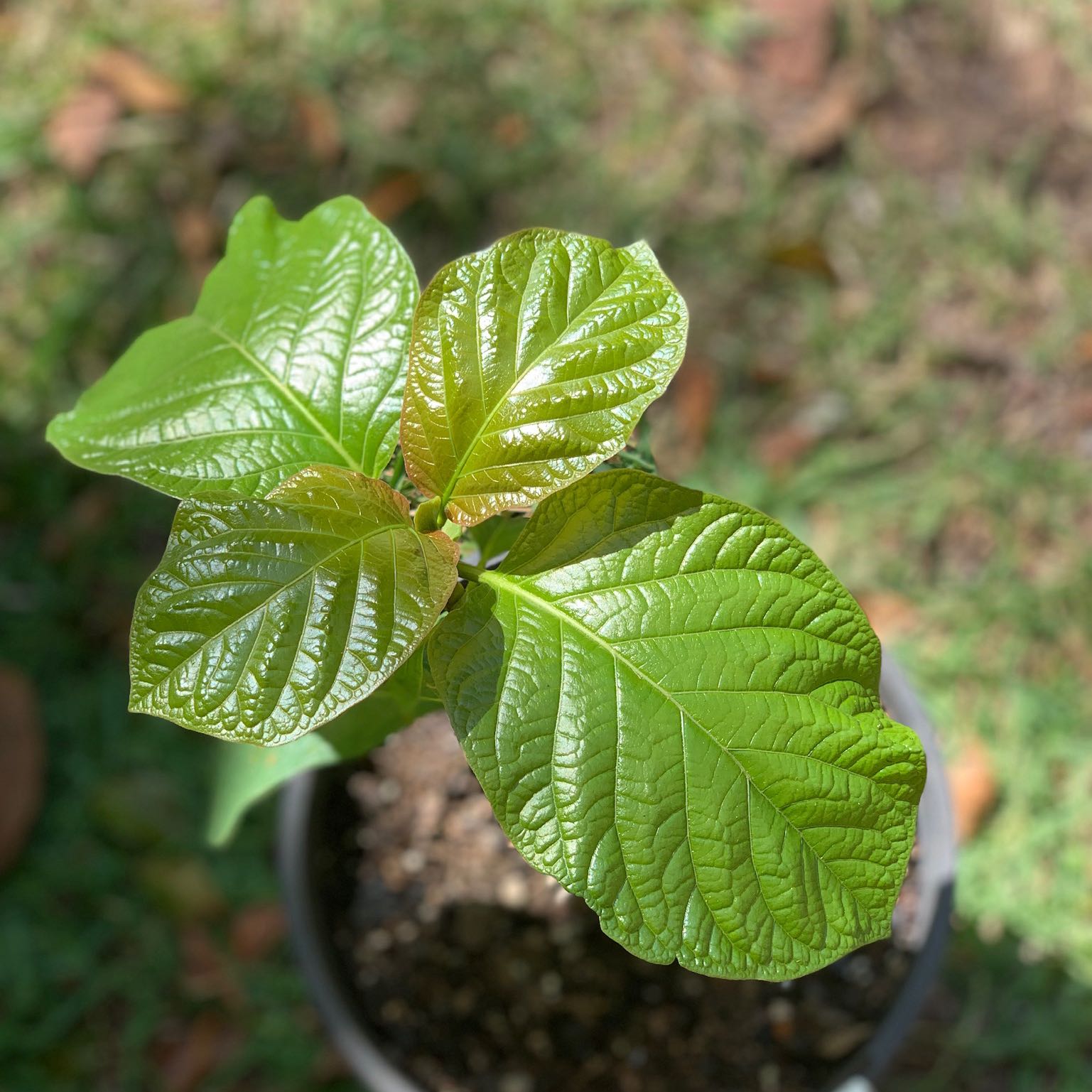
How to Grow Kratom
Keep Kratom warm (above 60°F year-round), humid (60 percent or higher), and in bright indirect light, in a loose well-drained potting mix. Most US growers raise it indoors as a houseplant, since outdoor growing needs USDA zones 10 to 11. Cold exposure below 50°F causes fast leaf drop.

Where to put it
Kratom is a tropical evergreen tree native to Southeast Asia. Outdoor year-round growing works only in USDA zones 10 and 11, with hard freezes lethal. Most US growers raise it as a large houseplant or move container plants outdoors only during warm months.
Light
Bright indirect light from a south or west-facing window suits Kratom indoors. Direct afternoon sun through glass can scorch the leaves, so pull the plant back a foot or hang a sheer curtain.
Outdoor container plants do best in partial shade or dappled morning sun. Full direct sun for hours in summer can damage the leaves, particularly in dry climates.
Warmth and humidity
Kratom needs consistent warmth and humidity year-round. Daytime temperatures between 70°F and 85°F suit it best, and night temperatures should stay above 60°F. Brief exposure below 50°F triggers heavy leaf drop, and freezing temperatures kill the plant.
Humidity of 60 percent or higher matches the plant's native conditions. Bathrooms with good light, plant rooms with a humidifier, or large grow tents work well in dry climates. In typical home humidity below 40 percent, leaves curl, brown at the edges, and drop.
Avoid cold drafts
Keep the plant well away from drafty winter windows, exterior doors, and AC vents. A single overnight cold draft can defoliate the plant. Move container plants indoors well before the first cool nights of fall, when temperatures still hold above 60°F.
Soil and potting
Kratom roots want oxygen and consistent moisture without sitting wet. Use a loose, well-drained potting mix with plenty of organic matter and good aeration. A blend of standard potting soil with added perlite and bark works well. Drainage holes are essential.
-
1Choose a pot one to two inches wider than the root ball Kratom grows steadily once happy and will need repotting every year or two when young. Start with a pot a few inches larger than the nursery container rather than jumping straight to a huge one. Wet soil sitting around small roots rots fast.
-
2Mix a loose airy potting blend Combine two parts good-quality potting soil with one part perlite and one part orchid bark or coconut coir. The goal is a mix that drains fast but holds enough moisture for the roots to drink between waterings.
-
3Set the plant in Lower the root ball straight into the prepared pot. Avoid breaking up the root ball, since Kratom roots are sensitive to disturbance. Backfill around the sides with mix and press lightly.
-
4Water thoroughly Soak the planting until water runs out the drainage holes, then dump the saucer. The plant likes a deep first drink to settle the roots into the new mix.
-
5Place in bright indirect light Set the pot in its permanent indoor spot with good warm bright light and away from cold drafts. Avoid moving the plant repeatedly, since Kratom dislikes the disturbance and drops leaves in response.
-
6Add a humidity boost If household humidity is below 50 percent, run a small humidifier nearby or set the pot on a pebble tray with water. A grouping of plants together also raises local humidity through their combined transpiration.
Watering and feeding
Watering
Water when the top inch of soil feels just barely dry, soaking the pot until water runs out the drainage holes, then dumping the saucer. In active growth during warm months, this works out to every 3 to 5 days for a medium-sized plant. In cooler months, water less often.
Kratom hates wet feet but also wilts and drops leaves if the roots dry out completely. Aim for consistently moist (not soggy) soil that breathes between waterings. Use filtered, distilled, or rain water if possible, since heavily chlorinated tap water hurts the tropical soil microbiome.
Feeding
Feed monthly through active growth (spring and summer) with a balanced liquid fertilizer at half strength. A formula labeled for tropical foliage plants works well. Skip feeding entirely in fall and winter when growth slows.
Container-grown plants need this consistent feeding because nutrients leach out with each watering. Watch for pale leaves or slow new growth as a sign that feeding should be more frequent or slightly stronger.
Pruning and shaping
Kratom grows steadily into a small tree if left unpruned. Pinching and light pruning keep the plant at a manageable size and produce more leaves to harvest.
Pinching the growing tips
Pinch the central growing tip back when the plant reaches a height you want to maintain. Pinching forces side branches and produces a bushier plant with more leaves per square foot. Pinch new growth every few weeks to maintain the bushy form.
Reducing height
If the plant gets too tall for its space, cut the main stem back to a healthy node about 6 to 12 inches below the height you want. The plant will branch out from the cut point. Make the cut in late spring or early summer during active growth, when the plant can recover quickly.
Removing damaged leaves
Cut off any yellowing, browning, or damaged leaves at the stem. Healthy leaves keep working as long as they look green and unblemished. Removing dying leaves prevents the plant from wasting energy maintaining them.
Harvest
Kratom is grown for its leaves, which can be harvested any time the plant is actively growing once it has built a healthy canopy. A 2 to 3 year-old plant produces a steady supply of mature leaves through the warm months.
When to harvest
Pick mature dark green leaves, since young pale leaves have not yet developed their full character. The plant should have at least 8 to 12 leaves before any are harvested. Younger plants need all their leaves to keep building roots and canopy.
Harvest most actively during warm growing months (spring through fall). The plant slows in winter and growing new leaves to replace harvested ones takes longer.
How to harvest
Pinch or snip individual leaves at the base of the leaf stem with clean scissors. Leave at least half the leaves on the plant after any harvest to keep it photosynthesizing and growing. Hard harvests that strip the canopy stress the plant and slow its recovery for months.
Drying the leaves
Spread leaves in a single layer on a tray or screen in a warm, dry, shaded room with good airflow. Drying takes 2 to 5 days depending on humidity. The leaves are dry when they crumble easily between your fingers.
Store dried leaves in an airtight jar away from light and heat. They keep their character for about a year. Crush or grind just before using to preserve the active compounds.
Common problems and pests
Most Kratom problems trace back to cold, low humidity, or root issues. The plant is otherwise hardy when its tropical conditions are met.
Massive leaf drop overnight
Cold exposure, often from a draft or a sudden temperature dip below 50°F. Move the plant immediately to a warm draft-free spot. New leaves regrow over weeks if the plant has rooted well. Prevent recurrence by keeping the plant well away from windows, doors, and AC vents in cold months.
Brown crispy leaf edges
Low humidity, the second most common Kratom problem in US homes. Move the plant to a more humid spot (bathroom or kitchen near a humidifier), set up a pebble tray, or run a small humidifier nearby. Misting helps briefly but does not raise ambient humidity for long.
Fine webbing under leaves with tiny moving dots
Spider mites, which thrive in the warm dry conditions Kratom shares its home with. Spray the undersides of leaves with a strong jet of water every few days to knock them down. Apply insecticidal soap or neem oil to thorough leaf coverage. Raising humidity around the plant also discourages mites.
Yellowing leaves with green veins
Iron or other micronutrient deficiency, common in container plants where nutrients have leached out. Apply a balanced liquid fertilizer with micronutrients, or switch to a chelated iron foliar spray for fast correction. Check soil pH if the problem recurs.
Wilting with wet soil
Root rot from overwatering or poor drainage. Pull the plant out of the pot, trim away any soft brown rotten roots with sharp scissors, repot in fresh well-drained mix, and water sparingly until you see new growth. Adjust the watering schedule to let the top inch of mix dry between drinks.
White cottony masses in leaf joints
Mealybugs. Wipe each cluster off with a cotton swab dipped in rubbing alcohol, then check the plant weekly for the next month since eggs hatch in waves. Heavier infestations respond to insecticidal soap or systemic insecticide labeled for houseplants.
Slow or stalled growth
Usually a combination of low light, cool temperatures, or underfeeding. Move to a brighter spot if possible, raise the temperature into the 70s, and apply a half-strength balanced fertilizer. Tropical plants in northern climates often slow dramatically in winter, which is normal.
Bumps on stems with sticky residue
Scale insects, which suck plant sap and excrete a sugary residue that grows black sooty mold. Wipe individual scales off with a cotton swab dipped in rubbing alcohol. Heavier infestations respond to horticultural oil applied to thorough coverage.
About This Article
