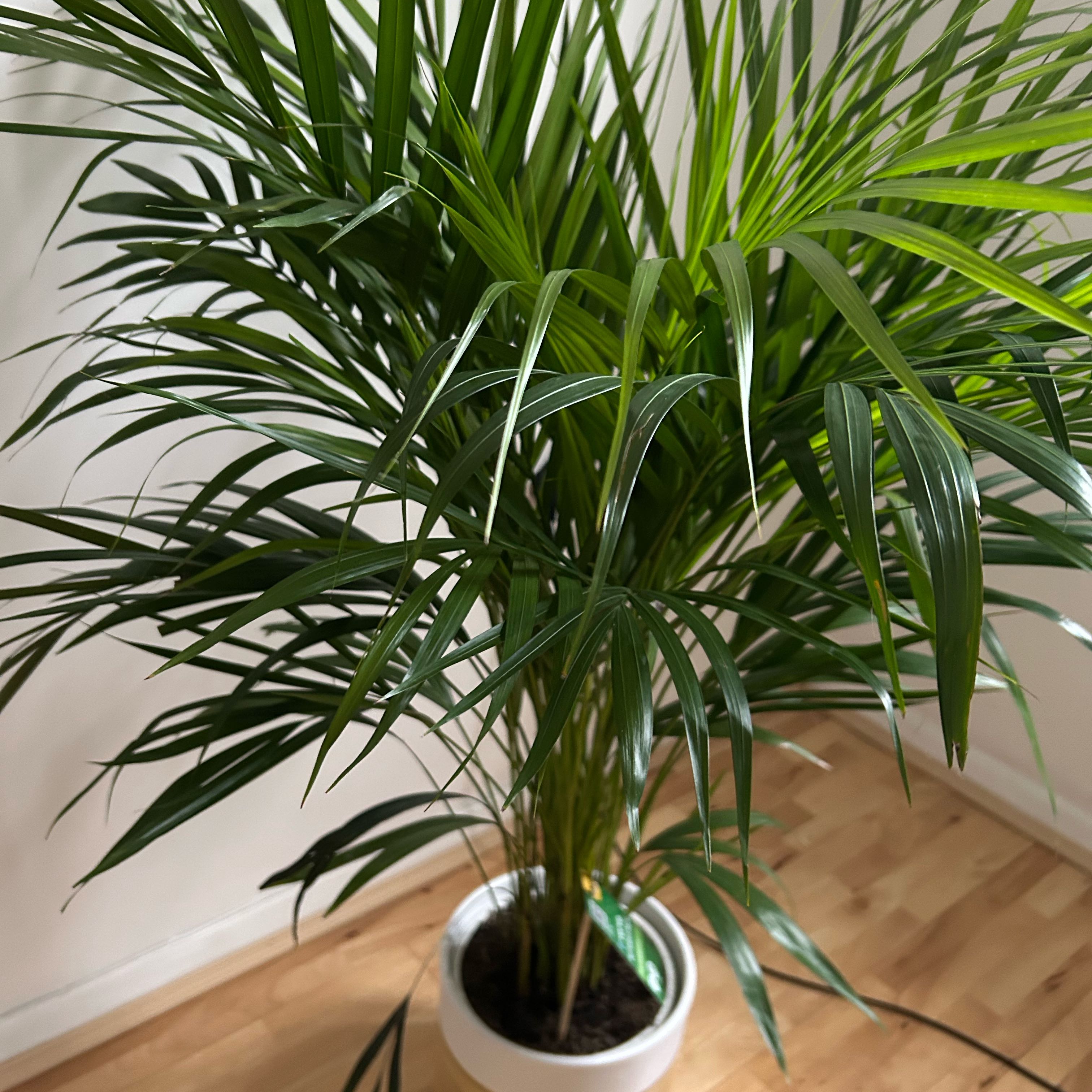
Areca Palm

What's Wrong with My Areca Palm?

Dypsis lutescens
Reviewed by Kiersten Rankel M.S.
Quick Answer
1.
Brown tips usually point to tap water.
Areca Palm is one of the most fluoride-sensitive palms sold as a houseplant. If tips are browning and watering looks fine, the water source is usually the culprit. Switching to filtered or rainwater often stops the damage.
2.
Check humidity and light if water looks right.
Low humidity dries out Areca's feathery fronds from the tips in, and insufficient light causes weak, sparse growth. Both problems look like general decline and are easy to miss in a typical living room.
3.
Watch the new spear in the center.
Areca Palm grows new fronds from a spear-shaped bud that emerges from the center of the crown and unfurls into a feathery frond. If that spear is firm and green, the plant is still actively growing and most problems are fixable.
Stay on top of plant care
Get seasonal reminders for watering and fertilizing โ€” personalized for your plants.
Try Greg Free

Common Areca Palm Problems

Brown leaf tips

Fluoride in tap water

Areca Palm is highly sensitive to fluoride and mineral salts in tap water. The frond tips accumulate these salts with every watering, and the tissue dies in a sharp, distinct line across the tip rather than a gradual fade. This keeps advancing as long as tap water is used, regardless of humidity or watering frequency.

1. Switch to filtered, distilled, or collected rainwater for all future waterings
2. Flush the pot thoroughly with filtered water to wash accumulated salt buildup out through the drainage hole
3. Trim existing brown tips with clean scissors at a slight angle. They will not recover, but new fronds will come in clean once the water source changes
Low humidity

Areca Palm is native to Madagascar and needs higher humidity than most indoor palms. Its many fine, feathery leaflets lose moisture fast in dry indoor air, and the tips brown first because they are furthest from the root supply. The browning from humidity is softer and more gradual than the sharp line left by fluoride.

1. Run a humidifier nearby targeting 50% humidity or higher
2. Move the palm away from heating vents and air conditioning units
3. Group it with other plants to raise local humidity around the fronds
Underwatering

Areca Palm prefers evenly moist soil. When the root ball dries out completely, moisture is pulled back from the frond tips first. The browning looks similar to humidity damage and the two often occur together in the same dry indoor environment.

1. Water thoroughly until it drains from the bottom, then check the soil again in two to three days
2. Keep soil evenly moist rather than letting it fully dry between waterings
3. Trim existing brown tips once watering is corrected. They will not green up

Yellow fronds

Overwatering

Areca Palm's roots need moisture but also need air. Waterlogged soil suffocates the roots, which then rot and lose the ability to move water and nutrients upward. Yellow fronds starting at the base and spreading upward, combined with soggy soil, point to overwatering rather than underwatering.

1. Stop watering and let the soil dry to just barely moist before watering again
2. Check that the pot has a drainage hole and is not sitting in pooled water in a saucer
3. Resume watering on a lighter schedule, aiming for evenly moist soil rather than wet
Nutrient deficiency

Areca Palm is a moderate to heavy feeder and container soil loses fertility within a few months. Older fronds yellow from the tips inward when nitrogen or magnesium runs low. Plants in brighter light grow faster and exhaust nutrients even more quickly.

1. Feed with a palm-specific slow-release fertilizer every two months in spring and summer
2. If yellowing is progressing quickly, supplement with a diluted liquid fertilizer containing magnesium
3. Skip fertilizing in fall and winter when growth slows
Normal frond aging

Areca Palm is a multi-stemmed palm that continuously pushes new growth and sheds the oldest lower fronds as it matures. One or two lower fronds yellowing while the rest of the plant looks healthy and full is normal. No action needed beyond trimming the spent frond.

Pests

Spider mites

Spider mites are the signature pest of Areca Palm indoors. Dry air is their main invite, and Areca's dense, feathery fronds give mites a huge surface area to colonize before the infestation becomes obvious. Fine webbing appears between leaflets and on frond undersides first, while the upper surface develops pale stippled speckles.

1. Rinse the fronds under a strong shower or garden hose to knock mites off
2. Wipe frond surfaces and undersides with insecticidal soap or 70% isopropyl on a cloth
3. Repeat every three to four days for two weeks
4. Raise humidity above 50%. Mites struggle in moist air and outbreaks rarely persist once humidity is addressed

Dying fronds

Root rot from overwatering

Whole fronds browning and dying from the base usually signals root rot. Areca Palm develops rot when soil stays waterlogged or the pot lacks a drainage hole. Once multiple fronds start dying together, the roots below are usually badly damaged and the stems at the base may feel soft.

1. Remove the plant from its pot and cut away all soft, brown, or mushy roots with clean scissors
2. Repot in fresh, well-draining palm mix in a container with a drainage hole
3. Resume watering cautiously, letting the top inch dry before watering again until the plant stabilizes
4. Trim dead fronds at the base to direct energy toward recovery
Chronic underwatering

Areca Palm does not tolerate repeated dry-downs the way a drought-tolerant palm does. Extended dry spells cause older fronds to die back as the plant pulls moisture from them to protect new central growth. If the central crown spear is still firm and green, the plant can recover with corrected watering.

1. Water thoroughly until water runs from the drainage hole and keep soil evenly moist going forward
2. If soil has shrunk from the pot edges, bottom-soak for 20 minutes to fully rehydrate the root ball
3. Remove dead fronds at the base with clean scissors

Leggy, sparse growth

Insufficient light

Areca Palm needs more light than most popular indoor palms. It originates from open, bright habitats in Madagascar and will grow noticeably weaker in low light. Fronds emerge fewer and farther apart, with pale yellow-green coloring instead of the rich golden-green it shows in good light. New canes from the base also stop forming.

1. Move the plant to a spot with bright, indirect light for most of the day
2. A south or east-facing window without direct harsh afternoon sun is ideal
3. Expect slow improvement. Existing sparse fronds will not fill in, but new growth will come in fuller and the characteristic yellow-orange petioles will deepen in color

Preventing Areca Palm Problems

A few consistent habits prevent most of what goes wrong with Areca Palm.
Weekly Check
1
Water with filtered or rainwater.
Areca Palm is highly sensitive to fluoride in tap water, and mineral buildup causes persistent tip burn that continues even after watering and humidity are corrected. Switching water sources removes this from the equation permanently.
2
Keep humidity at 50% or higher.
Low humidity is behind most tip browning and spider mite outbreaks on this palm. A humidifier positioned nearby is the most reliable fix. Heating and air conditioning drop indoor humidity well below what Areca needs to stay healthy.
3
Keep soil evenly moist with a drainage hole in the pot.
Areca Palm wants consistently moist soil but rots quickly in waterlogged conditions. A drainage hole lets you water generously without suffocating the roots. Check every few days and water before the soil dries out completely.
4
Place in bright, indirect light.
Areca Palm needs more light than Kentia or Parlor Palm to stay full and green. A spot near a south or east-facing window keeps fronds dense and encourages new canes from the base. Low light leads to sparse, pale growth over time.
5
Feed with palm fertilizer every two months in spring and summer.
Areca Palm depletes container soil faster than slower-growing palms. Regular feeding prevents the nutrient deficiencies that cause older fronds to yellow and die back prematurely.
Stay on top of plant care
Get seasonal reminders for watering and fertilizing โ€” personalized for your plants.
Try Greg Free

About This Article

Kiersten Rankel M.S.
Botanical Data Lead at Greg ยท Plant Scientist
About the Author
Kiersten Rankel holds an M.S. in Ecology & Evolutionary Biology from Tulane University. A certified Louisiana Master Naturalist, she has over a decade of experience in science communication, with research spanning corals, cypress trees, marsh grasses, and more. At Greg, she curates species data and verifies care recommendations against botanical research.
See Kiersten Rankel's full background on LinkedIn.
Editorial Process
Every problem and fix in this article was verified against Greg's botanical database, cross-referenced with USDA hardiness zone data and published horticultural research from the Missouri Botanical Garden, university extension programs, and species-specific literature. The Dypsis lutescens care profile reflects documented species behavior combined with years of community grower feedback in Greg.
3,844+ Greg users growing this plant
USDA hardiness zones 10aโ€“11b