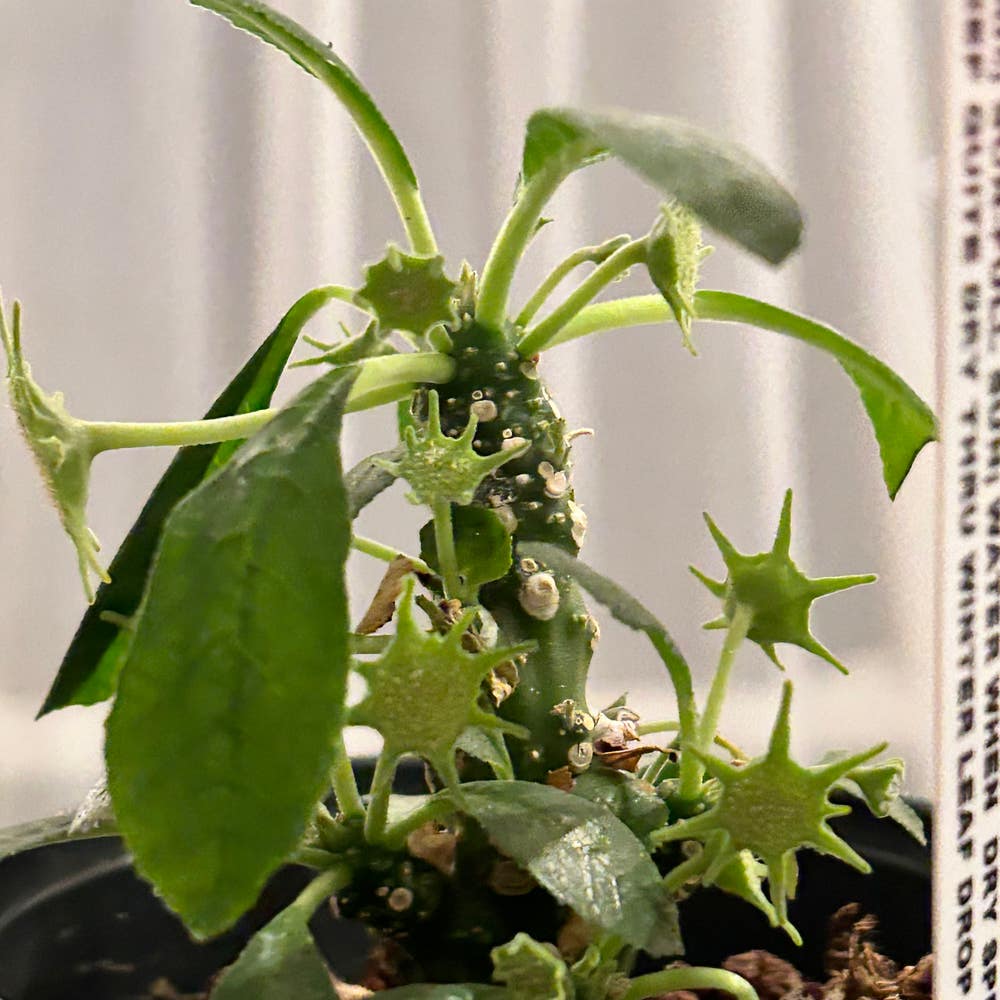
📚 Dorstenia bahiensis Explained: Key Information
Dorstenia bahiensis
By the Greg Editorial Team
Jan 29, 2025•10 min read
This article was created with the help of AI so we can cover more plants for you. May contain errors. See one? Report it here.
- 🌞 Dorstenia bahiensis thrives in bright, indirect sunlight and warm temperatures.
- 💧 Water when the top inch of soil is dry; avoid overwatering.
- 🌱 Use well-draining soil and fertilize every 4-6 weeks for optimal growth.
How to Grow
🌞 Choosing a Location
To ensure your Dorstenia bahiensis thrives, select a spot with bright, indirect sunlight. Direct harsh sunlight can scorch its leaves, so keep it shaded during peak hours.
Temperature plays a crucial role in its growth. This plant prefers a cozy range of 20°C to 30°C (68°F to 86°F), making it ideal for most indoor environments.
Humidity is another factor to consider. Dorstenia bahiensis enjoys moderate humidity, so using a humidity tray can help maintain the right moisture levels.
🌱 Soil Preparation
When it comes to soil, opt for a well-draining mix, ideally designed for cacti or succulents. This ensures that excess water drains away quickly, preventing root rot.
The ideal soil pH for Dorstenia bahiensis is slightly acidic to neutral, ranging from 6.0 to 7.0. Always check that your pots have drainage holes, and consider adding perlite to enhance drainage.
🌿 Planting Techniques
Spacing is key for outdoor planting; aim for 12-18 inches apart to allow for growth. If you're growing in containers, keep them 6-12 inches apart to ensure they have enough room to flourish.
When planting, make sure to place the plant at the same depth as it was in the nursery pot. Avoid burying the stem, as this can lead to rot.
💧 Watering Guidelines
Water your Dorstenia bahiensis when the top inch of soil feels dry. Typically, this means watering every 1-2 weeks, but always adjust based on your environment.
When watering, do so thoroughly until water drains out of the bottom. Avoid letting the plant sit in water, as this can cause root issues.
🌼 Fertilizing
During the growing season, use a balanced, diluted liquid fertilizer to give your plant a boost. This will help it thrive and produce new growth.
Fertilize every 4-6 weeks from spring to early fall. This regular feeding schedule will keep your plant healthy and vibrant.
✂️ Pruning and Ongoing Care
Pruning is essential for maintaining the shape of your Dorstenia bahiensis. Remove any dead or damaged leaves as needed to promote healthy growth.
Keep an eye out for signs of overwatering, such as wilting or yellowing leaves. Adjust your care routine based on seasonal changes to ensure your plant remains happy and healthy.
With these guidelines, you’re well on your way to successfully growing Dorstenia bahiensis. Next, let’s explore how to propagate this fascinating plant!
Propagation
🌱 Seed Propagation
To propagate Dorstenia bahiensis from seeds, start by sowing them in well-draining soil. Keep the soil moist but not soggy to encourage germination.
For optimal results, maintain a warm environment around 25°C (77°F). This temperature helps create the perfect conditions for your seeds to sprout.
✂️ Vegetative Propagation
Another effective method is vegetative propagation through cuttings. Take healthy stem cuttings and allow them to callous for a few days before planting them in suitable soil.
You can also propagate by offsets. Carefully remove these offsets and plant them in separate pots filled with the right soil mix for best results.
Lifecycle
Stages of Growth 🌱
The lifecycle of Dorstenia bahiensis unfolds through distinct stages: starting from seed or cutting, it progresses to germination, then to the seedling phase, followed by vegetative growth, flowering, and finally, seed production. Each stage is crucial for the plant's development and overall health.
Lifespan and Maturity ⏳
Typically, Dorstenia bahiensis is a perennial plant, thriving for several years when provided with optimal conditions. You can expect it to reach full maturity in about 2 to 3 years, showcasing its unique characteristics and beauty.
Growth Timeline 📅
Understanding the growth timeline helps you anticipate the plant's needs at each stage. From sowing seeds to enjoying its vibrant flowers, patience is key as you nurture this remarkable plant through its lifecycle.
This knowledge sets the foundation for successful cultivation, ensuring you can provide the right care at every stage. Next, let’s explore how to effectively propagate Dorstenia bahiensis to expand your collection.
Size
Mature Height and Spread 🌱
Dorstenia bahiensis typically reaches a mature height of 1 to 2 feet (30 to 60 cm). Its spread can also extend up to 1 to 2 feet, depending on the growing conditions.
Growth Rate and Size Variability 📈
This plant has a moderate growth rate, often adding several inches each year when provided with optimal conditions. Factors such as light, soil quality, and watering practices significantly influence its size variability.
Understanding these aspects can help you create the perfect environment for your Dorstenia bahiensis, ensuring it thrives and showcases its unique beauty. As you nurture this plant, keep an eye on its growth patterns to adjust care as needed, promoting a healthy and vibrant specimen.
Roots
Root System Characteristics 🌱
Dorstenia bahiensis features a fibrous root system that is both shallow and extensive. This unique structure allows the plant to spread out rather than grow deep, making it well-suited for various soil conditions.
Common Root-Related Issues ⚠️
One of the most common problems is root rot, which occurs due to overwatering. Symptoms include wilting and yellowing leaves, signaling that the roots are struggling.
Another issue is becoming rootbound, which happens when the roots fill the pot. Signs of this condition include stunted growth and roots that start to circle around the pot.
Visual Cues for Healthy vs. Unhealthy Roots 👀
Healthy roots are firm and white, indicating a thriving plant. In contrast, unhealthy roots appear brown and mushy, often accompanied by an unpleasant odor.
Understanding these root characteristics and issues is crucial for maintaining the health of your Dorstenia bahiensis. By keeping an eye on root health, you can ensure your plant thrives and flourishes.
Next, we will explore the benefits of growing this unique plant and why it deserves a spot in your garden or home.
Benefits
Top 5 Benefits 🌟
Unique Ornamental Appeal
Dorstenia bahiensis stands out with its exotic beauty, making it a striking addition to both gardens and interiors. Its unique foliage and structure can elevate any space, drawing admiration from guests.
Low Maintenance
This plant is perfect for those who prefer a low-maintenance option. It requires minimal care compared to other houseplants, allowing you to enjoy its beauty without constant attention.
Air Purification
Not only is it visually appealing, but Dorstenia bahiensis also contributes to improved indoor air quality. It helps filter toxins, making your living environment healthier.
Cultural Significance
In its native region, this plant holds cultural importance and is often used in traditional medicine. This adds a layer of meaning to its presence in your home or garden.
Drought Tolerance
Dorstenia bahiensis is resilient in dry conditions, making it an excellent choice for xeriscaping. Its ability to thrive with less water means you can enjoy a beautiful plant while conserving resources.
These benefits make Dorstenia bahiensis a fantastic choice for plant lovers and gardeners alike. Next, we'll explore how to propagate this remarkable plant, ensuring you can share its beauty with others.
Companion Plants
🌱 Explanation of Companion Planting
Companion planting is a gardening technique that enhances biodiversity in your garden. It improves pest management and promotes healthy growth by pairing compatible plants together.
🌿 List of Compatible Companion Plants
When growing Dorstenia bahiensis, consider these companion plants:
- Succulents: They share similar care needs and create a visually appealing arrangement.
- Herbs: Plants like basil or rosemary not only complement the aesthetic but also deter pests and attract beneficial insects.
🚫 Plants to Avoid
Be cautious of planting Dorstenia bahiensis near heavy feeders. These plants require high nutrient levels and can compete for resources, potentially harming your Dorstenia's growth.
By choosing the right companions, you can create a thriving garden that supports the health and beauty of your Dorstenia bahiensis. Next, let’s explore common problems that may arise while caring for this unique plant.
Problems
Common Problems 🌱
1. Incorrect Watering
Watering issues are a common concern for Dorstenia bahiensis. Symptoms like wilting or yellowing leaves can indicate either overwatering or underwatering.
To remedy this, adjust your watering frequency based on the moisture level of the soil. Always check the top inch of soil before watering.
2. Incorrect Light Conditions
Light conditions play a crucial role in the health of your plant. If you notice leggy growth or leaf scorch, it may be due to too much or too little light.
Simply relocate your plant to a spot with appropriate light levels to help it thrive.
3. Diseases
Fungal diseases can affect Dorstenia bahiensis, with powdery mildew and rust being the most common. Look for white spots or leaf discoloration as signs of these issues.
To combat this, improve air circulation around the plant and avoid overhead watering, which can exacerbate fungal growth.
4. Root Problems
Root rot is another significant issue, often caused by overwatering. Symptoms include mushy roots and wilting leaves.
If you suspect root rot, allow the soil to dry out and consider repotting the plant in fresh, well-draining soil.
5. Leaf Issues
Environmental stress or nutrient deficiencies can lead to leaf scorching or yellowing. These symptoms often indicate that your plant needs some adjustments in care.
Evaluate your care practices and make necessary changes to meet the plant's needs for optimal health.
Conclusion 🌟
By being aware of these common problems and their solutions, you can ensure your Dorstenia bahiensis remains healthy and vibrant. Next, let’s explore potential pest issues that could affect your plant.
Bugs
🐜 Potential Pest Issues
While Dorstenia bahiensis is generally resilient, it can still fall prey to certain pests. Keeping an eye out for these invaders is essential for maintaining the plant's health.
🔍 Identification and Damage
Spider Mites
Look for fine webbing on the leaves, which can lead to leaf drop and discoloration. These tiny pests thrive in dry conditions, making them a common nuisance.
Scale Insects
These pests leave a sticky residue and cause yellowing leaves. If you notice your plant weakening, scale insects might be the culprit.
Mealybugs
Identified by their white, cotton-like masses, mealybugs can stunt growth. They often cluster in leaf axils, making them easy to spot if you’re vigilant.
🧪 Treatment Options
Neem Oil
This natural solution is effective against many pests. Simply apply it as a foliar spray, ensuring you cover all affected areas.
Insecticidal Soap
Safe for use on your plants, insecticidal soap can help eliminate pests. Just follow the label instructions for the best results.
By staying proactive and addressing pest issues promptly, you can ensure your Dorstenia bahiensis remains healthy and vibrant. Next, let’s explore what animals might be interested in munching on your plant.
What Eats
Common Animals 🦌
Dorstenia bahiensis can attract a few hungry visitors.
- Deer: Look for signs like chewed leaves and broken stems.
- Rabbits: These little nibblers often leave evidence of their feasting on lower leaves and stems.
- Squirrels: You might notice them digging around the base or gnawing on stems.
Signs of Damage ⚠️
Identifying damage is crucial for protecting your plant.
- Chewed foliage: This is a clear indicator of herbivory; keep an eye out for droppings or tracks nearby.
- Damaged stems: Broken or gnawed areas on the plant signal that something has taken a bite.
Deterrent Methods 🚫
Preventing damage is easier than you think.
- Chemical repellents: Consider using commercial deer or rabbit repellents to keep these critters at bay.
- Organic methods: Planting deterrent species or using physical barriers like fencing can also be effective.
By staying vigilant and employing these strategies, you can help ensure your Dorstenia bahiensis thrives without unwanted munchers. Next, let’s explore common problems that might arise in your plant care journey.
⚠️ Safety First
This content is for general information and may contain errors, omissions, or outdated details. It is not medical, veterinary advice, or an endorsement of therapeutic claims.
Always consult a qualified healthcare professional before using any plant as food, medicine, or supplement.
Never eat any plant (or feed one to pets) without confirming its identity with at least two trusted sources.
If you suspect poisoning, call Poison Control (800) 222-1222, the Pet Poison Helpline (800) 213-6680, or your local emergency service immediately.
Spotted an error? Please report it here.
Nurture your Dorstenia bahiensis like a pro 🌱 with Greg's tailored care reminders and expert tips to ensure it thrives beautifully in your home!