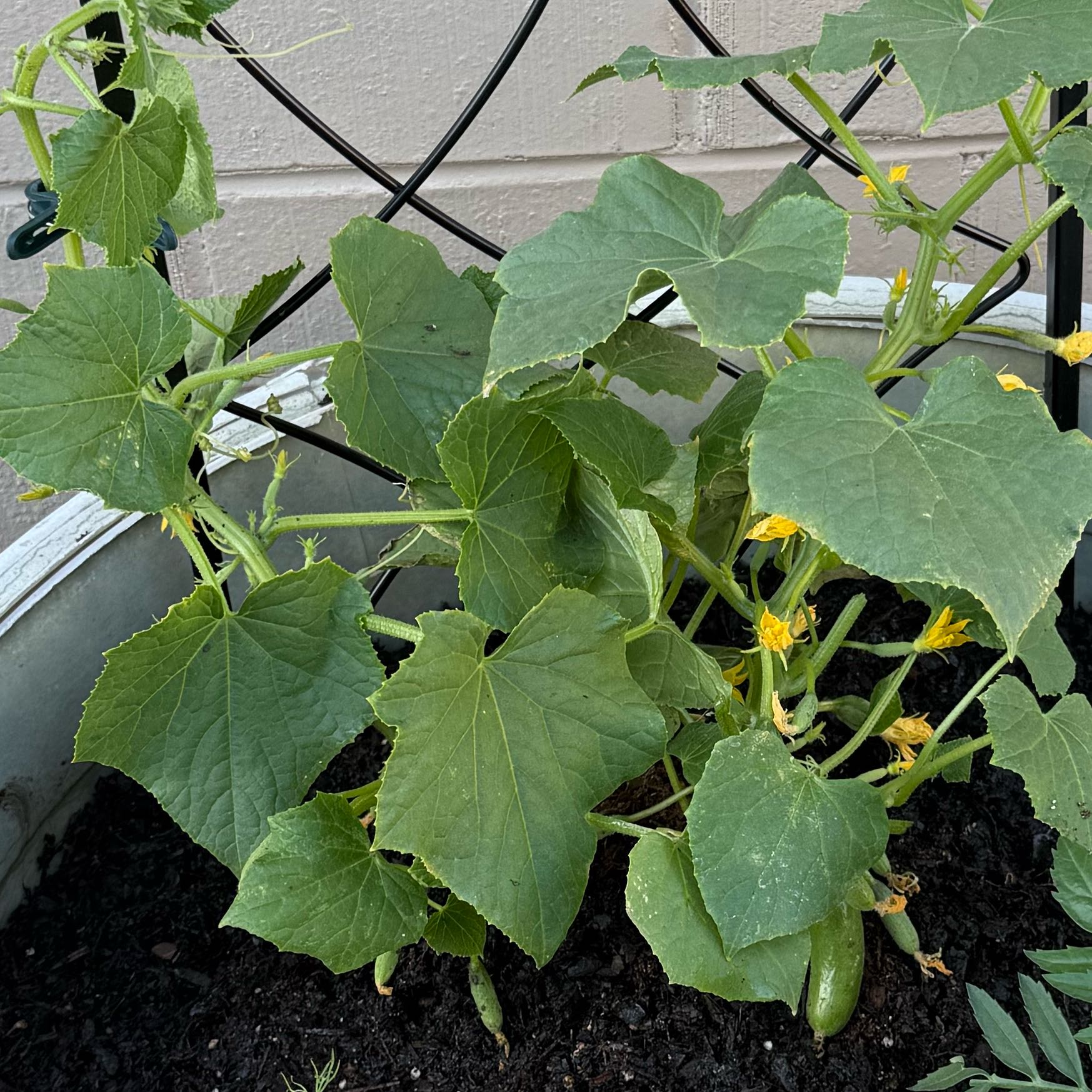
Fertilizing My Cucumber
Cucumis sativus
By the Greg Editorial Team
Jun 14, 2024•9 min read
This article was created with the help of AI so we can cover more plants for you. May contain errors. See one? Report it here.
- Balanced N-P-K and micronutrients are key for cucumber blooming.
- Organic vs. synthetic fertilizers: Choose based on growth stage and needs.
- Monitor for over-fertilization to prevent growth and blooming issues.
Types of Fertilizers for Cucumbers
Choosing the right fertilizer for your cucumbers can feel like a high-stakes chemistry experiment. But fear not, whether you go organic or synthetic, it's all about the balance of nutrients.
💚 Organic vs. Synthetic Fertilizers
Organic fertilizers are like the slow food movement for plants—nutrient-rich and environmentally friendly, but they take their sweet time. They're made from natural materials like compost, manure, and bone meal, which means they not only feed your cucumbers but also improve soil structure over time. However, they can be pricier and may attract unwanted pests.
On the flip side, synthetic fertilizers are the fast food of the plant world—quick and convenient. They're cheaper and can give your plants a rapid nutrient boost, but they can also lead to nutrient runoff and soil degradation. Plus, they lack the soil health benefits of their organic counterparts.
N-P-K Ratios and Micronutrients
When it comes to blooming, cucumbers are picky eaters. They thrive on a balanced diet of nitrogen (N), phosphorus (P), and potassium (K). Too much nitrogen and you'll get lush vines with nary a cucumber in sight. Aim for a lower nitrogen content and higher amounts of phosphorus and potassium, which encourage flowers and fruit.
Don't forget the micronutrients—like that dash of paprika on deviled eggs, they can make a big difference. Elements like calcium and magnesium can prevent blossom end rot and improve overall plant health.
The Best Picks
Here's the dirt on some top fertilizers:
- Miracle-Gro Plant Food: It's like the Swiss Army knife of fertilizers—versatile and reliable.
- Jobe's Organics: Think of it as the slow-release, granular multivitamin for your garden.
- Dr. Earth Organic: This one's in it for the long haul, feeding your plants for months.
- Flower Fuel: As the name suggests, it's the turbo boost for your cucumbers' bloom phase.
Remember, the best fertilizer for your cucumbers depends on your soil type, growth stage, and whether you're looking for a quick fix or long-term soil health. Keep it balanced, and you'll be in cucumber heaven.
Fertilization for Blooming
Fertilization is crucial for coaxing cucumbers into a show of blooms.
💡 Understanding the Nutrient Mix
Phosphorus and potassium are the key players for flower production. While nitrogen is important for growth, an excess can lead to all leaf, no bloom. Think of it as a veggie bodybuilder focusing too much on upper body and skipping leg day.
🍽️ The Role of Micronutrients
Micronutrients like magnesium and boron might sound like extras in a science film, but they're stars in the blooming saga. They work behind the scenes to ensure your cucumbers can strut their stuff come flowering time.
🌱 Practical Fertilizing Tips
Pre-planting, work in a balanced N-P-K mix to set the stage. As the vines begin to run, it's showtime for side dressing or fertigation—think of it as interval feeding for your green babies. Keep it regular; consistency is key.
Remember, overdoing it with fertilizer is like overwatering your guest at a dinner party—uncomfortable and potentially disastrous. Stick to the script: moderation and timing are your best friends here.
When to Fertilize Cucumbers
Cucumbers are hungry plants, craving nutrients throughout their growth cycle. Let's dive into the timing of fertilization, tailored to push your cucumbers into a blooming bonanza.
🌱 Seedling Stage
Six inches tall—that's the magic number. When your cucumber seedlings hit this height, it's time to introduce a slow-release fertilizer. Mix it into the compost to give these younglings a nutrient-packed send-off as they prep for their big move to the garden or greenhouse.
🌿 Post-Planting
Once the risk of frost is a distant memory and your cucumbers are snug in their final growing spots, it's time to bulk up their diet. A balanced slow-release fertilizer is your best bet here. Think of it as a multivitamin, setting the stage for strong, healthy growth.
💐 Flowering and Fruiting
Now, for the main event: flowering. When those blooms start to show, switch gears to a high-potassium liquid fertilizer. This isn't just any feed—it's the secret sauce for flowers and fruits. A weekly dose will do wonders, but remember, a parched plant won't absorb nutrients well, so keep the water coming.
🚫 Avoiding Over-Fertilization
Timing is everything, and overdoing it is a real risk. Ease up on the nitrogen as flowers form, and keep a close eye on your plants. Signs of overindulgence include leaf and stem growth that's more Hulk than healthy. Adjust as needed, and your cucumbers will thank you with a bounty of blooms.
How to Fertilize Cucumbers
Proper fertilization is key to blooming success. Let's dig into the how-to.
💦 Soil Drenching
Soak it up! Mix your fertilizer according to package instructions and drench the soil at the base of your plants. This method ensures that nutrients penetrate deeply, reaching the roots where they're needed most. Remember, cucumbers are thirsty plants; keep the soil consistently moist but not waterlogged.
🥗 Side Dressing
Boost your blooms! Apply a balanced fertilizer as a side dressing, gently working it into the soil on either side of your cucumber plants. This gives them an extra dose of nutrients during the crucial blooming and fruiting stages. Aim for a 2:1 potassium to magnesium ratio, and don't go overboard with nitrogen – it can encourage leafy growth at the expense of flowers.
🌿 Foliar Feeding
Spray and pray for flowers! Foliar feeding involves spraying diluted fertilizer directly onto the leaves. It's a quick fix for nutrient deficiencies and can give your plants a rapid green-up. However, it's not a substitute for soil fertilization, so use this method sparingly.
🌍 Even Distribution
Uniformity is your friend. Whether you're drenching, dressing, or spraying, ensure even distribution to avoid nutrient imbalances. Uneven fertilization can lead to patchy growth and less-than-ideal blooming.
🌱 Absorption
Maximize uptake. Water your cucumbers before and after fertilizing to help roots absorb nutrients efficiently. Avoid fertilizing during the heat of the day when plants are under stress and less able to take up nutrients.
Remember, fertilizing is not a "set and forget" task. Monitor your plants and adjust your methods as needed to keep those blooms coming!
Signs of Over-Fertilization and Nutrient Deficiencies
🕵️ Identifying the Culprits
Nutrient burn or toxicity can sneak up on your cucumbers like a cat burglar in the night. Look out for stunted growth, leaves with the enthusiasm of a wet weekend (dark green and dull), and yellow necrotic tissue playing the edge of leaf margins. It's a classic sign that nitrogen's been overdone.
💦 Flushing Out the Excess
When your cucumbers are more burnt than a beachgoer without sunscreen, it's time to leach the soil. Flush it with fresh water like you're washing away your sins. Then, reassess your fertilizer game plan—your plants will thank you.
🔍 Deficiency Detective Work
On the flip side, deficiencies can turn your cucumbers into a sad, pale imitation of their potential. Yellowing leaves? Could be a nitrogen no-show. Scorched and distorted leaves? Calcium might be playing hooky. And if you see older leaves looking like they've been through a yellow highlighter apocalypse, potassium is probably playing hard to get.
💉 The Fix Is In
For deficiencies, think of yourself as a plant doctor—prescribe a foliar spray or soil amendment. Calcium nitrate sprays for calcium, potassium fertilizer for potassium, and so on. It's like giving your plants their vitamins, so they don't end up looking like they've been on a junk food binge.
💧 Overwatering Overkill
Remember, too much love can be just as bad as neglect. Overwatering your cucumbers can lead to a host of issues, including those that mimic over-fertilization. So, if you're drowning your plants in affection (and water), take a step back. Let them breathe.
🕵️ Soil Testing: Don't Guess, Test!
Before you go throwing fertilizers at the problem like a cook who doesn't know when to stop seasoning, get a soil test. It's like detective work for your garden. This way, you're not just throwing darts in the dark and hoping for the best.
🍌 The Potassium Plot Twist
Cucumbers curling up like they're trying to hide from you? Could be a potassium plot twist. Before you start a composted banana peel heist, confirm it's a potassium issue. Don't just throw fruit scraps around willy-nilly.
🌱 Low Nitrogen, High Blooms
Too much nitrogen is like that overbearing friend who doesn't know when to leave the party—it prevents proper blooming. Keep your nitrogen levels in check, especially when you're eyeing those blooms. Think of nitrogen as the opening act, not the main event.
🍽️ Real Talk
In the end, your cucumbers don't need a buffet of nutrients—just a balanced diet. Avoid the temptation to overfeed like you're at an all-you-can-eat fertilizer restaurant. Keep it simple, keep it balanced, and your cucumbers will be the belle of the ball—or the garden, in this case.
Common Mistakes to Avoid
💥 Overzealous Fertilization
Over-fertilizing can lead to lush foliage at the expense of flowers. Cucumbers need a balanced diet; too much nitrogen can inhibit blooming. When it's time for flowers to appear, dial back the nitrogen and boost potassium to encourage them.
🧐 Misreading Fertilizer Labels
Don't play a guessing game with fertilizer ratios. Misinterpreting N-P-K numbers can lead to improper feeding. Stick to a balanced fertilizer like a 10-10-10, and always follow the manufacturer's instructions to avoid nutrient imbalances.
🍔 Infrequent, Heavy Feeding
A "feast or famine" approach doesn't work. Cucumbers prefer a consistent supply of nutrients. Swap out the big, bi-weekly feed for a weekly, lighter touch with a high-potassium liquid fertilizer to promote steady growth and flowering.
🌱 Neglecting Potted Cucumbers
Potted cucumbers can't forage for nutrients like their garden-bound cousins. They rely on you for their meals. Ensure your potting mix is fortified from the start and replenish nutrients regularly to keep your container cucumbers content and productive.
💦 Ignoring the Water-Fertilizer Tango
Water is the dance partner of fertilizer. Without adequate moisture, cucumbers can't absorb the nutrients they crave. Keep the soil consistently moist to facilitate nutrient uptake and prevent the stress that can stifle blooming.
🔄 Forgetting the Plant's Lifecycle
Cucumbers have growth stages, and each has its own nutritional needs. A seedling's diet differs from that of a fruiting adult. Adjust your fertilization practices as your plants mature to support their changing needs.
🌱 Overlooking Soil Health
Healthy soil is more than just a medium—it's a living ecosystem. Before reaching for the fertilizer, consider enriching your soil with compost or well-rotted manure. These can provide a slow-release feast for your cucumbers and improve soil structure.
🌡️ Disregarding Environmental Factors
Every garden has its own microclimate. Pay attention to temperature, sunlight, and humidity. These factors can affect how your cucumbers use nutrients. Be observant, be flexible, and be ready to adapt your fertilization strategy accordingly.
⚠️ Safety First
This content is for general information and may contain errors, omissions, or outdated details. It is not medical, veterinary advice, or an endorsement of therapeutic claims.
Always consult a qualified healthcare professional before using any plant as food, medicine, or supplement.
Never eat any plant (or feed one to pets) without confirming its identity with at least two trusted sources.
If you suspect poisoning, call Poison Control (800) 222-1222, the Pet Poison Helpline (800) 213-6680, or your local emergency service immediately.
Spotted an error? Please report it here.