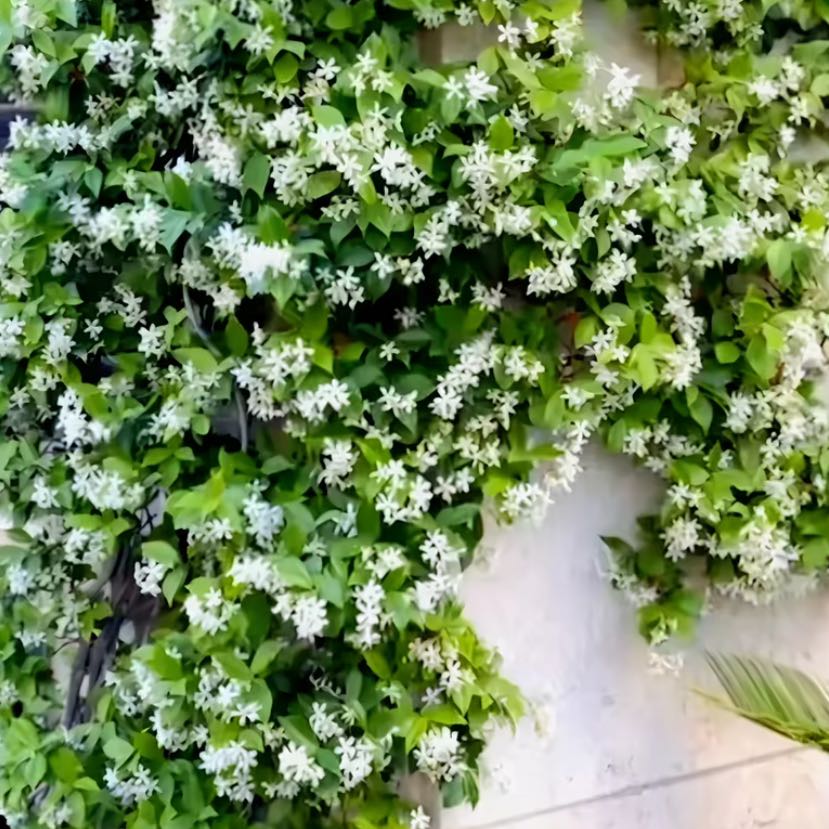
What's Wrong with My Star Jasmine?

Common Star Jasmine Problems
Yellow leaves with green veins
Star Jasmine needs iron to make chlorophyll, but in alkaline soil, iron becomes chemically locked and the roots cannot absorb it. The leaves turn yellow while the veins stay green because the veins are the last to lose their iron supply. This is the signature problem for this species and almost always traces back to soil pH being above 7 rather than a lack of fertilizer.
No flowers
Star Jasmine blooms on growth produced in full to partial sun. In deep shade, the vine puts energy into making leaves rather than flowers. The plant can look healthy and green while producing no blooms at all because it is getting enough light to survive but not enough to flower.
High-nitrogen fertilizers push leafy green growth at the expense of flowers. Star Jasmine flowering is triggered in part by a shift from vegetative to reproductive mode, and excess nitrogen keeps the plant in growth mode. A lush, fast-growing vine with no blooms in summer is a common sign.
Star Jasmine flowers on stems that grew the previous year. Pruning in late summer or fall removes the wood that would have flowered the following spring. Hard pruning at the wrong time can result in a full season without blooms.
Leggy growth
A Star Jasmine in too much shade produces long, widely spaced stems with few side branches as it stretches toward the light source. In a sunny spot, new growth is shorter and bushier. In shade, the internodes stretch and the vine becomes open and bare near the base over time.
Star Jasmine is a twining vine that wraps stems around supports as it grows. Without guidance, new stems reach outward and upward but leave the base bare. Untrained plants look sparse even when healthy because the growth concentrates at the tips.
Black spots on leaves
Dark or black spots, sometimes ringed with yellow, on the leaf surface signal fungal disease. Star Jasmine's dense, interwoven stems trap humidity and limit airflow, creating the damp leaf surface conditions that fungal spores need to germinate. Spots spread leaf to leaf if the conditions stay wet.
Pests
Brown or tan waxy bumps on stems and the undersides of leaves, often in clusters along the midrib. Star Jasmine's thick, waxy leaves and dense twining stems give scale insects ideal shelter, and a heavy infestation will leave sticky honeydew on everything below the plant.
White cottony masses in the crevices where leaves meet stems, or where stems branch. The dense, intertwined growth of a mature Star Jasmine vine gives mealybugs many hidden spots to colonize before the infestation becomes visible on the surface.
Brown leaves in winter
Star Jasmine is evergreen in zones 7 to 10 but takes damage when temperatures drop below 10 to 15°F for extended periods. The leaves turn bronze or brown and may drop, while stems can die back to the base in hard freezes. Plants in zone 7 or at the edge of their range are most vulnerable.
On a trellis or wall in an exposed position, winter wind draws moisture from Star Jasmine's evergreen leaves faster than the roots can replace it from cold or frozen soil. The leaves turn brown from the tips inward without the plant being genuinely frost-killed.
Preventing Star Jasmine Problems
About This Article
