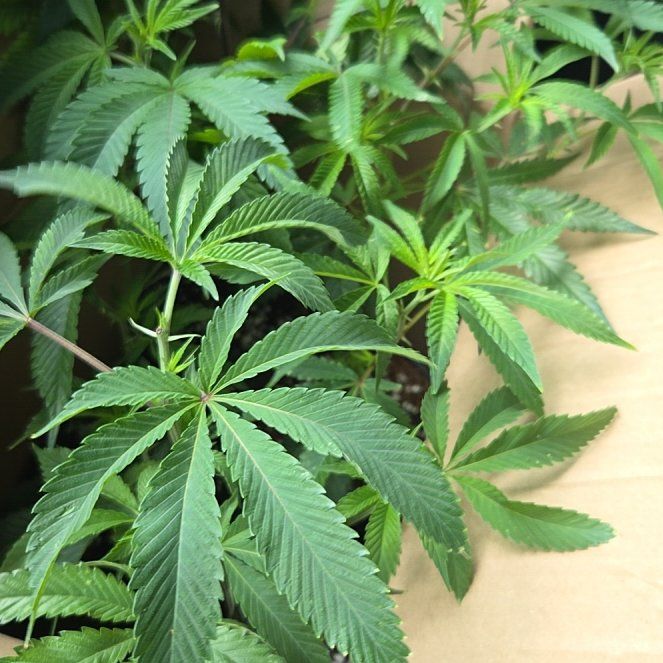
Use a rich, well-draining mix of potting soil, perlite, and compost. Cannabis is a fast-growing annual that needs plenty of nutrients and oxygen at the roots. Aim for a slightly acidic pH around 6.0-6.5.
What Soil Does Marijuana Need?
Cannabis is a fast-growing annual that produces a massive root system in a short time. It needs soil that's rich in organic matter for nutrients, loose enough for roots to spread quickly, and well-draining so oxygen can reach the root zone.
Stays wet
Damp
Waterloggedwet & suffocating
Damp & Airymoisture + oxygen
Compacteddense & dry
Gritty & Fastdrains in seconds
Marijuana
Regular Potting Soil
Airy
Dries quickly
Cannabis does best in a living, nutrient-rich soil that drains well. The plant grows aggressively and can become root-bound fast, so the mix needs to stay loose and airy even as roots fill the container.
Compost is the backbone of a good cannabis soil. It provides slow-release nutrients and supports beneficial microbes that help the plant absorb what it needs. Perlite keeps the mix from compacting.
Some growers add coco coir instead of (or alongside) peat-based potting soil. Coco coir holds moisture well, stays fluffy, and has a natural resistance to root diseases.
What Soil Mix Should I Use for My Marijuana?
Recommended Mix
Potting soil35%
Compost or worm castings25%
Perlite25%
Coco coir15%
Stay on top of plant care
Get seasonal reminders for watering and fertilizing — personalized for your plants.
Cannabis is unusually pH-sensitive. It performs best in the 6.0 to 7.0 range in soil, where all major and minor nutrients stay available. A $10 soil pH meter is worth the investment here since small shifts can cause big problems.
When pH drops below 5.5, calcium and magnesium lock out and you'll see brown spots on lower leaves. When it climbs above 7.5, iron and zinc become unavailable, causing pale new growth. Cannabis shows pH stress faster than most houseplants, so checking every few weeks during active growth is a good habit.
Ideal pH Range
Ideal range6.0–7.0
Tolerable range5.5–7.5
To lower pHMix in peat moss or elemental sulfur
To raise pHAdd dolomite lime or wood ash
When Should I Replace My Marijuana's Soil?
Since cannabis is an annual, you'll typically start with fresh soil each grow cycle. Reusing soil from a previous grow is possible but it will be depleted of nutrients and may harbor pests or pathogens.
If you do reuse soil, amend it heavily with fresh compost, perlite, and a balanced organic fertilizer before replanting. Many growers find it easier to just start fresh.
Signs Your Soil Needs Replacing
Soil compacted and water pools on the surface
Previous plant showed nutrient deficiencies late in growth
Fungus gnats or other pests present in old soil
Soil has a stale or sour smell
How Should I Amend Garden Soil for a Cannabis Plant?
Cannabis develops a strong taproot surrounded by a web of fine feeder roots that need loose, airy soil rich in organic matter. The ideal pH range is 6.0 to 7.0, and the plant is a heavy feeder throughout its life cycle.
For clay soil, work in generous amounts of compost, perlite, and aged bark to open up the structure and let roots spread freely. Adding worm castings gives a slow-release nutrient boost without burning young plants. Sandy soil benefits from compost, coco coir, and leaf mold to improve water retention and build a living soil ecosystem. Plant in full sun with good air circulation and make sure the site drains well after rain.
Got More Questions?
Can I use regular potting soil for my Marijuana?
You can for seedlings, but mature plants will do better with amendments. Mix in perlite for drainage and compost for nutrients. Straight potting soil tends to compact and stay too wet for cannabis roots.
Do I need to sterilize my soil before growing Marijuana?
If using fresh bagged soil, no. If reusing old soil, it's a good idea. You can bake it at 180°F for 30 minutes or solarize it in a black bag in the sun for a few days.
Is coco coir better than soil for Marijuana?
Coco coir drains faster and resists compaction, but it has no nutrients so you need to feed more often. Many growers blend coco into their soil mix for the best of both worlds.
Why are my Marijuana leaves turning yellow in good soil?
pH is the most common culprit. Even nutrient-rich soil can't feed the plant if the pH is off. Test your soil and water pH. Cannabis needs 6.0-6.5 in soil to absorb nutrients properly.
Should I add mycorrhizae to my Marijuana soil?
Yes, mycorrhizal fungi help cannabis roots absorb phosphorus and water more efficiently. Add it directly to the root zone at transplant time for the best results.
Stay on top of plant care
Get seasonal reminders for watering and fertilizing — personalized for your plants.
Kiersten Rankel holds an M.S. in Ecology & Evolutionary Biology from Tulane University. A certified Louisiana Master Naturalist, she has over a decade of experience in science communication, with research spanning corals, cypress trees, marsh grasses, and more. At Greg, she curates species data and verifies care recommendations against botanical research.
See Kiersten Rankel's full background on LinkedIn.
Editorial Process
Soil recommendations verified against Cannabis sativa growth data from Greg's botanical database, cross-referenced with USDA hardiness zone data and published horticultural research.