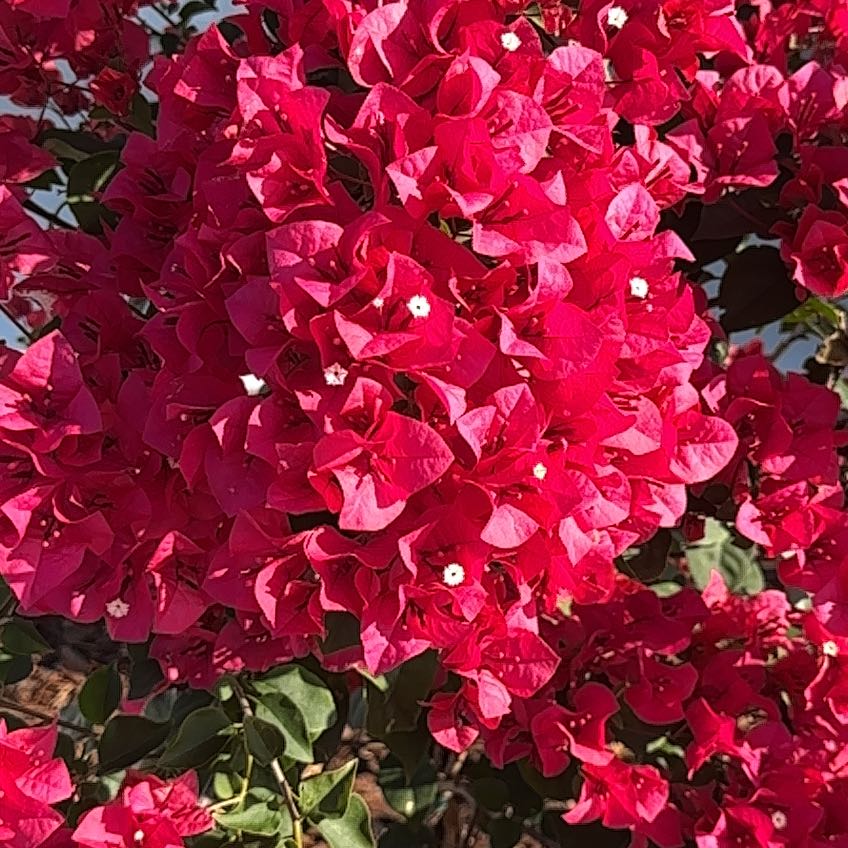
Bougainvillea

How to Fertilize Bougainvillea

Bougainvillea spectabilis
Reviewed by Kiersten Rankel M.S.
Quick Answer
Feed your Bougainvillea with a bloom-boosting fertilizer high in phosphorus and potassium (like 6-8-10) every 2 weeks during the growing season. Too much nitrogen pushes leafy growth at the expense of flowers. Stop feeding in winter when growth slows.

When Should I Start Feeding My Bougainvillea?

Start fertilizing your Bougainvillea when new growth and buds appear in spring, which happens much earlier in frost-free zones than in areas where the plant dies back to the roots.

US feeding regions map
Pacific Feb–Nov
Mountain May–Sep
Midwest May–Sep
Northeast May–Sep
Southeast Mar–Nov
Stay on top of plant care
Get seasonal reminders for watering and fertilizing — personalized for your plants.
Try Greg Free

How Often Should I Fertilize My Bougainvillea?

During active growth (spring through late summer), fertilize every 2 weeks with liquid or every 4-6 weeks with slow-release granules. Bougainvillea is a vigorous grower in warm weather and uses nutrients quickly during bloom flushes.

Begin tapering in early fall. By the time nighttime temperatures drop consistently below 60F (15C), stop feeding entirely. Bougainvillea goes semi-dormant in cool weather and does not need nutrients during this period.

Overfeeding shows up as lots of green growth with very few colorful bracts. If your bougainvillea is all leaves and no flowers, cut back on nitrogen and switch to a bloom formula.

Feeding Calendar
Spring & Summer
Bloom-boosting liquid every 2 weeks or slow-release granules every 6 weeks
Early Fall
Half-strength monthly, taper as temperatures cool
Late Fall & Winter
No feeding

What Is the Best Fertilizer for Bougainvillea?

Bougainvillea blooms most heavily with a fertilizer that is low in nitrogen and high in phosphorus and potassium, something in the range of 6-8-10 or a dedicated bougainvillea/hibiscus formula. Excess nitrogen pushes vigorous vine and leaf growth but suppresses the colorful bracts that make this plant worth growing.

A granular slow-release formula applied every 4-6 weeks works well for in-ground plants. For container-grown bougainvillea, a liquid fertilizer every 2 weeks gives you more control over bloom timing.

Bougainvillea is native to Brazil and tolerates lean, slightly acidic soils. It actually blooms better when slightly stressed, so do not overfeed. Moderate, consistent fertilizing produces far better color than heavy doses.

Synthetic
Purpose-built for bougainvillea with iron and micronutrients for vibrant bract color. Apply 1 tablespoon per gallon every 2 weeks.
High-phosphorus formula that promotes heavy flowering. Use at half strength (1/4 teaspoon per gallon) to keep nitrogen low.
Organic
Gentle organic granular with a bloom-friendly ratio. Apply every 4-6 weeks during the growing season.
Excellent phosphorus source for boosting blooms. Work a tablespoon into the top inch of soil monthly during the growing season.

How Do I Fertilize My Bougainvillea?

1
Water the soil first
Give your bougainvillea a good soak and let it drain before applying fertilizer. Even drought-tolerant plants can suffer root burn from fertilizer on dry soil.
2
Choose a bloom-boosting formula
Use a fertilizer with low nitrogen and higher phosphorus and potassium, like a 6-8-10 or a hibiscus/bougainvillea blend. Avoid high-nitrogen formulas (like 30-10-10), which suppress blooming.
3
Apply at the drip line
For in-ground plants, scatter granules or pour liquid around the drip line where feeder roots are most active. For containers, apply evenly across the soil surface.
4
Water in after applying
Give the soil a light watering after applying fertilizer to carry the nutrients down to the root zone. This is especially important for granular formulas.
5
Watch for bloom response
Bougainvillea typically responds to feeding with a new flush of colorful bracts within 3-4 weeks. If you see only green leaf growth, reduce nitrogen at the next feeding.

Got More Questions?

Can I use banana peels to fertilize my Bougainvillea?
Banana peels decompose slowly and do not release meaningful potassium in the timeframe your plant needs it. A proper bloom-boosting fertilizer is far more effective for encouraging flowers.
What happens if I over-fertilize my Bougainvillea?
Too much fertilizer, especially nitrogen, results in lush green vine growth with few or no colorful bracts. In severe cases, you may also see leaf tip burn or salt crust on the soil. Cut back on nitrogen and flush the soil.
Why is my Bougainvillea growing lots of leaves but not blooming?
This is almost always caused by too much nitrogen, too little light, or both. Switch to a low-nitrogen bloom fertilizer, make sure the plant gets at least 6 hours of direct sun, and allow the soil to dry out between waterings.
Should I fertilize my Bougainvillea during winter?
No. Bougainvillea goes semi-dormant in cool weather and does not use nutrients during this time. Resume feeding only when you see new growth in spring.
Does Bougainvillea need acidic soil?
Bougainvillea prefers slightly acidic to neutral soil (pH 5.5-6.5). If your water is very alkaline, an occasional application of soil acidifier or iron sulfate can help keep the pH in range and prevent yellowing leaves.
Stay on top of plant care
Get seasonal reminders for watering and fertilizing — personalized for your plants.
Try Greg Free

About This Article

Kiersten Rankel M.S.
Botanical Data Lead at Greg · Plant Scientist
About the Author
Kiersten Rankel holds an M.S. in Ecology & Evolutionary Biology from Tulane University. A certified Louisiana Master Naturalist, she has over a decade of experience in science communication, with research spanning corals, cypress trees, marsh grasses, and more. At Greg, she curates species data and verifies care recommendations against botanical research.
See Kiersten Rankel's full background on LinkedIn.
Editorial Process
Fertilizer recommendations verified against Bougainvillea spectabilis growth data from Greg's botanical database, cross-referenced with USDA hardiness zone data and published horticultural research.
1,838+ Greg users growing this plant
USDA hardiness zones 9a–11b