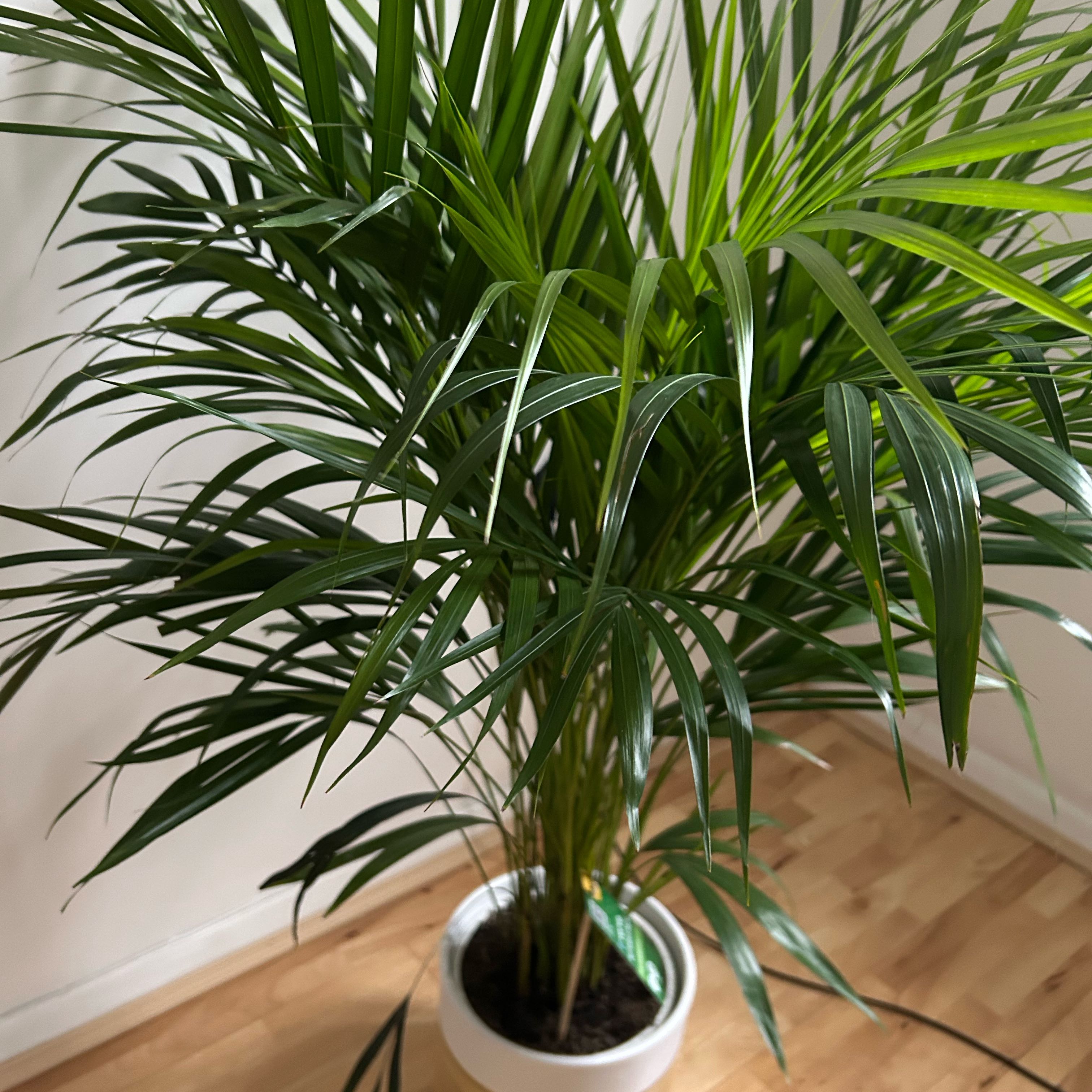
Areca Palm

Best Pot for Areca Palm

Dypsis lutescens
Reviewed by Kiersten Rankel M.S.
Quick Answer
Areca Palms do best in unglazed ceramic, wood, or glazed ceramic pots that hold moderate moisture while still draining well. Start with a pot 2โ€“3 inches wider than the root clump, and size up every 2 years as the clump fills out. Drainage holes are non-negotiable , soggy roots are this palm's biggest enemy.

What Size Pot Does an Areca Palm Need?

Areca Palms grow in tight clumps, and the pot should match the spread of that clump, not dwarf it. At the nursery, most plants arrive in 6โ€“8 inch pots. A pot 2โ€“3 inches wider than the root mass gives the clump room to expand without leaving so much excess soil that it stays wet between waterings.

As the plant matures indoors and reaches 5โ€“7 feet, it will need a 14โ€“18 inch pot to anchor the clump and support the canes. Taller pots help here because Areca roots grow both outward and downward. Going too wide too fast is the most common mistake: a large pot packed with unused soil holds moisture far longer than the roots can absorb, which sets the stage for rot.

When roots start circling the bottom or pushing through the drainage holes, it is time to go up one size. Every 2โ€“3 years is a typical repotting rhythm for a healthy, actively growing palm indoors.

Young plant (under 2 ft) 6โ€“8" pot
Growing plant (2โ€“4 ft) 10โ€“12" pot
Established plant (4โ€“6 ft) 14โ€“16" pot
Mature specimen (6 ft+) 18โ€“24" pot

What Material Pot Is Best for an Areca Palm?

Areca palms develop a dense, clumping mass of fibrous roots that fill a pot quickly and prefer consistent access to moisture. In their tropical habitat, roots stay in soil that is moist but never saturated, with plenty of airflow at the surface.

A container that holds moisture steadily while still draining freely from the bottom suits this palm well. Because the root mass is dense, the walls of the pot play an important role in regulating how quickly water moves through -- roots need to stay consistently moist, not swinging between flood and drought.

Dries fastest → Slowest
Best for Areca Palm
Fabric
Works well for Areca Palm, but the clump dries faster than in solid pots, so check soil moisture more frequently.
Unglazed Ceramic
An excellent choice , porous walls help prevent the root rot that Areca Palms are susceptible to while maintaining steady moisture.
Wood
Works well and looks natural; just inspect the interior every year or two since wood can degrade with repeated watering.
Glazed Ceramic
A solid option , retains moisture longer than unglazed, so let the top 2 inches of soil dry before watering again.
Plastic
Lightweight and practical, especially for large palms that get moved around; make sure drainage holes are large and unobstructed.
Metal
Fine for an indoor Areca Palm, but check that any uncoated interior doesn't rust over time with regular watering.

Areca Palms form dense clumps of roots that appreciate steady moisture, but they're also prone to root rot if things stay too wet. Every material on the spectrum works, which gives you plenty of options.

Unglazed ceramic is an excellent starting point. Its breathable walls help prevent overwatering while the weight keeps a tall palm from tipping. Glazed ceramic offers the same stability with a bit more moisture retention.

Plastic is lightweight and practical, especially for large palms you might need to move. Just pair it with a decorative outer pot or weighted base so a top-heavy palm doesn't topple over.

Stay on top of plant care
Get seasonal reminders for watering and fertilizing โ€” personalized for your plants.
Try Greg Free

Does My Areca Palm Need Drainage Holes?

Yes, drainage holes are essential for Areca Palms. The clumping root system is dense and generates a lot of root mass in a relatively small space. When water has nowhere to escape, that crowded root zone stays saturated and root rot develops quickly.

If you love a decorative pot without holes, use it as a cachepot. Set the grow pot inside and empty the outer pot within 30 minutes of watering. Root rot in palms is hard to reverse once it reaches the base of the canes, so good drainage from the start is worth the effort.

When Should I Repot My Areca Palm?

Most Areca Palms need repotting every 2 to 3 years, though a plant in a warm, bright spot may fill its pot faster. The clumping habit means new canes push up from the base continuously, and the root mass grows denser with each season.

Spring is the best time to repot, just as the plant enters its active growing period. Tip the palm out, loosen the bottom of the root mass gently, and move it into a pot 2 to 3 inches wider.

Avoid disturbing the clump more than necessary. Areca Palms do not love root disturbance, and torn roots on a crowded clump can lead to cane dieback. After repotting, water thoroughly and let the soil dry out a bit more than usual for the first 2 to 3 weeks while the roots settle in.

Signs It's Time to Repot
Roots circling the bottom or emerging from drainage holes
New canes emerging crowded or stunted at the base
Soil drying out within a day or two of watering
Palm tips yellowing despite normal care
Pot visibly bulging or becoming difficult to lift from root pressure

When Can I Plant My Areca Palm in the Ground?

Areca Palms can be planted in the ground in USDA Hardiness Zones 10aโ€“11b, where temperatures stay above 30ยฐF even in winter. In South Florida, Hawaii, and coastal Southern California, they thrive outdoors year-round and are often used as privacy screens or accent plantings.

Outside those zones, the Areca Palm is strictly a container plant with no frost tolerance. Even a brief freeze will damage the canes and can kill the clump entirely. If you move it outdoors for summer, place it in a sheltered spot with indirect light and bring it back inside well before the first fall frost.


Got More Questions?

Can I use a pot without drainage holes for my Areca Palm?
It's risky. Areca Palms are prone to root rot, and without drainage, water collects at the bottom and saturates the dense root clump. Use a cachepot setup instead , a grow pot with holes inside a decorative pot without them , and always empty the outer pot after watering.
How do I know if my pot is too big for my Areca Palm?
If the soil is still damp 5โ€“7 days after watering, the pot is likely too large relative to the root mass. Excess soil stays wet far longer than roots can absorb, which leads to rot. Go up only 2โ€“3 inches at a time when repotting.
My Areca Palm has multiple canes , should I separate them into different pots?
Generally no. Areca Palms are naturally clumping and the canes share a root system. Separating them causes significant root damage and stress. Let the clump grow together and move up to a wider pot as a unit.
Can I keep my Areca Palm in a plastic pot long-term?
Yes, absolutely. Plastic pots work well as long as they have drainage holes and you're not overwatering. Many large specimen palms spend their entire lives in plastic nursery pots with no issues.
Should I put gravel or rocks at the bottom of my Areca Palm's pot?
Skip the gravel layer , it actually reduces drainage rather than improving it by creating a perched water table at the interface. Good potting mix and working drainage holes are all you need.
Stay on top of plant care
Get seasonal reminders for watering and fertilizing โ€” personalized for your plants.
Try Greg Free

About This Article

Kiersten Rankel M.S.
Botanical Data Lead at Greg ยท Plant Scientist
About the Author
Kiersten Rankel holds an M.S. in Ecology & Evolutionary Biology from Tulane University. A certified Louisiana Master Naturalist, she has over a decade of experience in science communication, with research spanning corals, cypress trees, marsh grasses, and more. At Greg, she curates species data and verifies care recommendations against botanical research.
See Kiersten Rankel's full background on LinkedIn.
Editorial Process
Container guidance verified against Dypsis lutescens growth data from Greg's botanical database, cross-referenced with USDA hardiness zone data and published horticultural research.
3,850+ Greg users growing this plant
USDA hardiness zones 10aโ€“11b