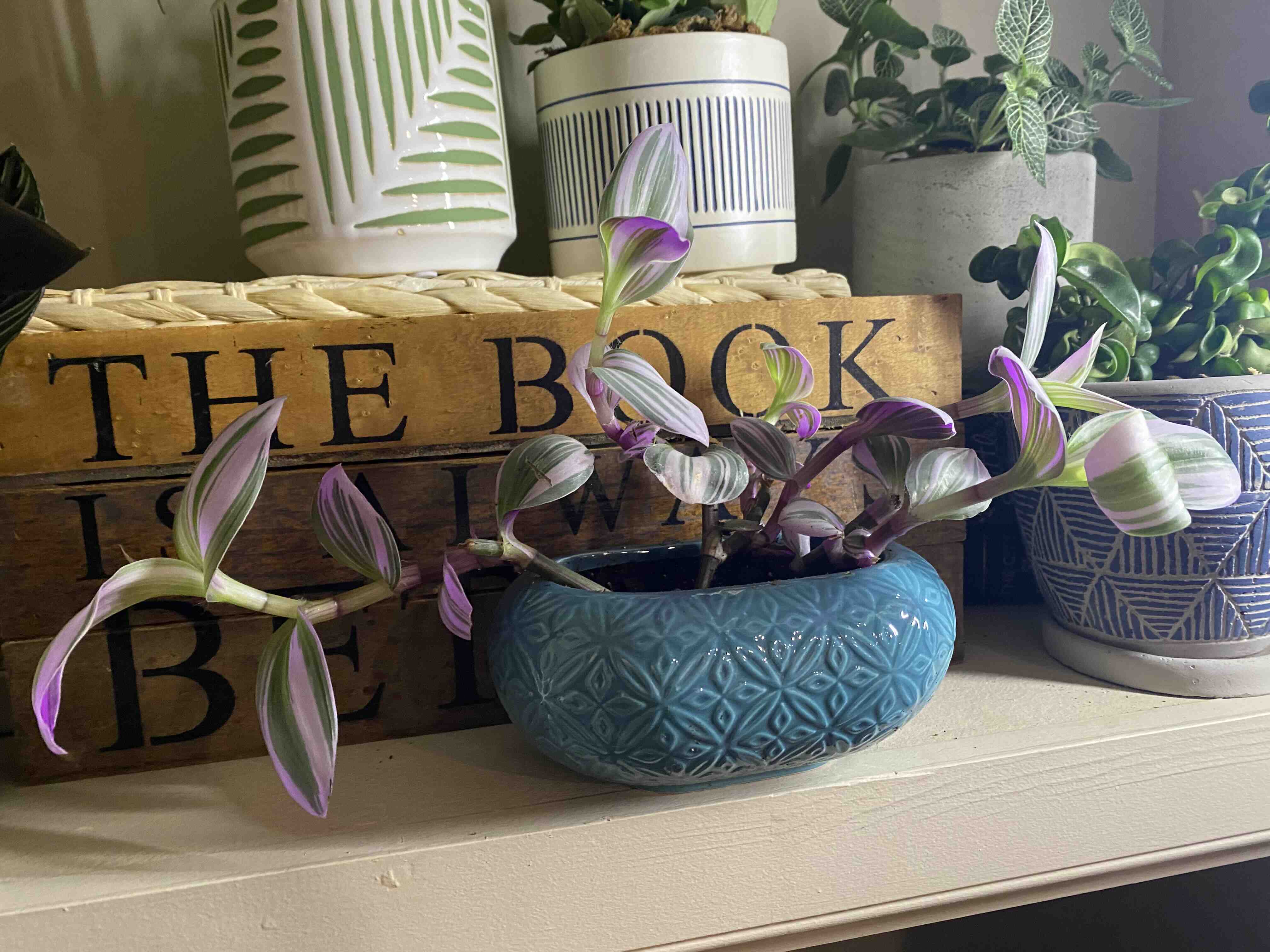
Tradescantia Nanouk does best in a glazed ceramic or plastic pot that holds some moisture between waterings. Pick a pot 1-2 inches wider than the root ball with drainage holes. This fast grower has shallow roots, so a wider pot works better than a deep one.
What Size Pot Does a Tradescantia Nanouk Need?
Tradescantia Nanouk has a shallow, spreading root system that matches its trailing growth habit. Choose a pot 1-2 inches wider than the current root ball. A wider, shallower pot gives the roots room to spread without sitting in excess wet soil at the bottom.
When you see stems trailing well past the pot rim and roots filling the surface, it's time to size up. Going too big too fast leaves soggy soil around the edges that the roots can't reach, which invites rot.
For a mature Nanouk, a pot around 8-10 inches wide is usually plenty. This plant stays compact, topping out around 12 inches tall with a 20-inch spread.
Rooted cutting or starter plant3–4" pot
Young plant (4–6" tall)5–6" pot
Established plant (6–10" tall)6–8" pot
Mature plant (10–12" tall, trailing)8–10" pot
What Material Pot Is Best for Tradescantia Nanouk?
Nanouk's shallow roots dry out quickly, and this plant has low drought tolerance. It needs consistent moisture without waterlogging, so a pot that holds some water between sessions is ideal.
The roots are fine and fibrous, not especially rot-prone, but they do suffer fast in bone-dry soil. A pot material that slows evaporation slightly gives you a bigger window between waterings.
Dries fastest → Slowest
FabricTOO FAST
Dries out too quickly for this moisture-loving plant, requiring very frequent watering.
Best for Tradescantia Nanouk
Unglazed Ceramic
Works fine if you water consistently, but dries faster than glazed options.
Wood
A good middle ground that breathes while holding enough moisture for Nanouk.
Glazed Ceramic
An excellent match, keeping soil evenly moist without staying soggy.
Plastic
Holds moisture well and keeps this thirsty plant happy between waterings.
Metal
Fine for indoor use where it retains moisture well for this trailing houseplant.
Tradescantia Nanouk is a thirsty trailing plant that prefers consistently moist soil. Glazed ceramic, plastic, and metal are all great choices because they hold moisture well between waterings. Wood offers a nice middle ground with some breathability.
Avoid fabric pots. They dry out too quickly for this moisture-loving plant, which means you would need to water very frequently to keep it happy. Unglazed ceramic works if you stay on top of watering, but glazed or plastic will make your life easier.
Stay on top of plant care
Get seasonal reminders for watering and fertilizing — personalized for your plants.
Yes, drainage holes are important for Nanouk. While this plant likes consistent moisture, standing water at the bottom of a pot quickly leads to mushy stems and root rot.
If you want to use a decorative pot without holes, place the Nanouk in a nursery pot inside it and dump any collected water after 15-20 minutes.
When Should I Repot My Tradescantia Nanouk?
Nanouk is a fast grower and typically needs repotting once a year, sometimes more during the growing season. Spring is the best time, right as the plant wakes up and starts pushing new growth.
When you repot, gently loosen the root ball and settle it into fresh, well-draining potting mix. Go up only 1-2 inches in pot width. Nanouk recovers quickly from repotting and usually starts trailing new growth within a few weeks.
If you prefer a bushier plant, repotting is also a great time to trim long stems and root the cuttings right back into the same pot.
Signs It's Time to Repot
Roots circling the surface of the soil
Water runs straight through without soaking in
Soil dries out within a day of watering
New growth looks smaller or paler than usual
Stems are trailing but the plant looks leggy at the base
When Can I Plant My Tradescantia Nanouk in the Ground?
Tradescantia Nanouk is hardy in zones 10a through 12a, so year-round outdoor planting only works in frost-free climates like southern Florida or Hawaii. In these areas, plant it in a shaded or dappled-light bed with moist, well-draining soil.
In cooler climates, you can move Nanouk outdoors in summer as a trailing accent in container gardens. Bring it back inside before nighttime temperatures drop below 50°F. Frost will kill the foliage and roots quickly.
Got More Questions?
Can I keep Tradescantia Nanouk in a pot without drainage holes?
It's risky. Nanouk likes moisture but not soggy roots. If you use a decorative pot without holes, set the plant in a nursery pot inside it and empty any standing water after each watering.
How do I know if my Nanouk's pot is too big?
If the soil stays wet for more than a week after watering, the pot is probably too large. The outer ring of soil stays saturated because the roots haven't grown into it yet, which can cause rot.
Should I use a hanging basket for Tradescantia Nanouk?
Absolutely. Nanouk's trailing habit looks beautiful in a hanging basket. Just check the soil more often since hanging pots dry out faster from air circulation on all sides.
Can I put multiple Nanouk cuttings in one pot?
Yes, and it's a great way to get a fuller plant faster. Use a pot wide enough that each cutting has a couple inches of space. They'll fill in quickly.
Does Tradescantia Nanouk like being root bound?
Not especially. It tolerates mild root binding, but growth slows down and the plant gets leggy. Repot when roots start circling or poking out of drainage holes.
Stay on top of plant care
Get seasonal reminders for watering and fertilizing — personalized for your plants.
Kiersten Rankel holds an M.S. in Ecology & Evolutionary Biology from Tulane University. A certified Louisiana Master Naturalist, she has over a decade of experience in science communication, with research spanning corals, cypress trees, marsh grasses, and more. At Greg, she curates species data and verifies care recommendations against botanical research.
See Kiersten Rankel's full background on LinkedIn.
Editorial Process
Container guidance verified against Tradescantia fluminensis 'Nanouk' growth data from Greg's botanical database, cross-referenced with USDA hardiness zone data and published horticultural research.