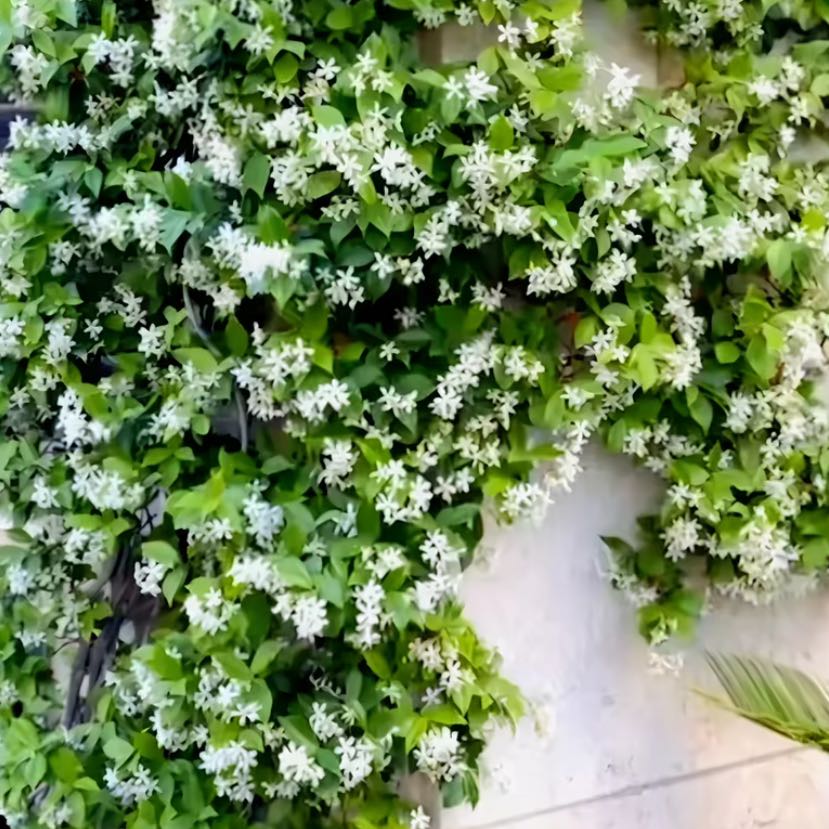
Star Jasmine does well in a heavy, sturdy pot like glazed ceramic or wood with good drainage. Choose a pot 2-3 inches wider than the root ball to give its vigorous roots room to grow. Drainage holes are essential since this vine likes consistent moisture but not soggy feet.
What Size Pot Does a Star Jasmine Need?
Star Jasmine is a vigorous vine that puts out a strong root system to support its spreading growth. Choose a pot 2-3 inches wider than the nursery container. A pot that is too small will restrict growth and cause the plant to dry out quickly during warm months.
As a vine, Star Jasmine also needs a trellis or support structure, which adds weight. Pick a pot heavy enough to stay upright as the vine fills out and catches wind. A low, wide pot with a broad base is more stable than a tall, narrow one.
When the roots start circling the inside of the pot or growing out the drainage holes, it is time to size up. Star Jasmine can grow quickly in the right conditions, so check the roots each spring.
Young plant (under 1 ft)6–8" pot
Established vine (1–3 ft)10–14" pot
Mature vine (3–6 ft spread)14–18" pot
Large specimen on trellis18–24" pot or planter
What Material Pot Is Best for Star Jasmine?
Star Jasmine roots need consistent moisture without waterlogging. The root system is dense and fibrous, spreading to anchor the vine as it climbs. A pot material that holds some moisture while still draining well gives this plant the even hydration it prefers.
Weight is another factor. A fully grown Star Jasmine on a trellis catches wind like a sail, so a heavier pot keeps everything stable outdoors.
Dries fastest → Slowest
Best for Star Jasmine
Fabric
Dries out fast, so you will need to water more often in summer. Works best for smaller plants.
Unglazed Ceramic
Good moisture balance and heavy enough to anchor a trellis. A reliable choice.
Wood
Natural insulation and decent moisture retention. A half-barrel planter is a classic look for jasmine.
Glazed Ceramic
Holds moisture well and adds weight for stability. Great for Star Jasmine's consistent watering needs.
Plastic
Lightweight and affordable, but may tip over as the vine grows tall. Weigh down with gravel if needed.
MetalOVERHEATS
Can cook roots on hot patios in summer sun. Star Jasmine often lives outdoors in full sun, making metal risky.
Star Jasmine is a vigorous vine that likes consistent moisture and full sun. Glazed ceramic and unglazed ceramic are both strong choices because they hold moisture well and add weight to anchor a trellis. A wood half-barrel is a classic look that works beautifully too.
Skip metal pots. Star Jasmine often grows on hot patios in full sun, and metal heats up fast in those conditions. The trapped heat can cook roots right when the vine is working hardest to bloom.
Stay on top of plant care
Get seasonal reminders for watering and fertilizing — personalized for your plants.
Yes. Star Jasmine wants evenly moist soil but will develop root rot if water sits at the bottom of the pot. Its dense fibrous roots need air as well as water, and an undrained pot creates anaerobic conditions at the root zone.
Make sure drainage holes are large enough and not blocked by compacted soil. Placing a layer of coarse gravel or pot shards over the holes keeps the drain open over time.
When Should I Repot My Star Jasmine?
Star Jasmine grows vigorously once established and may need repotting every one to two years when young. Once it reaches its final container size (around 18-24 inches), you can refresh the top few inches of soil each spring instead of fully repotting.
Repot in early spring before the main flush of new growth. Gently loosen circling roots and trim any that are damaged. Try not to disturb the root ball too much since Star Jasmine can sulk for a few weeks after a rough repotting.
Use a rich, well-draining potting mix. A general-purpose blend with added perlite works well. Star Jasmine appreciates slightly acidic to neutral soil.
Signs It's Time to Repot
Roots circling visibly at the soil surface
Water runs straight through without being absorbed
New growth slows despite good light and feeding
Plant wilts quickly between waterings even in shade
Roots growing densely out of drainage holes
When Can I Plant My Star Jasmine in the Ground?
Star Jasmine thrives in the ground in zones 8a through 10b. Plant in spring after the last frost, choosing a spot with full sun to partial shade and well-drained soil. It makes an excellent ground cover, wall climber, or fence screen once established.
In zones colder than 8a, keep Star Jasmine in a container so you can move it to a sheltered spot or indoors when temperatures drop below about 10 degrees F. It can handle brief cold snaps but sustained freezes will damage or kill it. Container plants can summer outdoors and overwinter in a cool, bright room.
Got More Questions?
Can I grow Star Jasmine in a pot without drainage holes?
This is not a good idea. Star Jasmine needs consistent moisture but its roots will rot in standing water. Always use a pot with drainage or a cachepot setup where you can pour out excess water.
How do I know if my Star Jasmine's pot is too big?
If the soil stays soggy for more than a week after watering, the pot is too large for the current root mass. The extra wet soil invites fungal problems. Size up gradually, 2-3 inches at a time.
Does my Star Jasmine need a heavy pot?
It helps. A mature Star Jasmine on a trellis acts like a sail in the wind. A heavy pot like glazed ceramic, stone, or a large wood planter keeps the whole setup stable and prevents tipping.
Can Star Jasmine stay in the same pot forever?
Large specimens can stay in their final pot for years if you top-dress with fresh soil each spring and fertilize regularly. The roots will fill the pot completely, but the plant can still thrive.
Should I prune the roots when repotting Star Jasmine?
Only trim roots that are damaged, mushy, or tightly circling the bottom. Star Jasmine does not respond well to aggressive root pruning. Gently loosen circling roots and place in the new pot with fresh soil.
Stay on top of plant care
Get seasonal reminders for watering and fertilizing — personalized for your plants.
Kiersten Rankel holds an M.S. in Ecology & Evolutionary Biology from Tulane University. A certified Louisiana Master Naturalist, she has over a decade of experience in science communication, with research spanning corals, cypress trees, marsh grasses, and more. At Greg, she curates species data and verifies care recommendations against botanical research.
See Kiersten Rankel's full background on LinkedIn.
Editorial Process
Container guidance verified against Trachelospermum jasminoides growth data from Greg's botanical database, cross-referenced with USDA hardiness zone data and published horticultural research.