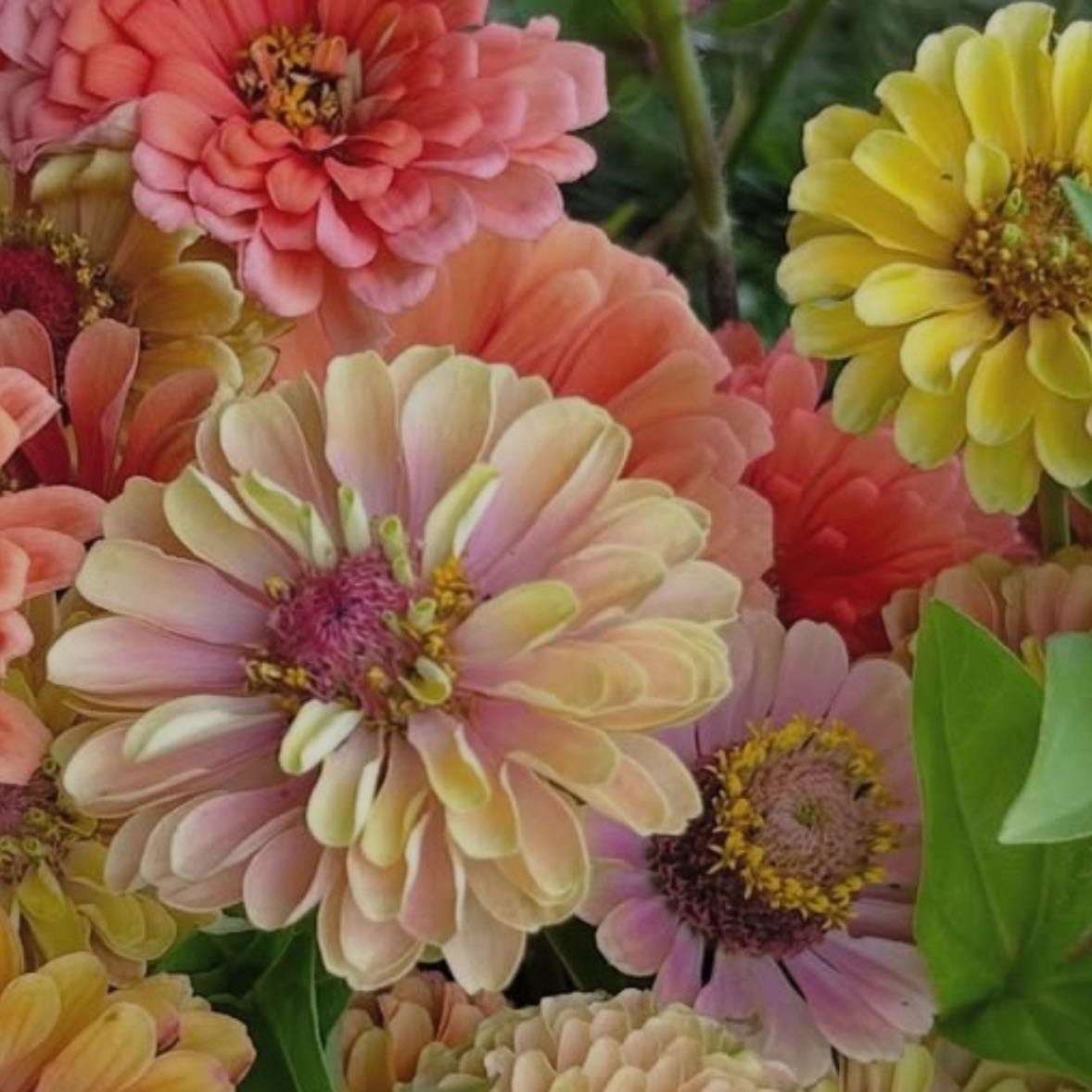
Zinnias grow well in plastic or glazed ceramic pots with drainage holes. Use a pot at least 8-12 inches wide for a single plant, or a wide planter for a group. Fast-draining soil is essential since zinnias are very prone to powdery mildew in damp conditions.
What Size Pot Does a Common Zinnia Need?
Zinnias have moderately deep root systems for an annual flower. A single plant needs a pot at least 8 inches wide and 10 inches deep. Taller zinnia varieties, like the Benary's Giant series, do better in 12-inch pots.
For a fuller display, plant 3-5 zinnias in a wide container or window box at least 18-24 inches long. Space them 4-6 inches apart so air circulates between plants, which helps prevent powdery mildew.
Avoid pots that are too shallow. Zinnias in cramped containers dry out fast and produce fewer blooms.
Seedling (just transplanted)4–6" pot
Dwarf variety (6–12 in tall)8–10" pot
Standard variety (2–3 ft tall)10–14" pot
Group planting (3–5 plants)18–24" planter
What Material Pot Is Best for Common Zinnia?
Zinnia roots need consistent moisture but are very sensitive to stagnant, humid conditions around the foliage. Their biggest enemy is powdery mildew, which thrives when air circulation is poor and leaves stay damp. A pot that retains a reasonable amount of moisture without keeping the soil soggy is ideal.
Good airflow around the pot and between plants matters just as much as the pot material itself. Elevating the container slightly off the ground helps air move under the pot and keeps the base drier.
Dries fastest → Slowest
Best for Common Zinnia
Fabric
Great airflow helps fight mildew, though you will water more often in hot weather.
Unglazed Ceramic
Breathable walls reduce excess moisture and help prevent fungal issues around the roots.
Wood
Offers a nice balance of moisture retention and breathability for seasonal annuals.
Glazed Ceramic
Holds moisture evenly so you water less often, which is helpful during hot summer stretches.
Plastic
Lightweight and affordable for seasonal planting. Pair with fast-draining soil to prevent soggy roots.
MetalOVERHEATS
Metal pots overheat in the full sun zinnias need, stressing roots and drying soil unevenly.
Zinnias are warm-season annuals from Mexico that love full sun and steady moisture, but they are also prone to mildew when their roots sit in soggy soil. Breathable materials like fabric and unglazed ceramic help air reach the roots and reduce fungal problems.
Plastic and glazed ceramic work too, especially during hot stretches when you want to water less often. Just pair them with a fast-draining potting mix. The one material to skip is metal, which overheats in the direct sun zinnias require.
Stay on top of plant care
Get seasonal reminders for watering and fertilizing — personalized for your plants.
Yes, always. Zinnias are highly susceptible to root rot and powdery mildew when moisture hangs around too long. Drainage holes let excess water escape and keep the root zone from becoming waterlogged.
If you are using a decorative outer pot without holes, place the zinnia in a plastic nursery pot inside it. Remove the inner pot to drain after watering.
When Should I Repot My Common Zinnia?
Zinnias are warm-season annuals, so repotting means transplanting seedlings into their final container. Start seeds indoors 4-6 weeks before the last frost, or direct sow into the final pot once frost danger has passed.
Transplant when seedlings have 2-3 sets of true leaves. Move them into their permanent pot and avoid disturbing the roots again, since zinnias do not like being moved once established.
Pinch the growing tip after transplanting to encourage bushier growth and more flower stems.
Signs It's Time to Repot
Seedling has 2-3 sets of true leaves
Roots visible at the bottom of the starter cell
Nighttime temperatures consistently above 50F
Plant looks crowded among other seedlings in the tray
When Can I Plant My Zinnia in the Ground?
Common Zinnias grow in USDA zones 2a through 11b as a warm-season annual. Plant outdoors after all frost danger has passed and soil temperatures reach at least 60F. Zinnias are native to Mexico and love heat, so waiting for truly warm soil gives them the best start.
In-ground zinnias generally grow taller and produce more blooms than container-grown ones, since their roots have unlimited room to spread. Space plants 6-12 inches apart in a sunny spot with good air circulation.
Got More Questions?
Can I grow zinnias in a pot without drainage holes?
No. Zinnias are very prone to root rot and powdery mildew. Without drainage, excess water sits around the roots and creates the exact conditions these diseases thrive in.
How do I know if my zinnia pot is too big?
If the soil stays wet for several days after watering, the pot may be too large for the number of plants in it. Add more plants or use a smaller container so roots can absorb water before it stagnates.
Why are my potted zinnias getting powdery mildew?
Poor air circulation and wet foliage are the usual culprits. Space plants further apart, water at the soil level instead of overhead, and make sure the pot is in a spot with good airflow.
Can I move my potted zinnias indoors?
Zinnias need full sun and are not suited to indoor growing. They will get leggy and stop blooming without at least 6 hours of direct sunlight daily.
How many zinnias can I fit in one pot?
In an 18-inch wide pot, 3-4 standard zinnias with 4-6 inches between them is a good rule. Overcrowding reduces airflow and increases disease risk.
Stay on top of plant care
Get seasonal reminders for watering and fertilizing — personalized for your plants.
Kiersten Rankel holds an M.S. in Ecology & Evolutionary Biology from Tulane University. A certified Louisiana Master Naturalist, she has over a decade of experience in science communication, with research spanning corals, cypress trees, marsh grasses, and more. At Greg, she curates species data and verifies care recommendations against botanical research.
See Kiersten Rankel's full background on LinkedIn.
Editorial Process
Container guidance verified against Zinnia elegans growth data from Greg's botanical database, cross-referenced with USDA hardiness zone data and published horticultural research.