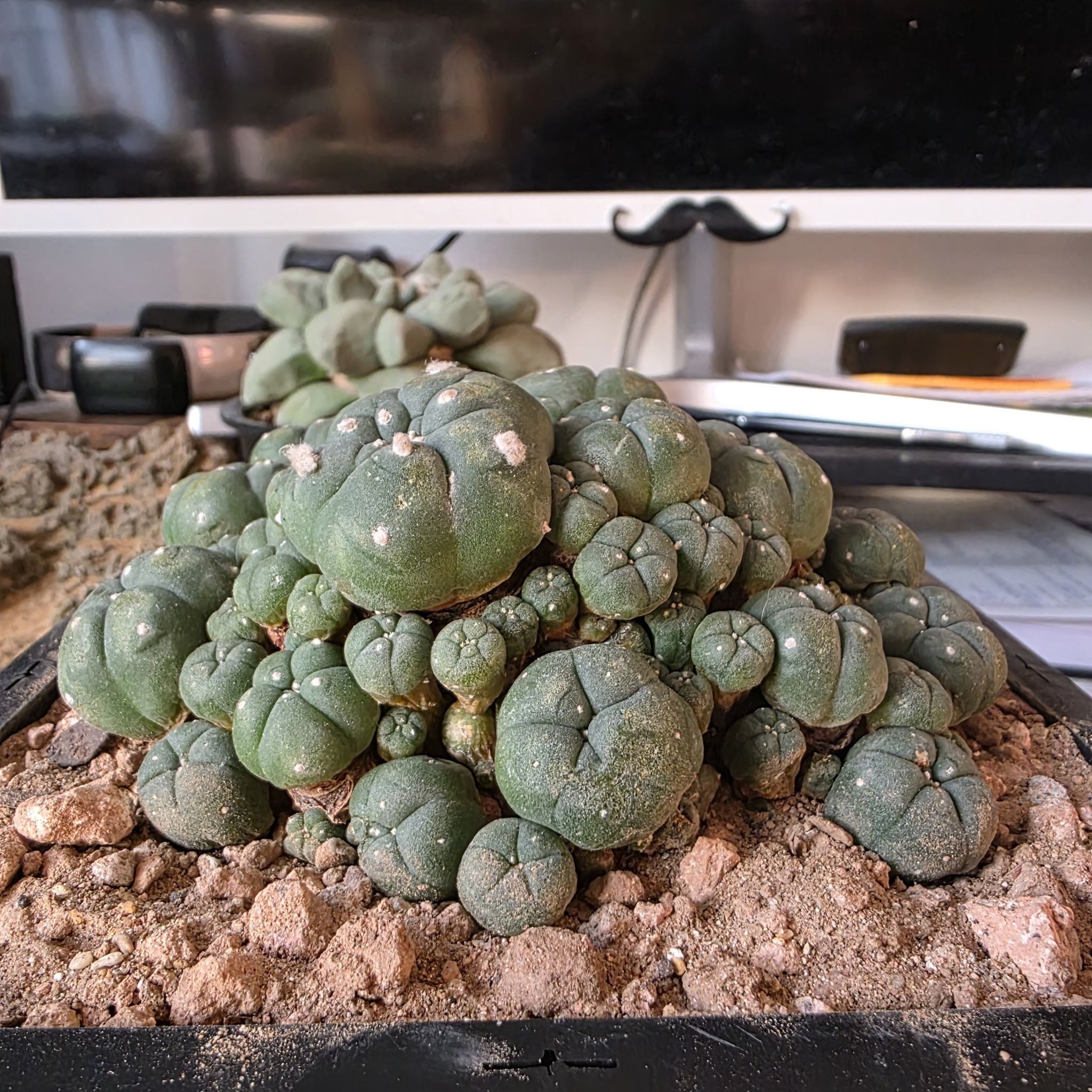
An unglazed ceramic or terracotta pot is ideal for Peyote because it wicks away excess moisture quickly. Choose a shallow pot only 1-2 inches wider than the plant, since Peyote has a compact taproot that rots easily in soggy soil. A drainage hole is absolutely essential.
What Size Pot Does a Peyote Need?
Peyote is a small, slow-growing cactus with a thick taproot. The pot should be just slightly wider than the plant body, with enough depth to accommodate the taproot without excess soil holding moisture.
When sizing up, go only 1 inch wider than the current pot. Too much extra soil stays wet for too long, which is the fastest way to lose a Peyote to rot.
If your Peyote sits loosely in its pot or the taproot is coiling at the bottom, it is time to move up. But if the soil still feels damp days after watering, your pot may already be too large.
Seedling (under 1")2" pot
Young plant (1–2")3" pot
Mature plant (2–4")4–5" pot
What Material Pot Is Best for Peyote?
Peyote has a thick taproot that stores water and is extremely sensitive to sitting in moisture. The roots need a pot that dries out quickly and allows air to reach the soil from all sides.
Fast-drying, breathable materials reduce the risk of rot, which is the number one killer of Peyote in cultivation. Anything that traps moisture for extended periods creates dangerous conditions for this desert cactus.
Dries fastest → Slowest
Best for Peyote
Fabric
Excellent airflow and fast drying make fabric a great match for Peyote's rot-sensitive roots.
Unglazed Ceramic
The top choice for Peyote. Terracotta wicks moisture from the soil and provides steady airflow.
Wood
Absorbs some moisture and breathes well, though it may retain slightly more water than terracotta.
Glazed Ceramic
Holds moisture longer than Peyote prefers. Only use with very fast-draining soil and careful watering.
PlasticTOO SLOW
Traps moisture and blocks airflow, creating the damp conditions that cause Peyote root rot.
MetalTOO SLOW
Retains moisture and can overheat in sun, both of which stress Peyote roots.
Peyote is a slow-growing desert cactus native to the dry landscapes of the southwestern United States and Mexico. Its roots are extremely sensitive to moisture and rot easily, so fast-draining pots are essential.
Fabric, unglazed ceramic, and wood are all ideal choices. Terracotta is the top recommendation because it wicks water from the soil steadily and provides great airflow. Fabric is another excellent option if you want maximum drainage.
Glazed ceramic, plastic, and metal all hold moisture longer than Peyote can handle. The non-porous walls trap dampness against the roots, creating exactly the conditions that cause rot.
Stay on top of plant care
Get seasonal reminders for watering and fertilizing — personalized for your plants.
Yes, without question. Peyote is one of the most rot-prone cacti in cultivation, and a pot without drainage is a death sentence. Water must be able to pass through the soil and exit completely.
Even with a drainage hole, use a fast-draining cactus mix with extra perlite or pumice. If water pools on the surface for more than a few seconds, the soil is too dense.
When Should I Repot My Peyote?
Peyote grows very slowly, so repotting is only needed every 3-5 years. The best time is in early spring, just as the growing season begins.
When you repot, let the roots dry for a day or two before placing the plant in fresh, dry soil. Do not water for at least a week after repotting to let any root damage heal.
Handle the taproot gently. It is the plant's main water storage organ, and damage to it can lead to rot if exposed to moisture too soon.
Signs It's Time to Repot
Taproot visible through the drainage hole
Plant has outgrown the pot diameter
Soil dries out within hours of watering
Growth has completely stalled for over a year
When Can I Plant My Peyote in the Ground?
Peyote can grow in the ground in USDA zones 9a through 11b, but only in very well-drained, rocky or sandy soil. It cannot tolerate any standing water around its roots.
In most climates, Peyote does best as a container plant. Keeping it in a pot gives you full control over soil drainage and lets you bring it indoors during cold or rainy seasons. Even in warm zones, a raised rock garden bed with mineral soil is safer than flat ground.
Got More Questions?
Can I use a pot without drainage holes for Peyote?
No. Peyote is extremely prone to root rot, and a pot without drainage will almost certainly kill it. Always use a pot with at least one drainage hole.
How do I know if my Peyote's pot is too big?
If the soil stays damp for more than 3-4 days after watering, the pot is too large. Peyote needs soil that dries out quickly between waterings.
Should I use a deep or shallow pot for Peyote?
A moderately deep pot works best. Peyote has a thick taproot that grows downward, so the pot needs enough depth to house it without excess soil around the sides.
Can I plant Peyote in pure mineral substrate?
Yes, many growers use a nearly soilless mix of pumice, perlite, and coarse sand. This mimics Peyote's natural rocky habitat and virtually eliminates rot risk.
Do I need to put gravel at the bottom of the pot?
A thin layer of gravel or pumice at the bottom can help with drainage, but it is not a substitute for a drainage hole. The most important thing is that water can exit the pot freely.
Stay on top of plant care
Get seasonal reminders for watering and fertilizing — personalized for your plants.
Kiersten Rankel holds an M.S. in Ecology & Evolutionary Biology from Tulane University. A certified Louisiana Master Naturalist, she has over a decade of experience in science communication, with research spanning corals, cypress trees, marsh grasses, and more. At Greg, she curates species data and verifies care recommendations against botanical research.
See Kiersten Rankel's full background on LinkedIn.
Editorial Process
Container guidance verified against Lophophora williamsii growth data from Greg's botanical database, cross-referenced with USDA hardiness zone data and published horticultural research.