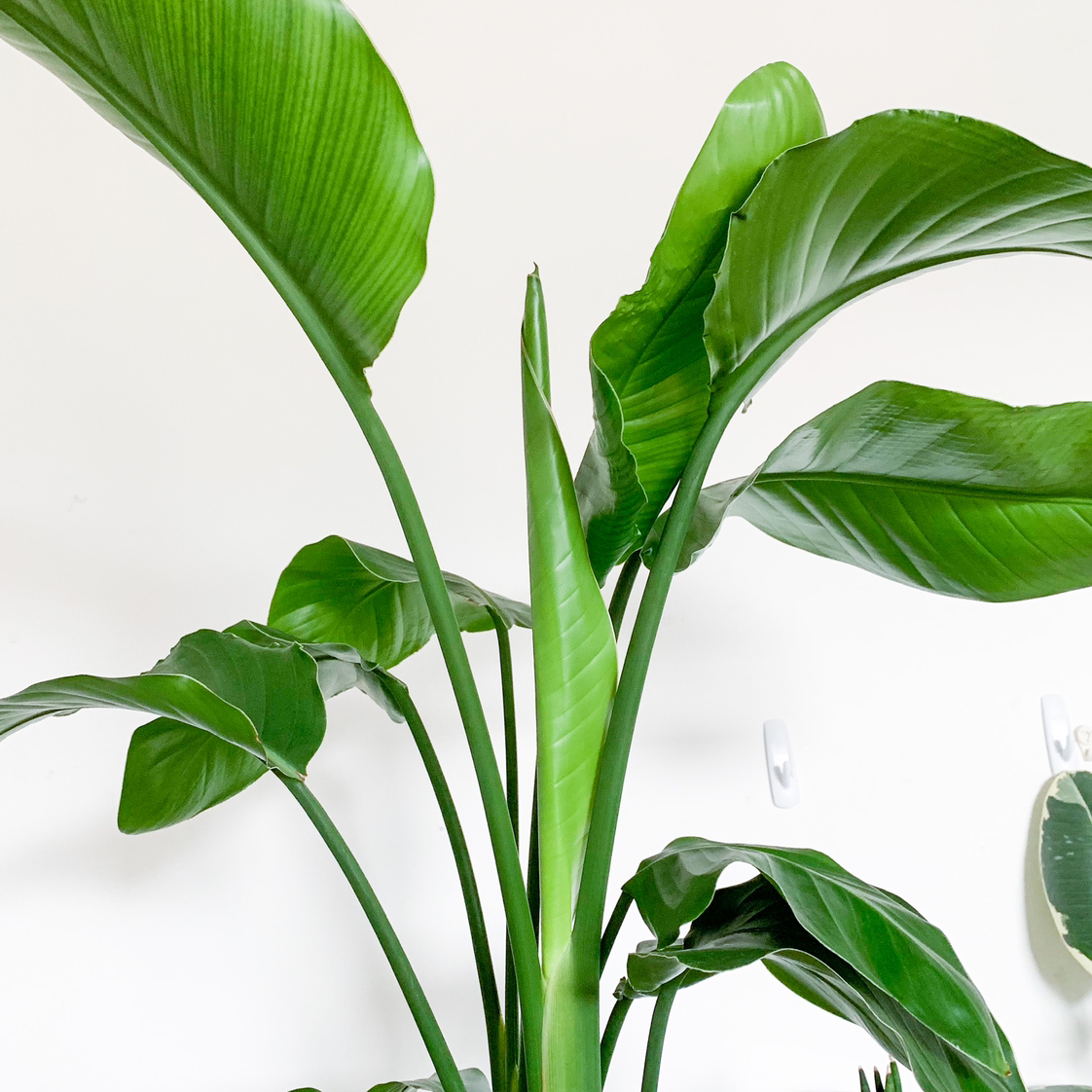
Best Pot for Bird of Paradise
What Size Pot Does a Bird of Paradise Need?
Bird of Paradise forms a dense clump of thick rhizomes and fleshy roots that fill a pot quickly. Unlike many houseplants, it actually blooms more reliably when somewhat rootbound, so resist the urge to size up too fast.
For most of its life, a pot 2 inches wider than the root clump is plenty. Let the plant tell you when it's ready for more space by showing you roots escaping from the drainage holes or leaves that look overcrowded.
Because Bird of Paradise grows tall with large paddle-shaped leaves, the pot also needs to be heavy enough not to tip. Choose a wider base relative to height, or use a heavy material like ceramic to keep it stable.
What Material Pot Is Best for Bird of Paradise?
Bird of Paradise produces thick, fleshy roots that store water and anchor a large, fast-growing plant. These roots are resilient but they still need a container with solid drainage so excess water can escape after deep watering.
Because the plant grows large and drinks heavily, it does best in a roomy pot that keeps the root ball stable. The roots tolerate brief dry spells but perform best when the soil stays consistently moist without pooling at the bottom.
Bird of Paradise is one of the most easygoing plants when it comes to pot material. Its thick, fleshy roots store water well and tolerate a wide range of moisture levels, so nearly any pot will work.
Fabric and unglazed ceramic dry out faster, which is fine as long as you water a bit more often. Glazed ceramic and plastic hold moisture longer, which this big plant appreciates between waterings. For larger sizes, plastic keeps the weight manageable.
Metal works too, especially indoors. If your Bird of Paradise lives outside in direct sun, just move a metal pot into partial shade during the hottest part of the day to keep roots comfortable.

Does My Bird of Paradise Need Drainage Holes?
Yes. Bird of Paradise roots are thick and fleshy and will rot if they sit in water. Without drainage holes, any excess water collects at the bottom of the pot and has nowhere to go, leaving the lower roots permanently wet.
Always use a pot with at least one good drainage hole. If you use a saucer, empty it after every watering session. Never let the pot sit in standing water.
When Should I Repot My Bird of Paradise?
Bird of Paradise is a slow-to-moderate grower and is famously reluctant to flower unless it's a bit rootbound. Don't rush repotting. Most plants are comfortable for 2–3 years in the same container, and repotting too often can actually delay flowering.
Spring is the best time to repot. The plant is entering its growing season and will push new roots quickly to establish itself in the new container. Move up only 2 inches in pot diameter to avoid overly wet soil.
If your Bird of Paradise is cracking its plastic nursery pot or you see a dense mass of roots when you tip it out, it's definitely time. Otherwise, let it be.
When Can I Plant My Bird of Paradise in the Ground?
Bird of Paradise can be planted in the ground in USDA zones 10a through 11b, where it thrives in full sun to partial shade and will bloom reliably each year. In those climates it grows much larger outdoors than in any pot.
In cooler zones, keep it in a container. It can spend summers outdoors on a patio in a sunny spot, but bring it back inside before temperatures drop below 50°F. Even brief cold can damage the large leaves.
Got More Questions?
About This Article
