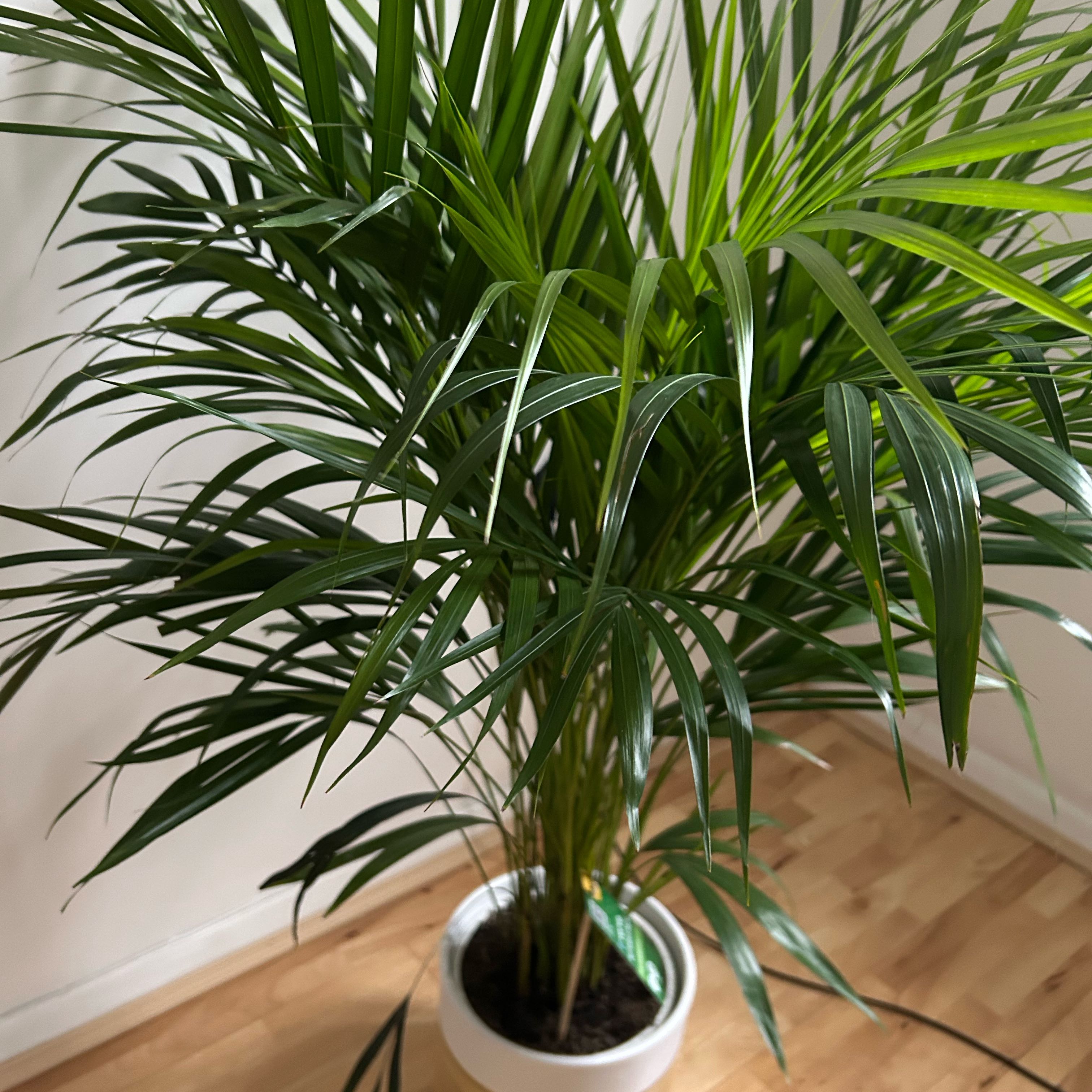
Best Pot for Areca Palm
What Size Pot Does an Areca Palm Need?
Areca Palms grow in tight clumps, and the pot should match the spread of that clump, not dwarf it. At the nursery, most plants arrive in 6–8 inch pots. A pot 2–3 inches wider than the root mass gives the clump room to expand without leaving so much excess soil that it stays wet between waterings.
As the plant matures indoors and reaches 5–7 feet, it will need a 14–18 inch pot to anchor the clump and support the canes. Taller pots help here because Areca roots grow both outward and downward. Going too wide too fast is the most common mistake: a large pot packed with unused soil holds moisture far longer than the roots can absorb, which sets the stage for rot.
When roots start circling the bottom or pushing through the drainage holes, it is time to go up one size. Every 2–3 years is a typical repotting rhythm for a healthy, actively growing palm indoors.
What Material Pot Is Best for an Areca Palm?
Areca palms develop a dense, clumping mass of fibrous roots that fill a pot quickly and prefer consistent access to moisture. In their tropical habitat, roots stay in soil that is moist but never saturated, with plenty of airflow at the surface.
A container that holds moisture steadily while still draining freely from the bottom suits this palm well. Because the root mass is dense, the walls of the pot play an important role in regulating how quickly water moves through -- roots need to stay consistently moist, not swinging between flood and drought.
Areca Palms form dense clumps of roots that appreciate steady moisture, but they're also prone to root rot if things stay too wet. Every material on the spectrum works, which gives you plenty of options.
Unglazed ceramic is an excellent starting point. Its breathable walls help prevent overwatering while the weight keeps a tall palm from tipping. Glazed ceramic offers the same stability with a bit more moisture retention.
Plastic is lightweight and practical, especially for large palms you might need to move. Just pair it with a decorative outer pot or weighted base so a top-heavy palm doesn't topple over.

Does My Areca Palm Need Drainage Holes?
Yes, drainage holes are essential for Areca Palms. The clumping root system is dense and generates a lot of root mass in a relatively small space. When water has nowhere to escape, that crowded root zone stays saturated and root rot develops quickly.
If you love a decorative pot without holes, use it as a cachepot. Set the grow pot inside and empty the outer pot within 30 minutes of watering. Root rot in palms is hard to reverse once it reaches the base of the canes, so good drainage from the start is worth the effort.
When Should I Repot My Areca Palm?
Most Areca Palms need repotting every 2 to 3 years, though a plant in a warm, bright spot may fill its pot faster. The clumping habit means new canes push up from the base continuously, and the root mass grows denser with each season.
Spring is the best time to repot, just as the plant enters its active growing period. Tip the palm out, loosen the bottom of the root mass gently, and move it into a pot 2 to 3 inches wider.
Avoid disturbing the clump more than necessary. Areca Palms do not love root disturbance, and torn roots on a crowded clump can lead to cane dieback. After repotting, water thoroughly and let the soil dry out a bit more than usual for the first 2 to 3 weeks while the roots settle in.
When Can I Plant My Areca Palm in the Ground?
Areca Palms can be planted in the ground in USDA Hardiness Zones 10a–11b, where temperatures stay above 30°F even in winter. In South Florida, Hawaii, and coastal Southern California, they thrive outdoors year-round and are often used as privacy screens or accent plantings.
Outside those zones, the Areca Palm is strictly a container plant with no frost tolerance. Even a brief freeze will damage the canes and can kill the clump entirely. If you move it outdoors for summer, place it in a sheltered spot with indirect light and bring it back inside well before the first fall frost.
Got More Questions?
About This Article
