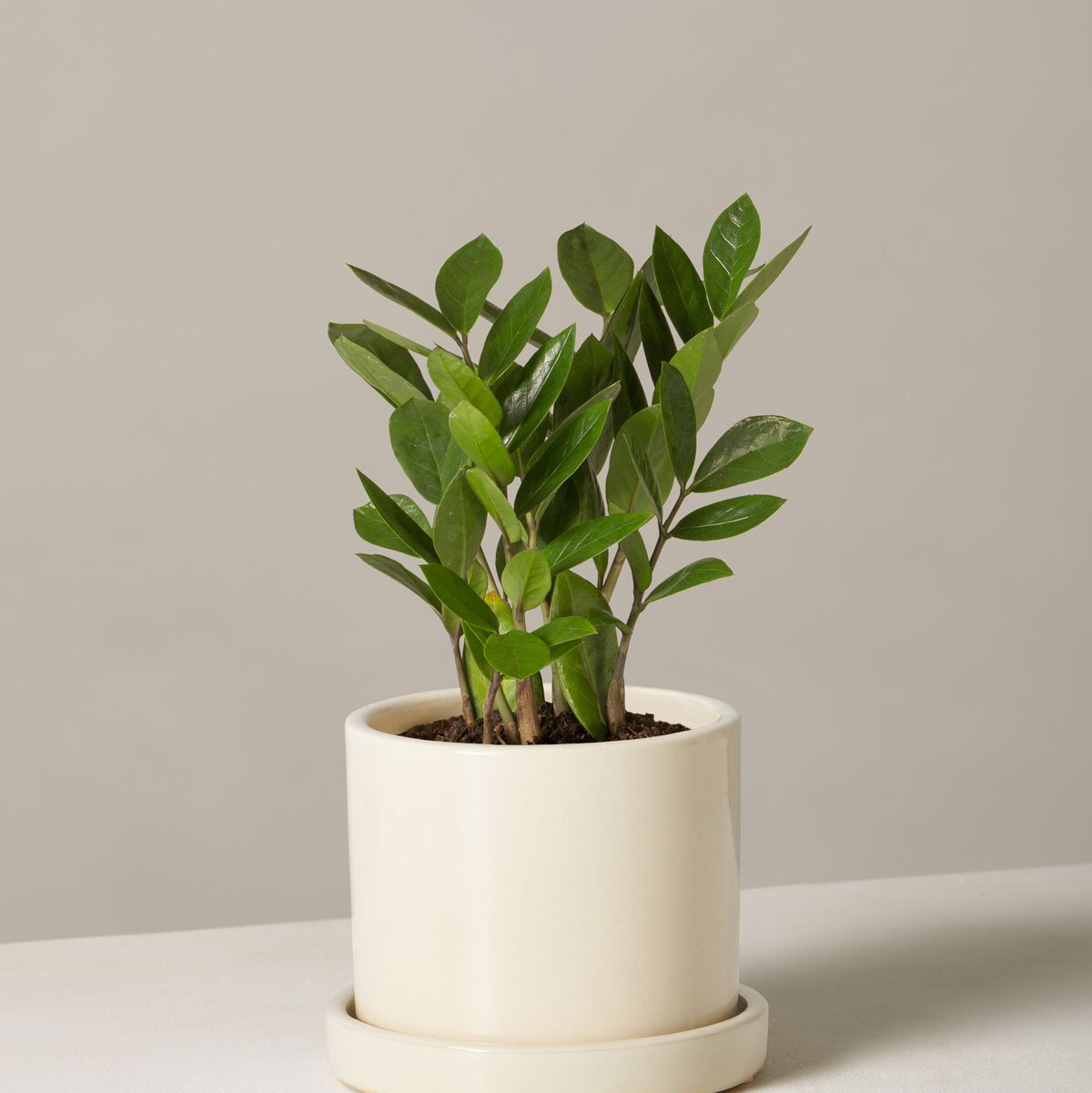
What's Wrong with My ZZ Plant?

Common ZZ Plant Problems
Yellow leaves
ZZ Plants store water in potato-like rhizomes underground. When the soil stays wet, the rhizomes can't breathe and begin to break down. The plant sheds leaves from the lower stems first as the roots fail.
ZZ Plants occasionally shed their oldest lower leaflets as they mature. If only a few leaflets near the base of a stem turn yellow and the rest of the stems stay firm and green, the plant is fine.
Mushy stems
This is late-stage overwatering. The rhizomes that sit below the soil have been saturated long enough to collapse. ZZ stems are held upright by these tubers, and once they're gone the stems have nothing to anchor them. By the time the stem feels soft at the base, the rot is serious.
Drooping stalks
ZZ stalks stay stiff and upright when the rhizome beneath them is firm. Once the rhizome starts rotting from too much water, it can no longer support the stalks above, and they splay outward. Wet soil plus splayed stalks is a classic rot signal.
Each ZZ stem is a single petiole growing directly from the rhizome. A stem that snaps or is bumped hard at the base may separate. The damage is cosmetic only and the rest of the plant is unaffected.
Brown tips
ZZ's thick waxy leaflets don't shed and replace themselves often, so fluoride and mineral salts from tap water accumulate over time and scorch the tips. Because ZZs are watered infrequently, each watering delivers a concentrated dose of whatever is in the water.
ZZ is a slow grower with low nutrient needs. Standard houseplant fertilizer doses build up as salts in the soil faster than the plant can use them, and the tips show the burn first.
Leggy stalks
ZZ is sold as a low-light plant because it survives in shade, but new stalks only emerge compact and glossy in bright indirect light. In dim corners the stalks grow tall with long gaps between leaflets and a thinner, paler look. The old stalks stay fine. The new ones give it away.
Pests
White cottony clumps in the tight joints where leaflets meet the stem. ZZ's dense, upright stalk structure creates sheltered spots that mealybugs exploit, and infestations can grow unnoticed until you look closely into the leaf axils.
Fine webbing between leaflets and faint stippling on the glossy upper surface. ZZ's waxy cuticle makes early stippling easy to miss, so infestations often progress further than on thinner-leaved plants before the webbing makes them obvious.
Preventing ZZ Plant Problems
About This Article
