

Spider mites
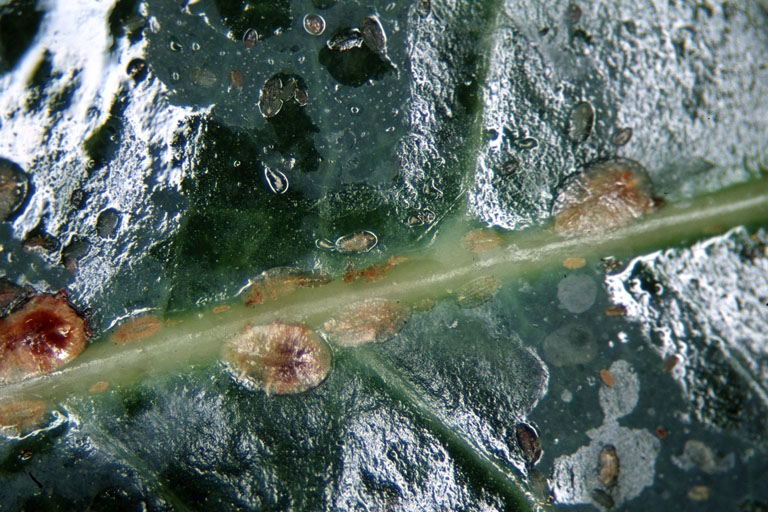
Almost invisible without a hand lens. Yellow-green to red-orange specks running along the underside of pinnae and on the rachis. The dense humid-loving canopy plus dry indoor heating air creates ideal mite weather, and a population can double every 3 days.
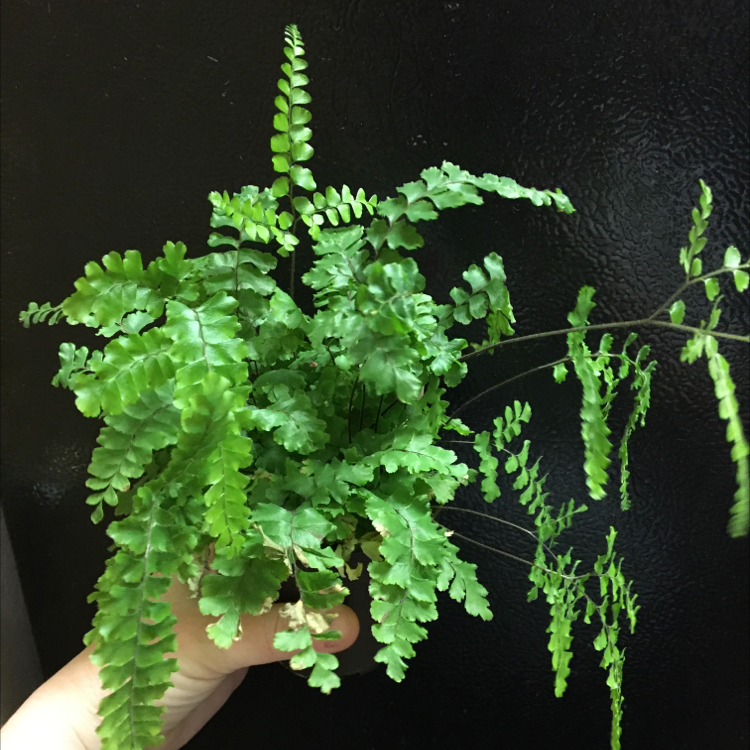
Pinnae go pale and dusty-looking, then bronze, then crisp and drop in clouds when touched. Fine webbing strung between pinnae and along the rachis. A neglected Boston fern in dry winter air can be skeletonized in 2 to 3 weeks.
Shower the fronds, every 4 days for 3 weeks
Move the fern to the shower or sink. Boston ferns love a thorough rinse.
Spray cool water on the underside of every frond for 60 seconds, working from the rachis outward through the pinnae.
Repeat every 4 days for 3 weeks. Knocked-off mites cannot reattach quickly, and the bath humidity slows survivors.
Insecticidal soap, water-based only, weekly for 3 weeks
Use ready-to-use insecticidal soap (Safer or Bonide, ~$10) on the underside of every frond at lights-out. Skip neem oil and horticultural oil on Boston fern, which scorch the delicate pinnae. Repeat every 7 days for 3 weeks. Test on one frond first if your fern has thin or new growth.
Raise humidity above 60%
Run a humidifier within a few feet of the fern for 60 to 70% relative humidity. Boston fern is a tropical understory plant and wants the moisture anyway. Dry forced-air heat is the climate that lets mites breed faster than you can clean them off.
Neem oil is the safe houseplant treatment for everything.
Boston fern is the exception. Neem and horticultural oils coat the soft pinnae and cause brown scorch patches that don't recover. Stick with plain water rinses and water-based insecticidal soap on this plant.