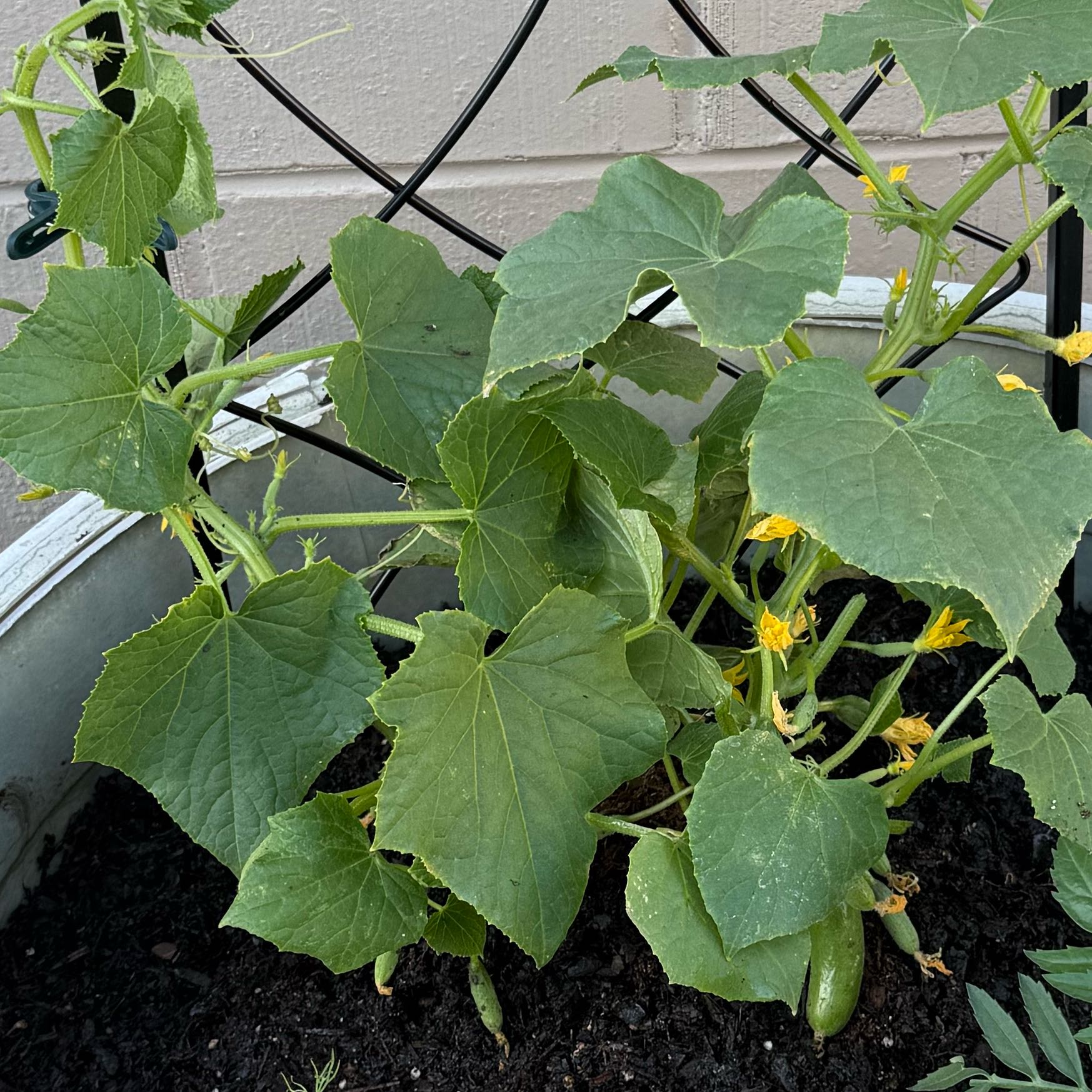
Determining What Might Be Eating Your Cucumber
Cucumis sativus
By the Greg Editorial Team
Jul 19, 2024•5 min read
This article was created with the help of AI so we can cover more plants for you. May contain errors. See one? Report it here.
- π¦ Deer damage: rough, torn leaves; prevent with fencing and repellents.
- π Rabbit signs: clean cuts on stems; control with barriers and habitat changes.
- πΏοΈ Squirrel clues: disturbed soil, nibbled fruits; manage with decoys and exclusion.
Identifying Herbivore Damage
π¦ Deer
Deer damage is unmistakable; look for rough, torn leaves and twigs, often on new growth. You won't find tooth marksβdeer tear plants due to their lack of upper incisors. To keep these browsers at bay:
- Erect tall fencing, at least 8 feet to deter jumping.
- Apply deer repellents with caution, ensuring they're safe for food crops.
- Integrate deer-resistant companion plants like garlic or chives.
π Rabbits
Rabbit presence is revealed by clean 45-degree angle cuts on stems and gnawed bark. Their damage is lower to the ground, and tooth marks are spoon-tip sized. Counter their nibbling with:
- Barriers such as chicken wire around plants.
- Encouraging natural predators like hawks or owls.
- Modifying habitat to make it less inviting, like removing brush piles.
πΏ Squirrels
Squirrels are trickier, often leaving less obvious signs like disturbed soil or nibbled fruits. They're agile climbers and can reach higher plants. To manage squirrels:
- Plant decoy food sources they prefer, like sunflowers.
- Use exclusion techniques like netting or wire cages.
- Try squirrel repellents, though their effectiveness may vary.
π¦ Birds
Birds can be friends or foes. Look for peck marks on fruits or small holes in leaves. To protect cucumbers without harming birds:
- Employ bird netting over plants.
- Use scare tactics: reflective tape, decoys, or noise devices.
- Diversify the habitat to attract birds to other food sources.
π Rodents
Mice, voles, and similar rodents leave small, fork-tine-sized tooth marks. They can cause significant damage overnight. Keep them away with:
- Traps placed strategically around the garden.
- Natural deterrents like peppermint oil.
- Maintaining a clean garden, free of debris and fallen fruits.
𦑠Groundhogs/Woodchucks
Groundhogs are voracious and can decimate plants quickly. Look for large, jagged holes in leaves and fruits. To mitigate their impact:
- Disrupt their burrows with humane methods.
- Install fencing that extends underground to prevent digging.
- Apply specific repellents designed for groundhogs.
Cucumber's Allure
Attractive Features
Cucumbers are a veritable feast for various garden visitors, thanks to their juicy flesh and tender leaves. Here's what makes them so irresistible:
- Fruits: The main attraction, cucumbers' water-rich fruits are a hydrating snack on hot days.
- Flowers: Bright and inviting, they're a beacon for pollinators and other insects.
- Young Shoots: Soft and easy to eat, these are often targeted by smaller herbivores.
Seasonal shifts can heighten this allure:
- Spring: Fresh growth tempts animals emerging from scarcity.
- Summer: Abundant fruits become a prime target in the heat.
- Fall: Animals prep for winter, seeking out calorie-rich foods.
π« Potential Toxicity
While cucumbers are a garden favorite, they have a hidden defense. Let's delve into the potential effects on wildlife:
- Cucurbitacin C: A bitter compound that can deter some animals and insects.
- Varietal Differences: Some cucumber varieties may have higher levels of this compound, influencing their palatability to wildlife.
It's important to note:
- Selective Deterrence: Not all animals are put off by cucurbitacins; some may be unaffected.
- Research: Studies are ongoing to fully understand the ecological role of these compounds.
Encouraging Beneficial Fauna
π Pollinators
Bees play a pivotal role in cucumber production, with their pollination efforts directly influencing fruit set and yield. To attract these vital workers:
- Plant flowers that bloom at different times of the year to provide a consistent food source.
- Avoid pesticide use during bloom times, especially in the morning when bees are most active.
- Provide water sources, like a shallow bird bath with stones for landing spots.
Protecting pollinators also means safeguarding their habitat. This can be done by:
- Leaving some areas of the garden wild to offer shelter.
- Using natural pest control methods to minimize harm to bee populations.
π Pest Predators
Beneficial insects like ladybugs are natural pest control agents, feasting on aphids and other pests that can damage cucumbers. To encourage their presence:
- Introduce plants that attract these predators, such as marigolds and dill.
- Avoid broad-spectrum insecticides that can kill beneficial insects alongside pests.
Creating a habitat for these allies involves:
- Providing a diversity of plant species to support a range of beneficial insects.
- Allowing some pests to remain as a food source for predatory insects.
Balancing Protection and Ecology
πΏ Preventive Strategies
Implementing preventive strategies is the cornerstone of a balanced garden ecosystem. Here's how to shield your cucumbers from herbivores while fostering ecological health:
- Embrace Integrated Pest Management (IPM) by combining physical barriers, like fencing, with biological controls, such as encouraging natural predators.
- Cultivate plant diversity to create a robust environment that can withstand and deter pests naturally.
- Apply organic deterrents, like neem oil or chili pepper sprays, which are less disruptive to non-target species.
- Adjust your strategies with the seasons; for instance, use row covers in the spring when seedlings are most vulnerable.
π¦ Reactive Tactics
When herbivores do make a meal of your cucumbers, respond with solutions that keep the bigger picture in mind:
- Identify and target specific pests to minimize collateral damage to beneficial fauna.
- Integrate organic and selective chemical controls, choosing products that are effective yet have minimal impact on the ecosystem.
- Repair and reinforce physical defenses promptly to prevent future breaches.
- Monitor plant health and pest activity regularly to stay ahead of potential issues.
β οΈ Safety First
This content is for general information and may contain errors, omissions, or outdated details. It is not medical, veterinary advice, or an endorsement of therapeutic claims.
Always consult a qualified healthcare professional before using any plant as food, medicine, or supplement.
Never eat any plant (or feed one to pets) without confirming its identity with at least two trusted sources.
If you suspect poisoning, call Poison Control (800) 222-1222, the Pet Poison Helpline (800) 213-6680, or your local emergency service immediately.
Spotted an error? Please report it here.