

Aphids
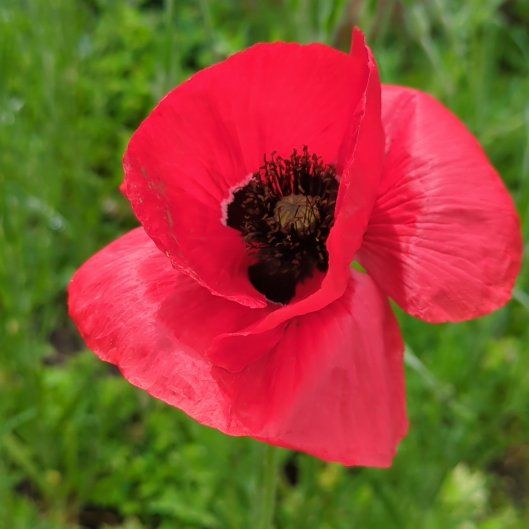
Tiny pear-shaped insects 1 to 3 mm long, in shades of green, black, or pink. Cluster densely along flower stalks and packed tightly around the swelling buds just before the iconic red petals open. The classic poppy pest, often the only insect pressure a home grower sees.
Buds open misshapen or fail to open at all when colonies are heavy. Stalks bend and twist where aphids feed. A sticky shiny film coats the stems and the leaves below, sometimes followed by black sooty mold. Petals can drop early or emerge with chewed-looking edges.
Strong water blast every 2 to 3 days for 2 weeks
Hold a hose nozzle 12 inches from the affected buds and stalks and spray at high pressure. Aphids dislodge and rarely make it back. The fern-like leaves and tall flower stalks of common poppy take a hard rinse without breaking. Repeat every 2 to 3 days for 2 weeks through the bud stage.
Insecticidal soap on stalks and buds at dusk
Spray ready-to-use insecticidal soap (Safer Insect Killing Soap, ~$10) directly on aphid clusters along the flower stalks at dusk. Soap kills on contact and breaks down by morning so it won't bother bees visiting open blooms. Repeat every 5 days for 2 to 3 rounds until the bud stalks are clean.
Plant alyssum or yarrow nearby for ladybug habitat
Sow sweet alyssum or plant yarrow within 3 feet of the poppy patch. These low growers attract ladybugs and lacewings, which feed heavily on aphids. Common poppy self-seeds and comes back every year in the same spot, so an established companion planting keeps aphid pressure low season after season.


