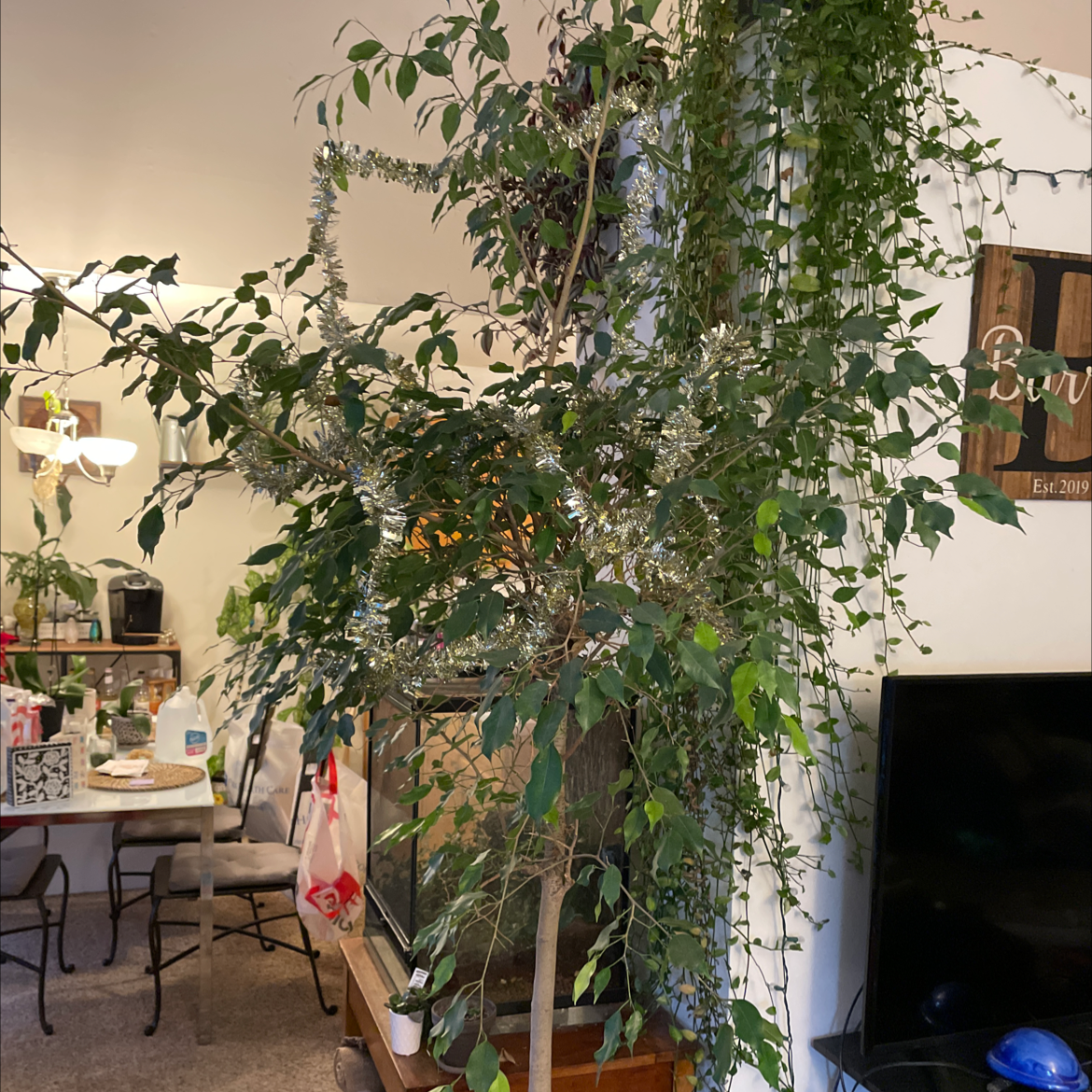
Weeping Fig

What's Wrong with My Weeping Fig?

Ficus benjamina
Reviewed by Kiersten Rankel M.S.
Quick Answer
1.
Leaf drop is usually environmental shock.
Moving the pot, a cold draft, a new room, or a shift in light direction all trigger mass leaf drop in Weeping Figs. If leaves are falling, think about what changed before reaching for the watering can.
2.
Check soil and humidity if nothing moved.
Overwatering, underwatering, and dry indoor air each show up on the leaves. Check the soil first, then think about how humid the room actually is.
3.
New pink-tipped leaves mean it is still fighting.
Weeping Figs push out new leaves at the branch tips with a soft pink or red tint before they green up. Seeing them means the plant is still actively growing and most problems are fixable.
Stay on top of plant care
Get seasonal reminders for watering and fertilizing — personalized for your plants.
Try Greg Free

Common Weeping Fig Problems

Leaf drop

Environmental shock

Weeping Figs evolved in stable tropical forest in South and Southeast Asia, where light direction and temperature barely shift. When the pot moves, a draft appears, or the room changes, the plant reads this as a threat and sheds leaves to reduce the canopy it has to support. Even rotating the pot a quarter turn can trigger it.

1. Return the plant to its last location if the drop started after a move
2. Block cold air sources near the pot and move it away from heating or cooling vents
3. Hold a steady watering rhythm and avoid repotting while the plant is stressed
4. Give it four to six weeks of stability before deciding whether the spot is working
Overwatering

Roots sitting in waterlogged soil rot and lose the ability to supply water and nutrients to the canopy. The leaves yellow, then fall. Unlike shock-related drop, this kind is accompanied by soil that stays wet for weeks and leaves that feel limp when they detach.

1. Stop watering and let the soil dry significantly before the next drink
2. Check the base of the stem for softness, which means rot has spread beyond the roots
3. If the stem is firm, resume on a drier schedule and watch for new growth
Underwatering

When the pot dries out completely, the Weeping Fig cannot sustain its dense canopy of small leaves and sheds them rather than pulling moisture out of each one individually. The soil will feel bone dry several inches down, and the leaves that fall are usually dry and curled at the edges.

1. Water thoroughly until it drains from the pot
2. If the soil has pulled away from the pot walls, bottom-soak for 20 minutes to re-wet the dry rootball
3. Resume watering when the top inch of soil feels dry

Yellow leaves

Overwatering

Chronic overwatering is the most common cause of yellowing. The roots sit in damp soil, lose their ability to take up oxygen, and the plant withdraws nutrients from older leaves to protect newer growth. Yellowing starts on the lower, older leaves and moves upward as root damage builds.

1. Let the soil dry down at least two inches before the next watering
2. Check moisture at root depth with a finger, not just the surface
3. If multiple leaves are yellowing at once, check for soft, dark roots
Cold air or draft

Weeping Figs are sensitive to temperatures below about 55°F (13°C). Cold air from a window, vent, or exterior door turns leaves yellow quickly, often on just the side of the plant facing the cold source. The leaves may drop soon after yellowing.

1. Move the plant away from cold windows, exterior doors, and air conditioning vents
2. Keep it in a room that stays above 60°F (15°C) at all times
Normal aging

As a Weeping Fig grows, it naturally sheds its oldest lower leaves to redirect energy into new growth at the branch tips. If just one or two leaves at the base are yellowing while the rest of the canopy looks fine and branch tips are active, this is normal turnover.

Sticky leaves and black coating

Scale

Scale insects are the most common Weeping Fig pest. They appear as small brown or tan bumps fixed to the stems and the underside of leaves along the midrib. They feed on the milky latex sap Ficus produces and excrete sticky honeydew that coats the leaves below and attracts sooty mold, turning the surface black.

1. Scrape visible bumps off stems and leaf undersides with a soft toothbrush or the edge of a card
2. Wipe affected areas with a cotton pad soaked in 70% isopropyl alcohol
3. Spray the whole plant with horticultural oil or insecticidal soap
4. Repeat weekly for three to four weeks to catch newly hatched crawlers

Crispy brown leaves

Low humidity

Weeping Figs originate in humid tropical forest and want humidity above 50%. In the dry air typical of heated or air-conditioned rooms, the small glossy leaves lose moisture faster than the roots can replace it. The edges and tips go brown and crispy, and the browning is dry to the touch rather than soft or dark.

1. Run a humidifier nearby, aiming for 50% or higher
2. Move the plant away from heating vents that push dry warm air directly at it
3. Group it with other plants to raise local humidity
Underwatering

When the rootzone stays dry too long, the Weeping Fig pulls moisture back from the leaf margins first. The small oval leaves dry out at the edges and tips, going brittle and brown. The soil will feel light and dry several inches down.

1. Water deeply until it drains freely from the bottom
2. If the soil has shrunk from the pot walls, bottom-soak for 20 minutes before top-watering
3. Check soil moisture more often and water before the pot goes completely dry

Leaning to one side

Phototropism

Weeping Figs bend toward their light source more aggressively than most indoor trees. When the pot sits in one position for months, branches on the lit side grow faster and the whole canopy leans hard in that direction. This is a purely light-driven response, not a health issue.

1. Rotate the pot a quarter turn every two to three weeks to even out growth
2. If the plant has already leaned badly, rotate gradually rather than all at once to avoid shocking it into leaf drop

Preventing Weeping Fig Problems

A few consistent habits prevent most of what goes wrong with Weeping Figs.
Weekly Check
1
Pick a permanent spot and commit to it.
Moving the pot is the single most reliable trigger for leaf drop. Choose a location with bright, indirect light away from vents, drafts, and exterior doors, then leave the plant there.
2
Rotate the pot a quarter turn every two to three weeks.
Weeping Figs lean hard toward light. Regular rotation keeps the canopy balanced without the shock of a sudden large turn.
3
Water when the top inch of soil is dry, then water deeply.
Checking moisture before each watering prevents both the wet-soil rot that causes yellowing and the dry-soil stress that triggers leaf drop.
4
Keep humidity above 50% with a humidifier.
Dry air causes crispy brown edges and makes the plant more vulnerable to scale. A humidifier near the pot is the most reliable fix in heated or air-conditioned rooms.
5
Inspect stems and leaf undersides monthly for scale.
Scale is the defining Weeping Fig pest and spreads slowly enough that catching it early makes treatment simple. Look for small brown bumps on stems and any sticky residue on leaves below.
Stay on top of plant care
Get seasonal reminders for watering and fertilizing — personalized for your plants.
Try Greg Free

About This Article

Kiersten Rankel M.S.
Botanical Data Lead at Greg · Plant Scientist
About the Author
Kiersten Rankel holds an M.S. in Ecology & Evolutionary Biology from Tulane University. A certified Louisiana Master Naturalist, she has over a decade of experience in science communication, with research spanning corals, cypress trees, marsh grasses, and more. At Greg, she curates species data and verifies care recommendations against botanical research.
See Kiersten Rankel's full background on LinkedIn.
Editorial Process
Every problem and fix in this article was verified against Greg's botanical database, cross-referenced with USDA hardiness zone data and published horticultural research from the Missouri Botanical Garden, university extension programs, and species-specific literature. The Ficus benjamina care profile reflects documented species behavior combined with years of community grower feedback in Greg.
9,653+ Greg users growing this plant
USDA hardiness zones 10a–11b