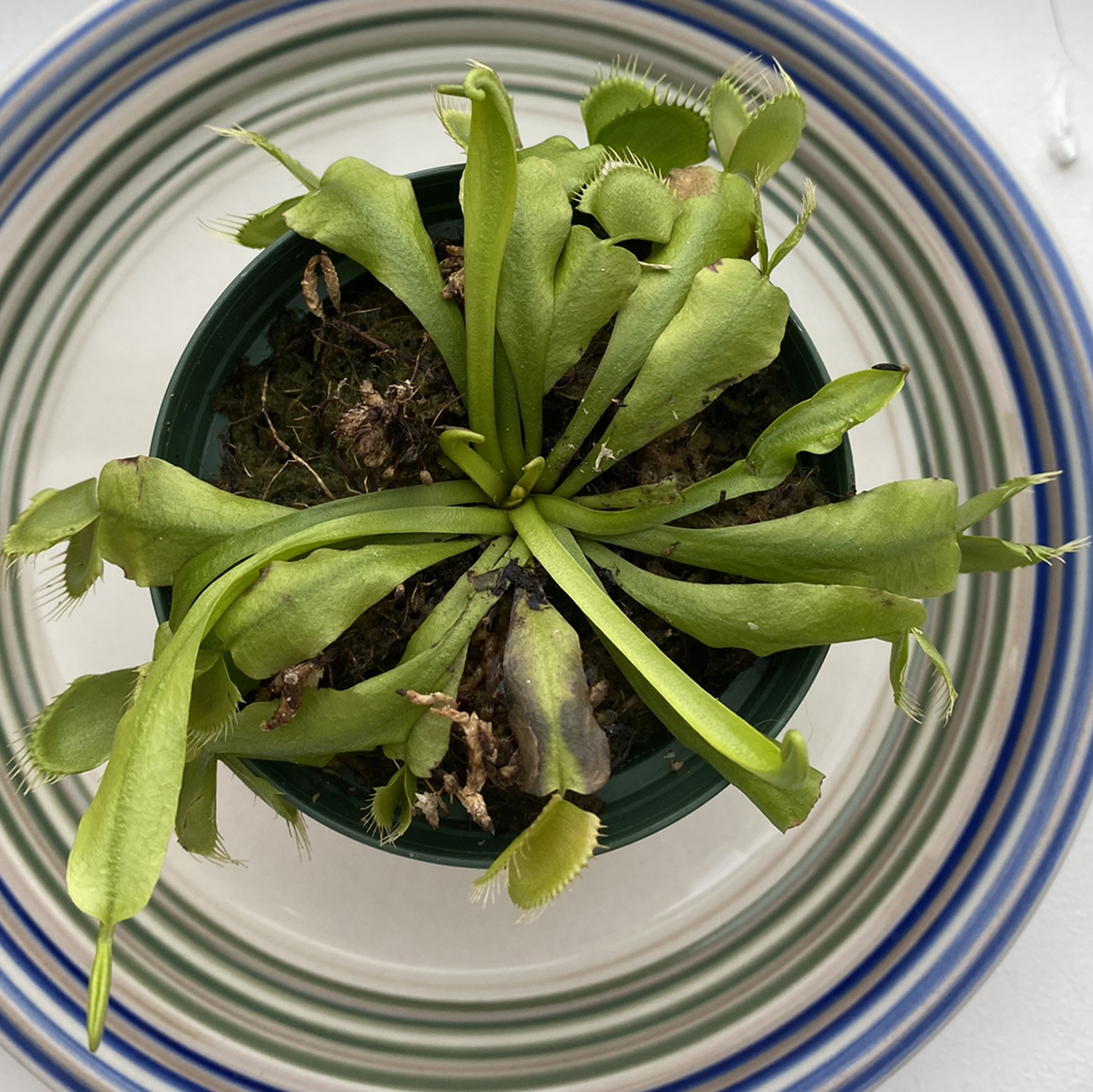
Venus Fly Trap Fertilizer: How And When To Use It πͺ°
Dionaea muscipula
By the Greg Editorial Team
Jun 17, 2024•5 min read
This article was created with the help of AI so we can cover more plants for you. May contain errors. See one? Report it here.
Boost your Venus Fly Trap's bug-catching prowess π·οΈ with the perfect fertilizer and savvy application tips!
- π± Venus Fly Traps prefer low-nutrient, acidic fertilizers to mimic their natural habitat.
- π Fertilize once a month during the growing season (early spring to late summer).
- π¨ Over-fertilization can harm the plant - monitor health and adjust accordingly.
Types of Fertilizers Suitable for Venus Fly Traps
π± The Nutrient Needs of Venus Fly Traps
Venus Fly Traps are the rockstars of the plant world. They don't play by the rules. While most plants are content to suck up nutrients from the soil, Venus Fly Traps have adapted to thrive in poor, acidic soil that lacks adequate nutrients. They're like the survivalists of the plant kingdom, making do with what they've got and supplementing their diet by trapping and digesting insects.
πΏ Low-Nutrient, Acidic Fertilizers
So, what does this mean for fertilizing these rebellious green wonders? Well, it means you can't just toss any old fertilizer at them. They need something that mimics their natural, nutrient-poor habitat. Low-nutrient, acidic fertilizers can do the trick.
But here's the kicker: Venus Fly Traps don't actually need fertilizer. That's right, they're the self-sufficient hermits of the houseplant world. They get their nutrients from photosynthesis and their insectivorous diet.
π Fish Emulsion Fertilizers
However, if you're determined to give your Venus Fly Trap a little boost, you might consider a fish emulsion fertilizer. Some carnivorous plant enthusiasts swear by it. But remember, less is more. Use only a quarter of the recommended strength.
And don't go dumping it in the soil. Venus Fly Traps prefer their meals served on a leaf. A foliar spray is the way to go.
π Timing and Frequency
When it comes to timing, Venus Fly Traps are like bears. They have a growing season (early spring to late summer) when they're active and can make the best use of nutrients. That's when you should apply the fertilizer.
As for frequency, remember these plants are used to a low-nutrient diet. Don't overdo it. A little goes a long way.
In conclusion, when it comes to fertilizing Venus Fly Traps, it's all about mimicking their natural habitat. Low-nutrient, acidic fertilizers, applied sparingly and directly to the leaves, can give your plant a little boost. But remember, these plants are survivors. They don't need much to thrive.
When and How to Fertilize Venus Fly Traps
π‘ Timing during the Active Growing Season
So, you've got a Venus Fly Trap and you're ready to play plant parent. Timing is key. These little green monsters are most hungry for nutrients during their active growing season, which runs from early spring to late summer. This is when they're putting out new leaves, blooming, and generally showing off.
π½οΈ Application Methods
Now, let's talk about how to feed these beasties.
Dilution is crucial. You've got to remember, Venus Fly Traps are used to poor, nutrient-starved soils. They're not the greedy, guzzling types. So, when it comes to fertilizer, less is more. Aim for a quarter of the minimum dosage listed on the fertilizer label.
Frequency matters. Once a month during the growing season should do the trick. Any more than that and you risk overdoing it.
Application technique is important. A foliar spray is your best bet. This means spraying the fertilizer directly onto the leaves, where it can be readily absorbed. It's like a nutrient-rich shower for your plant. Plus, it avoids leaving any fertilizer residue in the soil, which could harm your plant in the long run.
Now, you might be wondering about fish emulsion fertilizers. They're a good option, but again, use them sparingly and at a quarter of the recommended strength.
Remember, these are general guidelines. Every plant is unique, just like us. So, keep an eye on your Venus Fly Trap and adjust as needed. If it starts looking peaky or unhappy, it might be time to tweak your fertilizing routine.
And there you have it. Armed with this knowledge, you're ready to nurture your Venus Fly Trap like a pro. Happy fertilizing!
Signs of Over-Fertilization and Remedies
π¨ Identifying Symptoms of Over-Fertilization
Over-fertilization is like a bad hangover for your Venus Fly Trap. It's not pretty and it's not fun. Leaf discoloration and wilting are the plant's equivalent of a pounding headache and a queasy stomach.
But let's get specific. Over-fertilization can manifest as yellowing leaves, especially the lower ones. It's like your plant is waving a yellow flag, begging for mercy.
Dark-brown spots on the end of the leaves are another telltale sign. It's like your plant has been in a bar fight and come out with a black eye.
A white crust on the soil surface is a dead giveaway. It's like your plant has been partying too hard and left evidence all over the place.
And if you happen to unpot your plant and notice browned, blackened, or limp roots, it's like finding your plant passed out in the bathroom. Not a good sign.
π οΈ Remedial Actions
So, your plant has over-indulged. Now what?
Step 1: Remove all yellow or severely damaged leaves. It's like cleaning up after a wild party.
Step 2: Rinse the soil thoroughly with water. It's like giving your plant a cold shower to sober up.
Step 3: Cut back on fertilizing for a while. It's like putting your plant on a detox diet.
Remember, it's all about balance. Too much of a good thing can be a bad thing. So, keep an eye on your plant, and if it starts to look like it's had one too many, take action. Your Venus Fly Trap will thank you.
β οΈ Safety First
This content is for general information and may contain errors, omissions, or outdated details. It is not medical, veterinary advice, or an endorsement of therapeutic claims.
Always consult a qualified healthcare professional before using any plant as food, medicine, or supplement.
Never eat any plant (or feed one to pets) without confirming its identity with at least two trusted sources.
If you suspect poisoning, call Poison Control (800) 222-1222, the Pet Poison Helpline (800) 213-6680, or your local emergency service immediately.
Spotted an error? Please report it here.