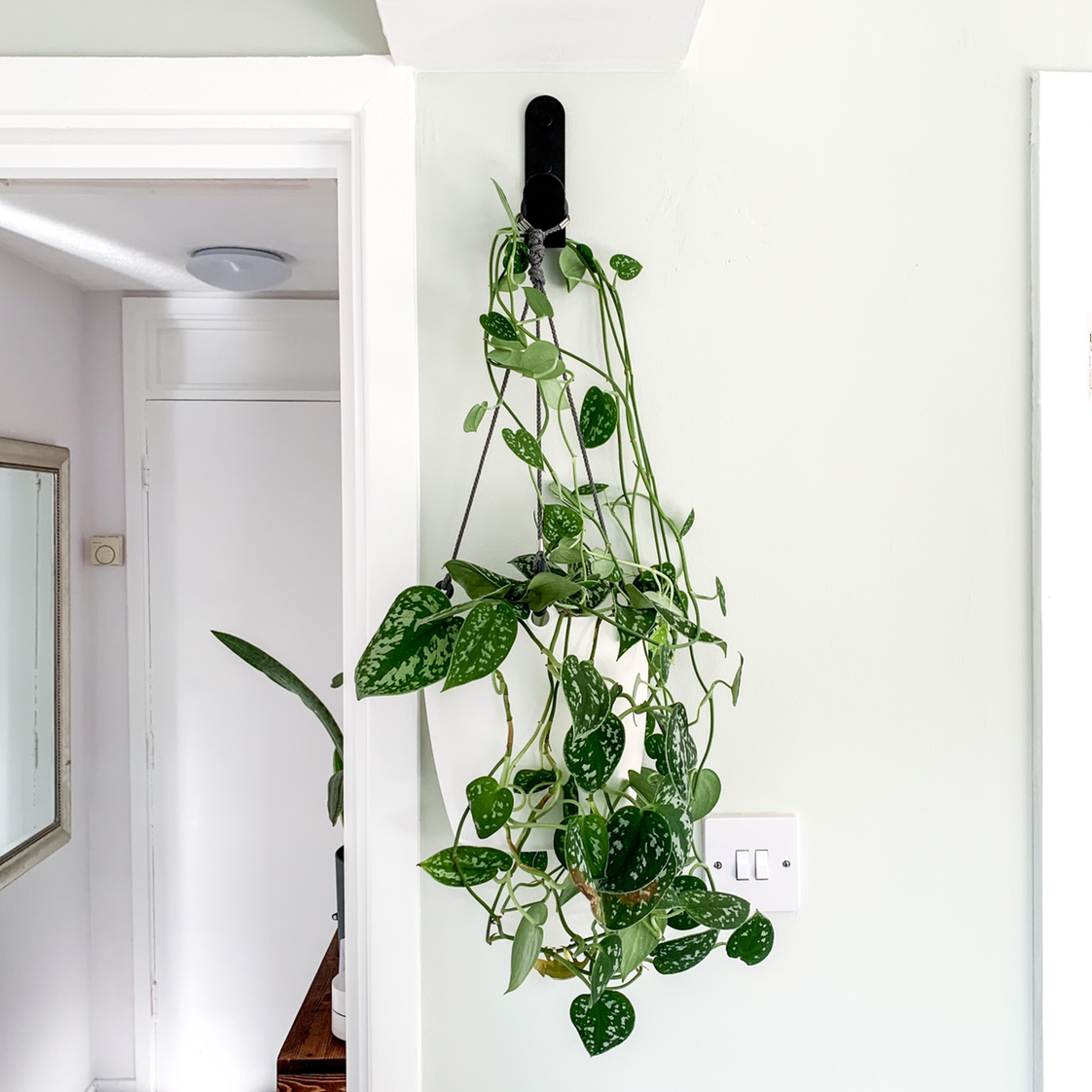
Satin Pothos

What's Wrong with My Satin Pothos?

Scindapsus pictus
Reviewed by Kiersten Rankel M.S.
Quick Answer
1.
Most Satin Pothos problems trace back to watering.
Thicker leaves than true Pothos mean it tolerates drought well. If in doubt, wait another few days.
2.
Fading silver pattern means not enough light.
Bright indirect light keeps the variegation vivid. Dim light makes new leaves come out all green.
3.
New leaves at the vine tip mean it's still fine.
As long as the growing tip keeps pushing new leaves, you have time to fix whatever's wrong.
Stay on top of plant care
Get seasonal reminders for watering and fertilizing โ€” personalized for your plants.
Try Greg Free

Common Satin Pothos Problems

Yellow leaves

Overwatering

Scindapsus roots are fine and fibrous, adapted to clinging to mossy bark in Southeast Asian rainforest, not sitting in waterlogged soil. When they suffocate and rot, the plant pulls nutrients back from the oldest leaves first. Yellowing starts at the base and works up the vine.

1. Stop watering and let the top 2 inches of soil dry fully before the next drink
2. Unpot and check the roots if yellowing is spreading up multiple vines. Trim any brown or mushy sections back to firm tissue
3. Repot in a chunky mix with perlite or bark if the current soil stays soggy
4. Empty the saucer after every watering so the pot never sits in water
Natural leaf turnover

Satin Pothos cycles through its oldest leaves as it grows. As a vine ages, the earliest leaves near the base yellow and drop while fresh leaves keep forming at the growing tip. This is normal.

Drooping vines

Underwatering

Scindapsus stems hold little water reserve, so the trailing vines lose turgor fast when the soil runs dry. The whole plant flops. Recovery is quick after a thorough drink, usually within a few hours.

1. Water thoroughly until it drains from the bottom
2. If the soil pulled away from the pot edges, bottom-soak for 20 minutes before top-watering
3. Water slightly more often going forward
Overwatering

Damaged roots can't move water even when the soil is wet. The vines droop exactly like a thirsty plant, but the pot is heavy and the soil is soggy. Check moisture before watering more.

1. Skip watering and let the soil dry out
2. Unpot if the soil has been wet for more than a week
3. Trim soft or brown roots and repot in fresh, well-draining mix

Brown leaf edges

Low humidity

Satin Pothos is native to humid Southeast Asian understory and wants humidity above 50%. The leaf edges are the farthest point from the water supply in the stem, so they dry out first. The thick matte texture masks the problem longer than thinner-leaved aroids, so by the time edges crisp, the air has been dry for a while.

Run a humidifier nearby or group the plant with other plants to raise local humidity. Move it away from heating vents and AC drafts, which dry the air quickly. Skip misting -- it raises humidity for minutes and wets the leaves, which can invite rot.

Fading variegation

Not enough light

The silver markings on Scindapsus pictus form inside iridoplast cells that only develop when a new leaf grows in bright light. In dim conditions fresh leaves emerge plain green. Existing faded leaves never recover, but new ones will once the plant gets more light.

Move to bright indirect light, a few feet from a window that gets morning or afternoon sun. Avoid direct midday sun, which can bleach the leaves. New leaves should show stronger variegation within a month or two.

Leggy growth

Low light

Scindapsus climbs toward the forest canopy in the wild by lengthening its internodes when light is scarce. In a dim room the nodes space far apart and leaves get smaller and less silver-marked. The plant survives but never fills in.

1. Move to a brighter spot with filtered indirect light
2. Give it something to climb. A moss pole or trellis signals the plant to produce larger, more compact leaves
3. Trim long bare sections back to a node with healthy leaves to encourage branching

Pests

Spider mites

Fine webbing on leaf undersides and pale stippling across the surface. Dry indoor air invites them. The silver markings on Scindapsus leaves can mask early stippling, so an infestation often goes unnoticed until webbing appears at the nodes.

1. Rinse the plant under a strong shower, hitting the undersides of leaves
2. Wipe leaves top and bottom with insecticidal soap or a cloth dampened with 70% isopropyl
3. Repeat every 3-4 days for two weeks
4. Raise local humidity to make conditions less hospitable for mites
Mealybugs

White cottony clumps tucked into leaf axils and along the nodes. Scindapsus's short nodes and slightly textured leaf bases give them cover, and they spread quickly in dry indoor conditions.

1. Dab each cluster with a cotton swab dipped in 70% isopropyl alcohol
2. Follow up with an insecticidal soap spray over the whole plant, reaching the nodes
3. Check every week for three weeks. Eggs survive the first treatment and hatch in waves

Preventing Satin Pothos Problems

A few consistent habits prevent most of what goes wrong.
Weekly Check
1
Water when the top 1-2 inches of soil feel dry.
Scindapsus leaves are thicker than true pothos and won't droop until they're quite dry. Check the soil before watering rather than going by a schedule or the look of the plant.
2
Use a chunky, well-draining mix in a pot with a drainage hole.
Bark, perlite, and coco coir keep the fine fibrous roots aerated. Dense potting soil holds water too long and is how rot starts.
3
Keep it in bright indirect light.
This preserves the silver variegation and keeps internodes short. A few feet from an east or west window is the sweet spot.
4
Maintain humidity above 50% year-round.
A humidifier or grouping plants together prevents crispy edges and discourages spider mites. Move the plant away from heating vents in winter.
5
Quarantine new plants for two weeks before placing them nearby.
Spider mites and mealybugs almost always arrive on a new plant. Two weeks of isolation catches an infestation before it spreads.
Stay on top of plant care
Get seasonal reminders for watering and fertilizing โ€” personalized for your plants.
Try Greg Free

About This Article

Kiersten Rankel M.S.
Botanical Data Lead at Greg ยท Plant Scientist
About the Author
Kiersten Rankel holds an M.S. in Ecology & Evolutionary Biology from Tulane University. A certified Louisiana Master Naturalist, she has over a decade of experience in science communication, with research spanning corals, cypress trees, marsh grasses, and more. At Greg, she curates species data and verifies care recommendations against botanical research.
See Kiersten Rankel's full background on LinkedIn.
Editorial Process
Every problem and fix in this article was verified against Greg's botanical database, cross-referenced with USDA hardiness zone data and published horticultural research from Missouri Botanical Garden, NC State Extension, and the University of Florida IFAS. The Scindapsus pictus care profile reflects the plant's distinct biology versus the true pothos it's often confused with โ€” velvety rather than glossy leaves, finer roots, higher humidity and light needs โ€” and draws on years of community grower feedback in Greg.
21,604+ Greg users growing this plant
USDA hardiness zones 10aโ€“12b