
Brown spots??
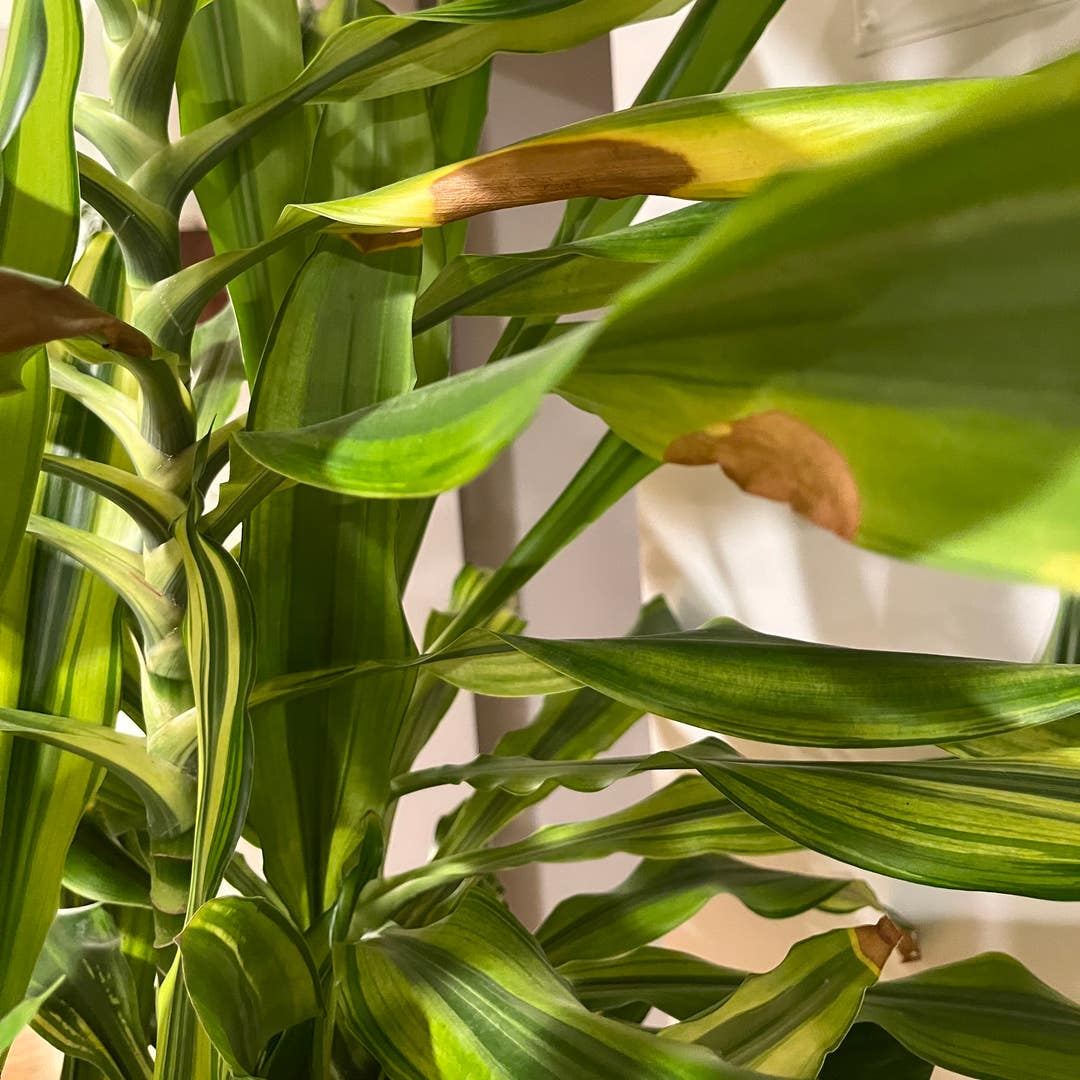
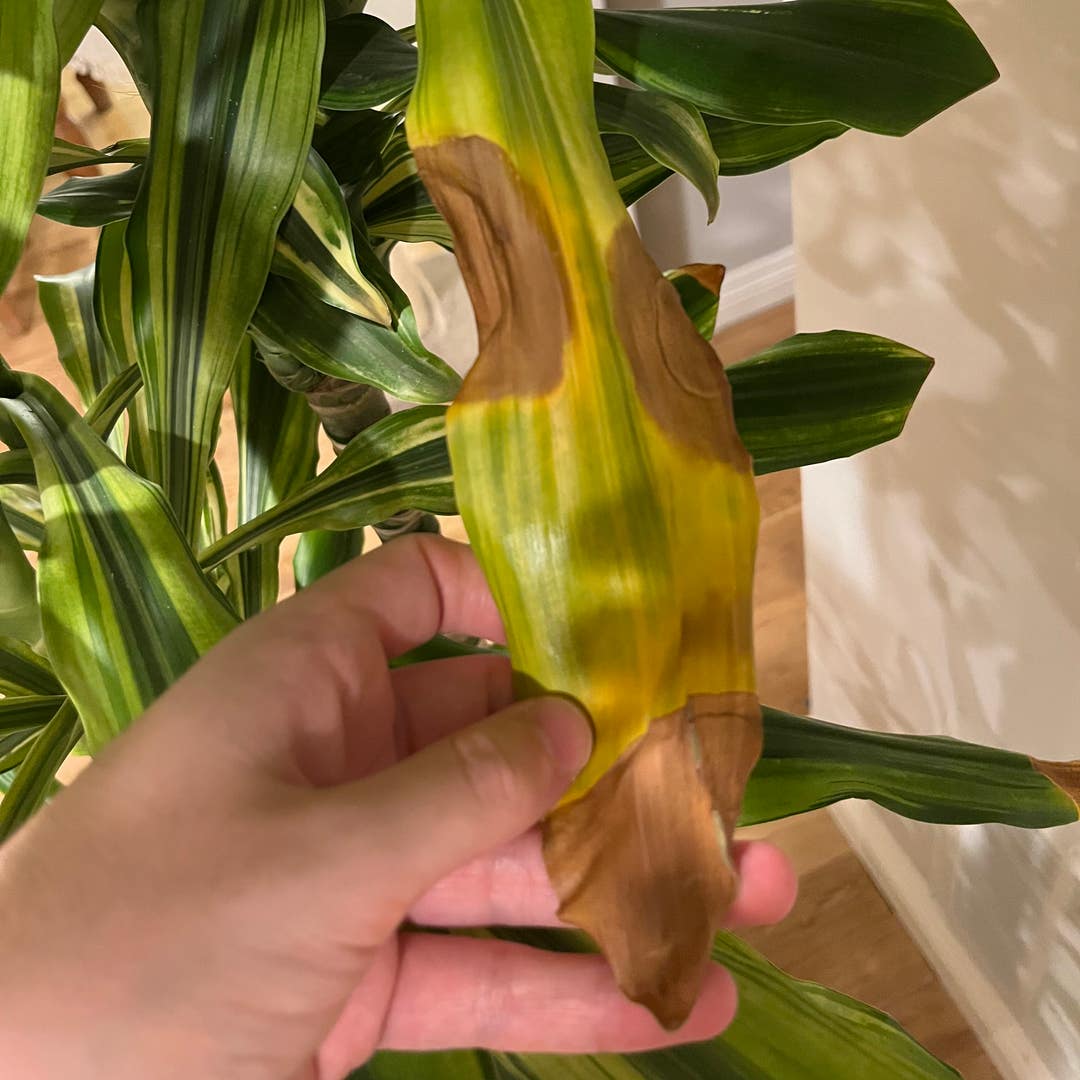
Hey guys, any idea why brown spots are appearing on my dracaena? Plants seems helthy, keeps putting out new leaves, however brown spots don’t stop appearing.
Any idea?
Any idea?




 2
2



@usera18b710c Corn plants most commonly get brown leaf tips due to underwatering or inconsistent watering. Other common causes include water high in fluoride or chlorine, or sources of plant stress such as low humidity, excess fertilizer, excess heat and light, pests, diseases and stress due to acclimation or repotting. This article will show you how to identify why your Corn Plant has brown tips and explain how to correct the problem and get your plant back to health. Underwatering
Corn Plants (Dracaena fragrans) are one of the more drought-tolerant houseplants, but lack of water will eventually cause problems for your plant, and brown leaf tips are one of the things to expect. Brown leaf tips due to underwatering will be accompanied by dry soil, and you may see leaf curling and brown, crispy lower leaves. Brown tips on Corn plants happen due to insufficient water reaching the leaf tips to keep them healthy. When water is scarce, it is easier for your Corn Plant to supply water to the parts of the plant that are closest to the roots. The leaf tips, being the furthest point from the source of water are the most likely to turn brown and die in drought conditions. You should try to water your Corn Plant once the top one to two inches of soil is dry, providing enough water to soak the soil each time you water. Make sure to let all excess water drain from the drainage holes, as you don’t want to let the plant sit in soggy soil. This can cause even worse problems, such as root rot. Read my article about how to water houseplants to learn how to provide just the right amount of water for your Corn Plant.
Inconsistent Watering
A consistently underwatered plant will adapt to some degree to the scarce water available. The plant will grow less foliage and the leaves will typically be smaller. An inconsistently watered plant will not be able to adapt to the fluctuating conditions. In times of plenty, the plant will start a growth spurt producing plenty of healthy foliage, but when left without water for a long time, the foliage will struggle to stay healthy, and the leaves will develop brown tips, and may become crispy and curled.
Consistency of watering is an important factor in keeping the foliage of your Corn Plant looking healthy and avoiding any brown tips. Make sure to check the soil of your plant every few days so you get an idea of when it will need watered. Bear in mind that water requirements will change during the year. More water will be required in spring and summer, as the plant grows strongly and evaporation increases in warmer temperatures.
The plant will grow much more slowly or not at all in winter, using much less water. Always be guided by the condition of the plant and soil when watering, and avoid watering on a schedule to ensure your Corn Plant doesn’t get brown tips. Water Impurities
Whilst Corn Plants are resilient houseplants, tolerating a range of conditions, their foliage will not stay looking perfect unless it is treated right. Corn Plants can be a little sensitive to certain chemicals in tap water such as fluoride and chlorine. These can build up in the leaves, causing toxicity, leading to your Corn Plant getting brown tips, or other leaf problems. Fluoride levels in tap water can fluctuate significantly, and some local authorities even add fluoride to tap water due to the beneficial impact on dental health. You may wish to check your local water quality report, which can normally be obtained from your water supplier. If you have high levels of fluoride or chlorine, you could consider using filtered water, rainwater or distilled water to water your Corn Plant. Water quality can be a tricky problem to identify, and may not be the first thing you think may be causing your Corn Plant brown tips. I would recommend ensuring that you are meeting the basic care needs of your Corn Plant first before changing the type of water you use. If you think you are doing a good job with the care requirements, switch to a different type of water, and observe. New leaves should be free of brown tips, although the old foliage will not return to a pristine state.
Low Humidity
Corn Plants naturally grow in humid environments, but they are quite capable of remaining healthy in moderate indoor humidity. It is only when humidity levels drop below 40% that humidity can be a factor in the development of brown tips on your Corn Plant. Courtesy of Smart Garden Guide ! Hope it helps, Happy growing
Corn Plants (Dracaena fragrans) are one of the more drought-tolerant houseplants, but lack of water will eventually cause problems for your plant, and brown leaf tips are one of the things to expect. Brown leaf tips due to underwatering will be accompanied by dry soil, and you may see leaf curling and brown, crispy lower leaves. Brown tips on Corn plants happen due to insufficient water reaching the leaf tips to keep them healthy. When water is scarce, it is easier for your Corn Plant to supply water to the parts of the plant that are closest to the roots. The leaf tips, being the furthest point from the source of water are the most likely to turn brown and die in drought conditions. You should try to water your Corn Plant once the top one to two inches of soil is dry, providing enough water to soak the soil each time you water. Make sure to let all excess water drain from the drainage holes, as you don’t want to let the plant sit in soggy soil. This can cause even worse problems, such as root rot. Read my article about how to water houseplants to learn how to provide just the right amount of water for your Corn Plant.
Inconsistent Watering
A consistently underwatered plant will adapt to some degree to the scarce water available. The plant will grow less foliage and the leaves will typically be smaller. An inconsistently watered plant will not be able to adapt to the fluctuating conditions. In times of plenty, the plant will start a growth spurt producing plenty of healthy foliage, but when left without water for a long time, the foliage will struggle to stay healthy, and the leaves will develop brown tips, and may become crispy and curled.
Consistency of watering is an important factor in keeping the foliage of your Corn Plant looking healthy and avoiding any brown tips. Make sure to check the soil of your plant every few days so you get an idea of when it will need watered. Bear in mind that water requirements will change during the year. More water will be required in spring and summer, as the plant grows strongly and evaporation increases in warmer temperatures.
The plant will grow much more slowly or not at all in winter, using much less water. Always be guided by the condition of the plant and soil when watering, and avoid watering on a schedule to ensure your Corn Plant doesn’t get brown tips. Water Impurities
Whilst Corn Plants are resilient houseplants, tolerating a range of conditions, their foliage will not stay looking perfect unless it is treated right. Corn Plants can be a little sensitive to certain chemicals in tap water such as fluoride and chlorine. These can build up in the leaves, causing toxicity, leading to your Corn Plant getting brown tips, or other leaf problems. Fluoride levels in tap water can fluctuate significantly, and some local authorities even add fluoride to tap water due to the beneficial impact on dental health. You may wish to check your local water quality report, which can normally be obtained from your water supplier. If you have high levels of fluoride or chlorine, you could consider using filtered water, rainwater or distilled water to water your Corn Plant. Water quality can be a tricky problem to identify, and may not be the first thing you think may be causing your Corn Plant brown tips. I would recommend ensuring that you are meeting the basic care needs of your Corn Plant first before changing the type of water you use. If you think you are doing a good job with the care requirements, switch to a different type of water, and observe. New leaves should be free of brown tips, although the old foliage will not return to a pristine state.
Low Humidity
Corn Plants naturally grow in humid environments, but they are quite capable of remaining healthy in moderate indoor humidity. It is only when humidity levels drop below 40% that humidity can be a factor in the development of brown tips on your Corn Plant. Courtesy of Smart Garden Guide ! Hope it helps, Happy growing


@jcPlantProper thanks, Ill try to water from the bottom