
Sago Palm brown and curling
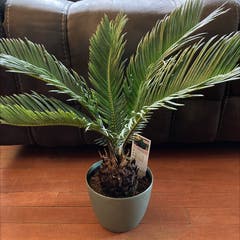
My Sago Palm has brown and curling ends on its leaves. At first it was only one stem, but now it’s starting to impact my other stem too. I’m not sure what I’m doing wrong. Can anyone help me?




 2
2


She is definitely not getting enough light for Sago in a north facing window. They won't curl because of humidity.
It's not like other palms and is well adapted to dry climates. In fact they are even drought tolerant once established.
I do want to address those fronds that are yellowing with browning. She looks overwatered and that will definitely need to be addressed.
Her soil is staying wet way too long in a north facing window. Because she's in a north window and not able to get enough light ( I know they are sold as low light plants, it's a marketing ploy). They are absolutely NOT low light plants! But without enough light growth is slowed down because she's not able to get enough energy to grow right. That creates a weak plant and gives her the curling fronds.
I see she's in a well draining soil with perlite, but if you keep her in that window she will need even more aeration. At least 60- 70% aeration. They do best if allowed to dry between waterings.
I would check her roots they should be whitish and add more chunky stuff to counteract the north facing window. Ideally another window would be bettin a South facing would be great. But I realize we don't all have access to that.
Here is the root rot treatment if needed:
1. Remove from your pot, to check the roots. If there is anything brown black or mushy you have rot and will need to cut it all off. Keep only the healthy roots they will be whitish in color
Now root rot comes from a bacteria that forms in your soil and then attacks your plant. So treatment is absolutely necessary.
2. Cut off all affected roots soak what is left in:
1 part peroxide + 3 parts water and leave in the peroxide mix to soak for 5 minutes this will kill off the remaining bacteria. It will bubble pot and fizz this is good it’s killing the bacteria.
3. Next is soil, the best
choice is to throw it away. It’s safest. Or bake it for 1 hour in a 200
Degree oven, not the greatest because it REALLY stinks. But it’s effective. Or the most risky way is to thoroughly flush your soil out with your peroxide mix twice! You need to be very careful and do it thoroughly because if even a teeny bit of bacteria is left your rot will come back.
4. Now the pot, it also has that pesky bacteria you must scrub it out with soapy water very well and then also scrub it down with the peroxide mix.
Now you can plant her again. Be sure to add some perlite to your soil for aeration. This will help oxygen reach those roots and I avoid bacteria growth in the future.
It's not like other palms and is well adapted to dry climates. In fact they are even drought tolerant once established.
I do want to address those fronds that are yellowing with browning. She looks overwatered and that will definitely need to be addressed.
Her soil is staying wet way too long in a north facing window. Because she's in a north window and not able to get enough light ( I know they are sold as low light plants, it's a marketing ploy). They are absolutely NOT low light plants! But without enough light growth is slowed down because she's not able to get enough energy to grow right. That creates a weak plant and gives her the curling fronds.
I see she's in a well draining soil with perlite, but if you keep her in that window she will need even more aeration. At least 60- 70% aeration. They do best if allowed to dry between waterings.
I would check her roots they should be whitish and add more chunky stuff to counteract the north facing window. Ideally another window would be bettin a South facing would be great. But I realize we don't all have access to that.
Here is the root rot treatment if needed:
1. Remove from your pot, to check the roots. If there is anything brown black or mushy you have rot and will need to cut it all off. Keep only the healthy roots they will be whitish in color
Now root rot comes from a bacteria that forms in your soil and then attacks your plant. So treatment is absolutely necessary.
2. Cut off all affected roots soak what is left in:
1 part peroxide + 3 parts water and leave in the peroxide mix to soak for 5 minutes this will kill off the remaining bacteria. It will bubble pot and fizz this is good it’s killing the bacteria.
3. Next is soil, the best
choice is to throw it away. It’s safest. Or bake it for 1 hour in a 200
Degree oven, not the greatest because it REALLY stinks. But it’s effective. Or the most risky way is to thoroughly flush your soil out with your peroxide mix twice! You need to be very careful and do it thoroughly because if even a teeny bit of bacteria is left your rot will come back.
4. Now the pot, it also has that pesky bacteria you must scrub it out with soapy water very well and then also scrub it down with the peroxide mix.
Now you can plant her again. Be sure to add some perlite to your soil for aeration. This will help oxygen reach those roots and I avoid bacteria growth in the future.


