
too much light or just thirsty?
hello everyone, this summer will be the first with this plant. i noticed that a leaf was kind of folding. does this mean that she has too much light or needs water? or is it normal?


10ft to light, indirect

4” pot with drainage

Last watered 1 month ago

 2
2


@plantasticplant hello 👋 Lisa. One thing that you need to change is where it is located. Calatheas don’t like direct sunlight.
Calatheas thrive in medium, indirect sunlight but tolerate lower light levels too. Bright direct sunlight can cause the stunning colours on their leaves to fade, with prolonged exposure likely to burn and scorch their leaves.
Too Much Light
In the wild, Calathea plants grow under the canopies of larger trees so they have adapted to more dappled shade. When growing a Calathea indoors, you should make sure it has bright but indirect light and ensure that it is out of the way of direct light at midday. Too much direct light will scorch the leaves and cause the patterns to fade. This looks bad; it also stops the foliage from absorbing light and creating energy.
To avoid this, make sure your plant is in a location that is out of direct sunlight or that your window is covered by a blind that filters the light. The key is good ambient light, not direct light. Once you correct the lighting conditions for your Calathea you will find the leaves unfurl and recover within days, although you will need to remove any badly damaged leaves.
Humidity is crucial for a healthy Calathea plant. Calathea absorb water through their leaves as well as through their roots so watering alone is not enough to give them all the moisture they need. If the leaf dries up the plants first defense mechanism is to curl up to try and retain moisture.
When this happens the leaf will also feel dry and brittle to the touch. The first thing you should do is mist the leaves with a spray bottle to rehydrate the foliage.
Misting is a short-term solution and should be done regularly to keep the leaves healthy and vibrant. For a longer-term solution you could place a humidifier near your plant or place it on a pebble tray. Another option is to move your plant into a more humid space like a bathroom or kitchen (just make sure the space meets the plants light and temperature requirements).
Calatheas thrive in medium, indirect sunlight but tolerate lower light levels too. Bright direct sunlight can cause the stunning colours on their leaves to fade, with prolonged exposure likely to burn and scorch their leaves.
Too Much Light
In the wild, Calathea plants grow under the canopies of larger trees so they have adapted to more dappled shade. When growing a Calathea indoors, you should make sure it has bright but indirect light and ensure that it is out of the way of direct light at midday. Too much direct light will scorch the leaves and cause the patterns to fade. This looks bad; it also stops the foliage from absorbing light and creating energy.
To avoid this, make sure your plant is in a location that is out of direct sunlight or that your window is covered by a blind that filters the light. The key is good ambient light, not direct light. Once you correct the lighting conditions for your Calathea you will find the leaves unfurl and recover within days, although you will need to remove any badly damaged leaves.
Humidity is crucial for a healthy Calathea plant. Calathea absorb water through their leaves as well as through their roots so watering alone is not enough to give them all the moisture they need. If the leaf dries up the plants first defense mechanism is to curl up to try and retain moisture.
When this happens the leaf will also feel dry and brittle to the touch. The first thing you should do is mist the leaves with a spray bottle to rehydrate the foliage.
Misting is a short-term solution and should be done regularly to keep the leaves healthy and vibrant. For a longer-term solution you could place a humidifier near your plant or place it on a pebble tray. Another option is to move your plant into a more humid space like a bathroom or kitchen (just make sure the space meets the plants light and temperature requirements).

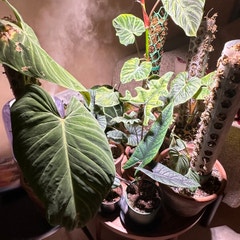

Calatheas curling is usually a sign of improper moisture. Both in soil and humidity. They’re fairly temperamental. Too little water will cause the plant to dry out, causing the leaves to curl up. Too much water will cause root rot which stops the plant being able to absorb nutrients which will cause the leaf to degrade, making them curl up.
Hope this helps, happy growing!
Hope this helps, happy growing!