
Tiny bugs in my pothos gold???
I have gotten a pothos gold like 3 weeks ago and there are tiny little white bugs in the soil (spotted them today while watering) they are just crawling around not doing much but should I do something about it? #HappyPlants #NewGrowth #help bugs">#bugs #NewPlantMom #PestControl


5” pot with drainage

Last watered 2 years ago


 6
6

 Best Answer


The tiny bugs you've observed in your soil could either be soil mites or root aphids. The pics are a bit blurry so I’m unable to pinpoint which one! 😬😬Soil mites are generally beneficial organisms that thrive in the soil, aiding in the decomposition of organic matter and contributing to a healthy soil ecosystem. They pose no harm to your plants and are often a sign of a well-balanced soil environment. On the other hand, root aphids are sap-sucking insects that feed on plant roots, potentially causing harm to your plant. These pests often come from contaminated soil, infested plants, or garden debris. Visually, soil mites are usually tiny, oval-shaped creatures with a wide range of colors, and they move quickly through the soil.
In contrast, root aphids are small, soft-bodied insects with a pear-shaped appearance, often in shades of white, yellow, or brown, and they tend to stay on or near the roots.
Attached are the best pics I could find of the two to help identify!
In contrast, root aphids are small, soft-bodied insects with a pear-shaped appearance, often in shades of white, yellow, or brown, and they tend to stay on or near the roots.
Attached are the best pics I could find of the two to help identify!
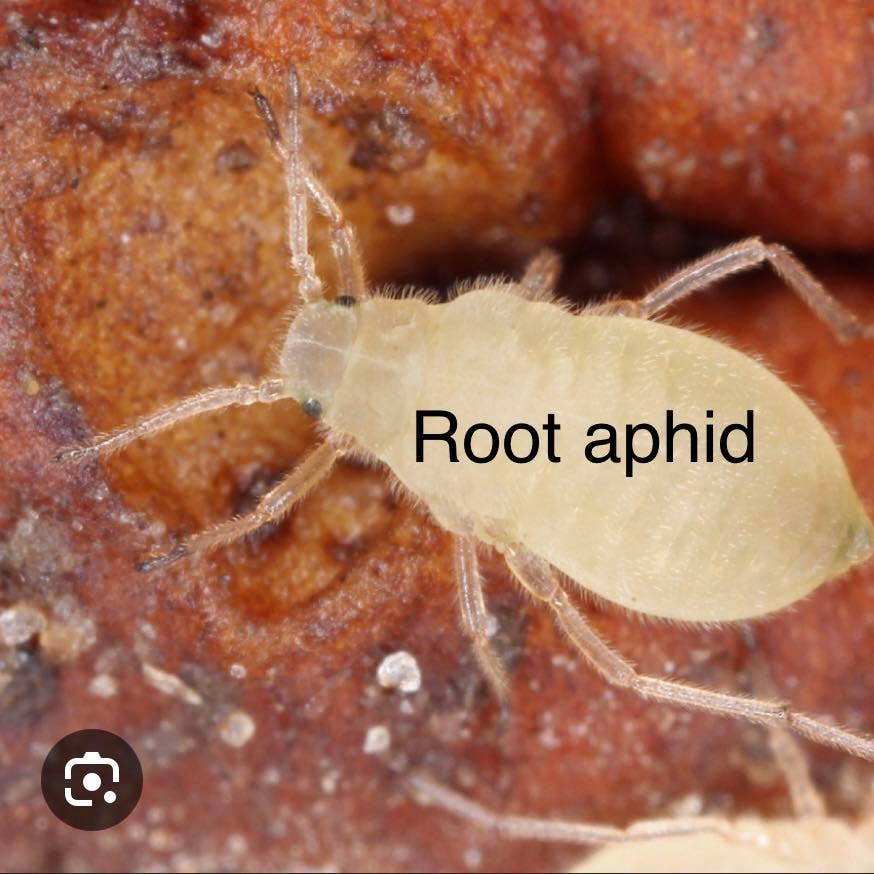


@KatVinogradova yep, closer look and they are Root aphids (thank you so much btw) I guess the best solution is some sort of spray?

@KatVinogradova
Don't forget about springtails! They are usually benefical like the soil mites. But they multiply like crazy if the soil is kept wet. If it hops when you scare it, it is a springtail. I always find springtails in my soil, both the beetle-like ones and the oval/long ones 😅 And rove-mites..
Also adding a pic of the fungus gnats larvae and puppae.. they are not like the others 🙈
Don't forget about springtails! They are usually benefical like the soil mites. But they multiply like crazy if the soil is kept wet. If it hops when you scare it, it is a springtail. I always find springtails in my soil, both the beetle-like ones and the oval/long ones 😅 And rove-mites..
Also adding a pic of the fungus gnats larvae and puppae.. they are not like the others 🙈


@CalmBloodroot Managing root aphids in indoor plant soil can involve various methods. You can try neem oil or insecticidal soap, beneficial nematodes, or introducing predatory insects like ladybugs. Additionally, maintaining proper soil moisture and avoiding over-fertilization can help create conditions less favorable for aphids.
I found an article that talks about imidacloprid and dinotefuran that I found interesting! https://www.canr.msu.edu/news/root_aphids_the_underground_pest_on_succulent_plants#:~:text=Michigan%20State%20University%20Extension%20ornamentals,work%20well%20on%20root%20aphids.
Imidacloprid is a systemic insecticide that belongs to the neonicotinoid class. It's commonly used in agriculture and horticulture to control pests like aphids, termites, fleas, and beetles. Imidacloprid works by interfering with the transmission of nerve impulses in insects, leading to their paralysis and eventual death. While it's effective, there have been concerns about its impact on non-target organisms and the environment, particularly pollinators. It's important to use imidacloprid according to recommended guidelines and consider alternative methods if possible.
Dinotefuran is a neonicotinoid insecticide that is used to control a variety of pests, including insects like aphids, thrips, whiteflies, and beetles. Similar to other neonicotinoids, dinotefuran acts on the nervous system of insects, disrupting nerve signal transmission and leading to their eventual death. As with any pesticide, it's crucial to follow recommended application rates and safety guidelines to minimize potential risks to non-target organisms and the environment.
I found an article that talks about imidacloprid and dinotefuran that I found interesting! https://www.canr.msu.edu/news/root_aphids_the_underground_pest_on_succulent_plants#:~:text=Michigan%20State%20University%20Extension%20ornamentals,work%20well%20on%20root%20aphids.
Imidacloprid is a systemic insecticide that belongs to the neonicotinoid class. It's commonly used in agriculture and horticulture to control pests like aphids, termites, fleas, and beetles. Imidacloprid works by interfering with the transmission of nerve impulses in insects, leading to their paralysis and eventual death. While it's effective, there have been concerns about its impact on non-target organisms and the environment, particularly pollinators. It's important to use imidacloprid according to recommended guidelines and consider alternative methods if possible.
Dinotefuran is a neonicotinoid insecticide that is used to control a variety of pests, including insects like aphids, thrips, whiteflies, and beetles. Similar to other neonicotinoids, dinotefuran acts on the nervous system of insects, disrupting nerve signal transmission and leading to their eventual death. As with any pesticide, it's crucial to follow recommended application rates and safety guidelines to minimize potential risks to non-target organisms and the environment.
@MockingJay This is true! Springtails tend to have a more elongated body shape though and the little guy in her pic looks to be more of a pear shape!
You are right though! It is crucial to maintain awareness of all potential possibilities to mitigate the inadvertent harm of beneficial insects like springtails and soil mites!:)
You are right though! It is crucial to maintain awareness of all potential possibilities to mitigate the inadvertent harm of beneficial insects like springtails and soil mites!:)