Plant Care
›
Propagation
›
Sweetbay Magnolia
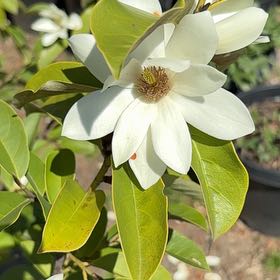
Magnolia virginiana
Reviewed by Kiersten Rankel M.S.
QUICK ANSWER
Seeds give the most plants and germinate in 8 to 12 weeks after a 3 month cold stratification. Softwood cuttings taken in early summer root in 8 to 12 weeks under a humidity dome with rooting hormone.
Air layering produces a pre-rooted thick branch in 12 to 16 weeks and is the most reliable way to preserve a specific tree's traits.
Air layering produces a pre-rooted thick branch in 12 to 16 weeks and is the most reliable way to preserve a specific tree's traits.
Stay on top of plant care
Get seasonal reminders for watering and fertilizing, personalized for your plants.
Try Greg Free
Pick your method
Tap one to jump to the walkthrough.
From seed
Best for growing many trees from local cones
Softwood cuttings
Best in early summer for true-to-tree plants
Air layering
Best for preserving a specific tree's traits
From seed
Time
8–12 weeks germination
Level
Intermediate
Success rate
Moderate
You'll need
Ripe Sweetbay Magnolia cones (red seeds visible)
Bowl and warm water
Fine mesh strainer
Moist sand or vermiculite
Sealable plastic bag
1-gallon deep pots and seed mix
1
Collect cones in early fall
Pick the cone-like fruits when they split open and reveal bright red seeds. Each seed has a fleshy red coat over a hard inner shell. Harvest before birds strip the cones bare.
2
Remove the red seed coat
Soak seeds in warm water for 24 to 48 hours until the red flesh softens. Rub the coats off in a strainer until you see the bare brown shell.
The red coat contains germination inhibitors, so removing it completely is essential or seeds will sit dormant.
The red coat contains germination inhibitors, so removing it completely is essential or seeds will sit dormant.
3
Cold stratify for 3 months
Mix cleaned seeds with moist sand or vermiculite in a sealable bag. Refrigerate at 35 to 40 degrees F for 12 to 16 weeks. Magnolia seeds will not germinate without this chill, so do not skip it.
4
Sow in deep pots
Fill 1-gallon deep pots with a humus-rich seed mix and sow seeds half an inch deep. Magnolia roots grow downward fast and need depth from the start. Water gently and place in bright indirect light at 65 to 75 degrees F.
5
Wait for sprouts
Sprouts appear in 8 to 12 weeks once the chill is satisfied. Germination is uneven so leave the pots in place even if some seeds take longer. Keep the soil consistently moist but not soggy through this period.
6
Grow on for one full year
Once seedlings show 4 true leaves, move outdoors to part shade. Sweetbay seedlings need a full season of growth before transplanting since the taproot is fragile when young. Plant out in fall after the second growing season.
WATCH FOR
Yellow leaves on young seedlings that do not green up. This is usually iron deficiency from alkaline soil. Switch to a peat-based mix and water with rainwater or distilled water since Sweetbay needs slightly acidic conditions to thrive.
Softwood cuttings
Time
8–12 weeks
Level
Advanced
Success rate
Moderate
You'll need
Sterile pruners
Rooting hormone (recommended)
Perlite and peat mix (50/50)
Deep nursery pots with drainage
Heated propagation dome (with bottom heat)
Bright indirect light spot
1
Take cuttings in early summer
Choose this year's new growth from the lower branches that has just started to firm up. Cut 4 to 6 inch tip sections in the morning when the tree is fully hydrated. Wrap them in damp paper towel until you can stick them within an hour or two.
2
Strip leaves and wound the base
Remove all but the top 2 leaves and cut those remaining leaves in half across the blade. Make a shallow vertical scrape on the bottom inch with a sterile blade.
Magnolia stems are notoriously hard to root, so this wound exposes the cambium and gives roots more surface area to emerge from.
Magnolia stems are notoriously hard to root, so this wound exposes the cambium and gives roots more surface area to emerge from.
3
Apply rooting hormone heavily
Dip the wounded base in rooting hormone powder and tap off only the loose excess. Magnolia needs a strong hormone treatment to root since cuttings of woody plants are stubborn without it.
4
Stick into a moist mix
Fill deep nursery pots with a 50/50 perlite and peat mix pre-moistened until water drips out. Push each cutting in 2 inches deep. Firm the medium so the cutting stands upright on its own.
5
Use bottom heat and high humidity
Place pots on a heat mat set to 75 degrees F under a closed dome. Mist the inside of the dome twice a day to keep humidity above 80 percent. Vent for 5 minutes daily to prevent mold.
6
Check at 8 weeks
Give a gentle tug at 8 weeks. Resistance means roots have anchored. Move rooted cuttings into 1-gallon pots and acclimate to lower humidity gradually over 2 weeks. Overwinter the first year in a cold frame to protect the new root system.
WATCH FOR
Cuttings that turn brown from the base upward within the first month. This is rot from too much moisture combined with poor air movement. Vent the dome more often, check that no leaves are touching the medium, and pull any cuttings with mushy stems immediately.
Air layering
Time
12–16 weeks
Level
Intermediate
Success rate
High
You'll need
Sterile sharp knife
Rooting hormone (recommended)
Sphagnum moss (pre-soaked)
Clear plastic wrap
Twist ties or twine
5-gallon pot with humus-rich mix
1
Pick a healthy branch in spring
Choose a branch that is half an inch to an inch thick with vigorous growth this year. Mark a spot 12 to 24 inches back from the tip where you want roots to form. The branch should still have plenty of foliage above the chosen spot.
2
Make a wound in the bark
Use a sterile knife to remove a one-inch wide ring of bark all the way around the branch.
Scrape the green cambium layer underneath until you reach the harder white wood, then dust the wound with rooting hormone.
Scrape the green cambium layer underneath until you reach the harder white wood, then dust the wound with rooting hormone.
3
Wrap with damp sphagnum moss
Squeeze excess water from pre-soaked moss until it is just damp. Pack a softball-sized handful around the wounded section. The moss must completely cover the exposed wood and feel firm but not dripping.
4
Seal with plastic wrap
Wrap clear plastic tightly around the moss and secure both ends with twist ties. The seal needs to be airtight to hold moisture inside. Check the moss color through the plastic since it should stay light brown and damp, never black or dry.
5
Wait for visible white roots
Roots show through the plastic in 12 to 16 weeks during the growing season. Wait until you see a dense network of white roots, not just a few strands. A sparsely rooted layer often fails after severing, so patience pays off.
6
Sever and pot up in fall
Cut the branch off just below the new root ball with sharp pruners. Remove the plastic but leave the moss attached to the roots.
Plant into a 5-gallon pot with humus-rich mix and grow on in a sheltered spot through winter before planting out the following spring.
Plant into a 5-gallon pot with humus-rich mix and grow on in a sheltered spot through winter before planting out the following spring.
WATCH FOR
Dry crumbly moss showing through the plastic before roots form. The seal has failed and moisture is escaping. Open the wrap, re-soak the moss with rainwater, and re-seal more tightly. The wound stays viable for several weeks even if the first wrap dries out.
Stay on top of plant care
Get seasonal reminders for watering and fertilizing, personalized for your plants.
Try Greg Free
About This Article

Kiersten Rankel M.S.
Botanical Data Lead at Greg · Plant Scientist
Editorial Process
Propagation methods verified against Magnolia virginiana growth data from Greg's botanical database, cross-referenced with USDA hardiness zone data and published horticultural research.
131+ Greg users growing this plant
USDA hardiness zones 5a–10b