Plant Care
›
Propagation
›
Spicebush
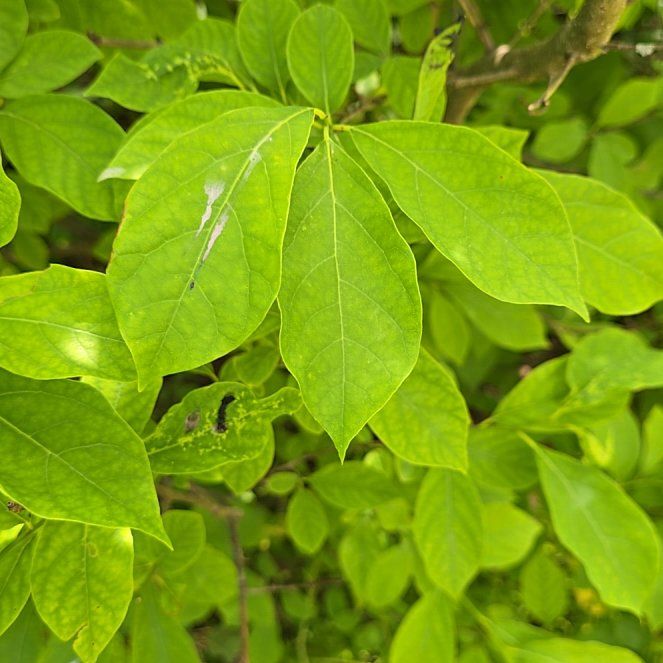
Lindera benzoin
Reviewed by Kiersten Rankel M.S.
QUICK ANSWER
Fresh seed sown in fall and overwintered outside is the most reliable method and produces young shrubs in one growing season.
Ground layering of a low branch roots in 12 months and gives a planting-size shrub. Softwood cuttings taken in June are quick but only succeed about half the time. Dividing a multi-stemmed clump moves a mature shrub in a single afternoon.
Ground layering of a low branch roots in 12 months and gives a planting-size shrub. Softwood cuttings taken in June are quick but only succeed about half the time. Dividing a multi-stemmed clump moves a mature shrub in a single afternoon.
Stay on top of plant care
Get seasonal reminders for watering and fertilizing, personalized for your plants.
Try Greg Free
Pick your method
Tap one to jump to the walkthrough.
From seed
Best for native plant gardeners growing many shrubs
Softwood cuttings
Best in June while wood is still flexible
Ground layering
Best for getting one new shrub from a mature plant
Division
Best when your shrub already has multiple stems
From seed
Time
4–6 months stratification
Level
Beginner
Success rate
High
You'll need
Ripe red berries collected in early fall
Bowl of water for the float test
Plastic bag with damp sand or peat
Outdoor nursery bed or 1-gallon pots
Hardware cloth to keep rodents out
1
Collect berries at peak red
Pick the bright red drupes from female plants in September or early October. Pick when they squish slightly between your fingers. Green berries are immature and will not germinate.
2
Clean and float-test the seed
Mash the berries in a bowl of water and rub the pulp off the hard seed inside. Skim off the fruit pulp and any seed that floats.
The seeds that sink are dense, viable, and ready to sow. Spicebush seed loses viability quickly if it dries out, so move from cleaning to sowing within a week.
The seeds that sink are dense, viable, and ready to sow. Spicebush seed loses viability quickly if it dries out, so move from cleaning to sowing within a week.
3
Sow outdoors right away
Push each seed half an inch deep into a prepared nursery bed or a 1-gallon pot of compost-mixed garden soil. Space seeds 2 inches apart. Water once and label the spot.
4
Cover and protect through winter
Lay hardware cloth over the bed to stop chipmunks and squirrels from digging up the seeds. Mulch lightly with shredded leaves. Winter cold provides the 4 to 6 months of stratification the seed needs to break dormancy.
5
Watch for May germination
Seedlings push through in mid to late spring once soil hits 60 degrees. The first true leaves are notched and aromatic when crushed, the dead giveaway you got the right plant. Thin to one seedling every 6 inches.
6
Pot up or transplant at one year
Lift seedlings the following fall when leaves drop and pot up into 1-gallon containers. Spicebush develops a deep taproot fast, so move them before they hit the third growing season. Plant out the spring after that.
WATCH FOR
Seeds vanish overnight from an unprotected bed. Squirrels and chipmunks treat Spicebush seed like buried treasure. The hardware cloth is not optional. If you skip it, expect to lose 80 percent of your seed before spring.
Softwood cuttings
Time
6–10 weeks
Level
Intermediate
Success rate
Moderate
You'll need
Sterile pruners
Rooting hormone powder (recommended)
4-inch pots with drainage
Equal-parts perlite and peat mix
Clear plastic dome or large plastic bag
Bottom heat mat (optional)
1
Time the cutting to early summer
Take cuttings in June from new growth that bends without snapping. The base of the new stem should be just starting to firm up. Wood that has fully hardened off does not root from softwood cuttings.
2
Cut 5-inch pieces
Snip 5-inch tip cuttings each containing 3 to 4 leaf nodes. Strip leaves from the lower two nodes. Leave the top two leaves but cut each one in half to reduce moisture loss.
3
Dust with rooting hormone
Spicebush is a moderate rooter and benefits from hormone. Tap the cut end against the powder, then knock off the excess. Without hormone, expect closer to a 30 percent success rate instead of 60.
4
Stick into rooting medium
Push each cutting 2 inches deep into perlite-peat mix. The lower two nodes need to sit below the surface because that is where the roots form.
Firm the medium around the stem so there are no air pockets. Water until the mix drips.
Firm the medium around the stem so there are no air pockets. Water until the mix drips.
5
Cover and keep warm
Set the pot inside a clear dome or plastic bag, sealed loosely to hold humidity above 80 percent. Place in bright indirect light at 70 to 75 degrees. A bottom heat mat speeds rooting by 2 to 3 weeks.
6
Tug-test at 6 weeks
Give a gentle pull. Resistance means roots have anchored. Open the dome for an hour each day for the next week to acclimate the cutting, then pot up into garden soil and grow on through the first winter under cover.
WATCH FOR
Leaves yellow and drop within 2 weeks of sticking the cutting. That is heat stress combined with too much direct light. Move the dome to a north-facing windowsill or a shaded outdoor spot, and check that the soil is damp not wet. New leaves push within a month if the cutting has rooted.
Ground layering
Time
12 months
Level
Beginner
Success rate
High
You'll need
Sterile knife
Landscape staple or large U-shaped wire
Compost-enriched soil
Mulch
Sterile pruners for severing
1
Pick a low flexible branch
In early spring, find a 1 to 2-year-old branch on the lower part of the shrub that bends to the ground without breaking. Strip the leaves from the section that will be buried. Mark the spot 12 to 18 inches back from the tip.
2
Wound the underside
Make a shallow 2-inch cut along the underside of the branch at the marked spot, slicing through the bark but not through the wood. The wound is where roots emerge.
Keep the cut open with a small wedge of toothpick if it wants to close.
Keep the cut open with a small wedge of toothpick if it wants to close.
3
Pin the wound underground
Dig a 4-inch trench, lay the wounded section in it with the cut facing down, and pin it firmly with a landscape staple. The branch tip should curve back up out of the trench. Backfill with compost-mixed soil.
4
Water and mulch
Soak the buried section so the soil settles around the wound. Cover with 2 inches of mulch. Keep the area damp through the first summer and fall.
5
Leave it alone for a year
Roots form slowly. Do not dig up the layered branch to check progress. By the following spring, the buried section will have a fist-sized root system if soil moisture stayed consistent.
6
Sever and transplant
The next spring, cut the branch between the parent plant and the rooted section with sterile pruners. Wait two more weeks for the new plant to adjust, then dig it up with a generous rootball and move to its permanent spot.
WATCH FOR
The buried section pulls free of its staple after heavy rain. Without firm contact between the wound and the soil, no roots form. Re-pin the branch as soon as you notice it has popped up, add fresh soil, and water again to reseat it. One disturbance does not ruin the layer if you fix it within a few days.
Division
Time
1–2 weeks
Level
Intermediate
Success rate
Moderate
You'll need
Sharp spade
Loppers or pruning saw
Sterile garden knife
Bucket of water
Compost-amended planting hole
Mulch
1
Identify a multi-stemmed shrub
Spicebush often grows as a clump of 3 to 6 stems rising from a shared crown. Only divide shrubs with at least 4 stems so each piece keeps a viable stem and root system. Single-stem shrubs are not candidates for division.
2
Dig in late winter
Wait until the shrub is fully dormant in February or early March. Dig a wide trench around the entire crown, going down at least 12 inches. Lever the rootball out of the ground and lay it on its side.
3
Separate the stems
Look for natural seams where the crown can be split. Use loppers or a pruning saw to sever the woody crown into halves or quarters, each section with its own stems and roots.
Do not rip the rootball apart. Clean cuts heal far better than torn tissue.
Do not rip the rootball apart. Clean cuts heal far better than torn tissue.
4
Prune the top to match the roots
Each division has lost about half its root mass in the split. Cut the stems back by one third to balance the loss. This stops the plant from trying to push leaves on roots that cannot support them.
5
Replant immediately
Set each division at the same depth it grew before in a compost-amended hole. Backfill, firm the soil, and water in deeply. Mulch 3 inches deep but keep the mulch off the stems.
6
Water weekly for the first season
Even dormant shrubs need consistent soil moisture for new roots to form. Soak the rootball with a bucket of water once a week through the first growing season unless it rains heavily. Skip a watering only if the top 2 inches of soil are still damp.
WATCH FOR
Spring leaf-out is sparse or one-sided. That means part of the root system did not survive the move. Be patient and keep the soil damp. Spicebush often pushes a flush of new growth from dormant buds at the base by midsummer if you do not give up on it. Do not fertilize a stressed division because the salt damages weakened roots.
Stay on top of plant care
Get seasonal reminders for watering and fertilizing, personalized for your plants.
Try Greg Free
About This Article

Kiersten Rankel M.S.
Botanical Data Lead at Greg · Plant Scientist
Editorial Process
Propagation methods verified against Lindera benzoin growth data from Greg's botanical database, cross-referenced with USDA hardiness zone data and published horticultural research.
43+ Greg users growing this plant
USDA hardiness zones 4a–9a