Plant Care
›
Propagation
›
Silver Ragwort
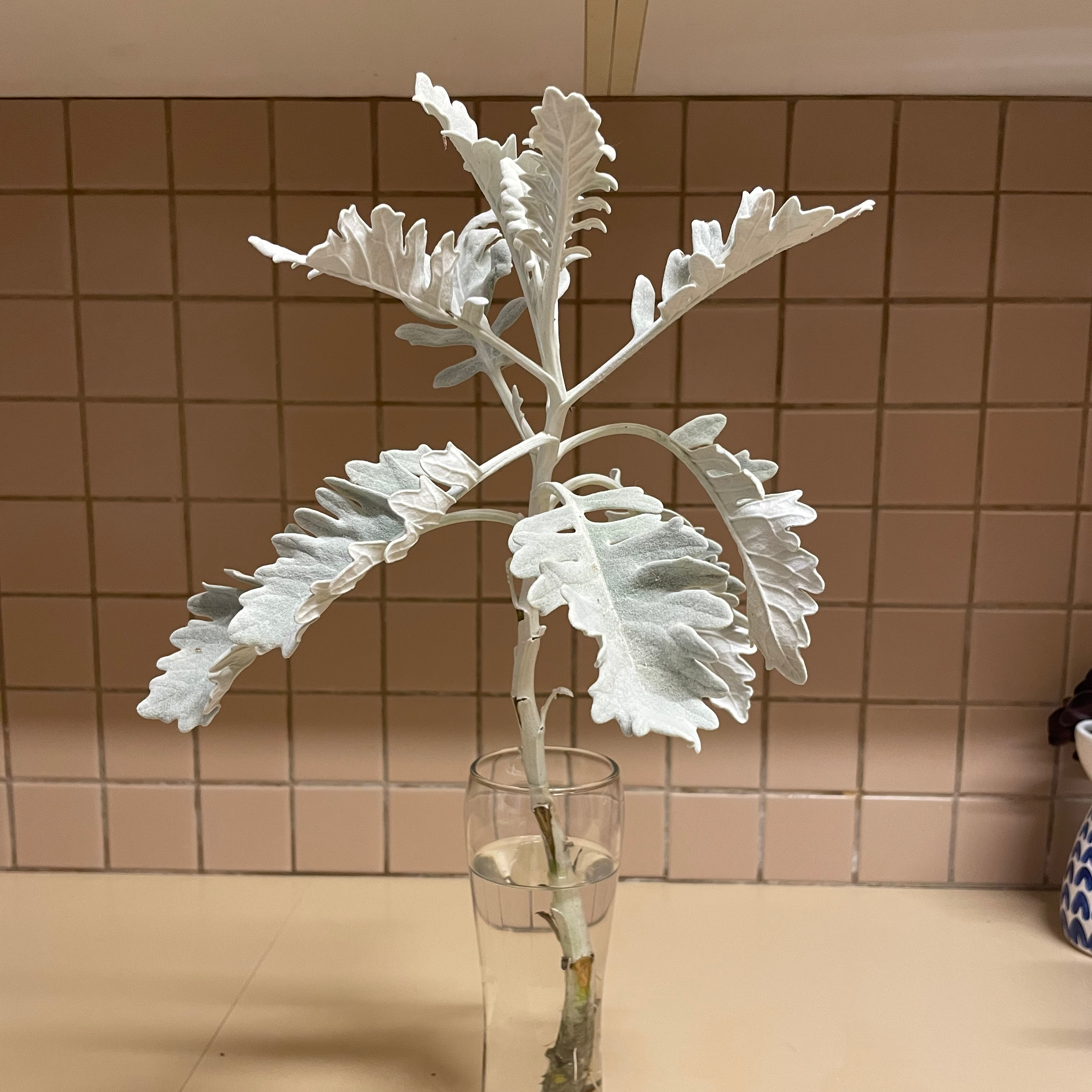
Jacobaea maritima
Reviewed by Kiersten Rankel M.S.
QUICK ANSWER
Softwood cuttings root in 3 to 5 weeks and let you produce many plants from a single parent. Division is fastest at 2 to 3 weeks and works on mature clumps in late winter or early spring.
Seed is best for filling a flat with hundreds of plants and germinates in 10 to 14 days, but seedlings need 8 to 10 weeks indoors before they go outside.
Seed is best for filling a flat with hundreds of plants and germinates in 10 to 14 days, but seedlings need 8 to 10 weeks indoors before they go outside.
Stay on top of plant care
Get seasonal reminders for watering and fertilizing, personalized for your plants.
Try Greg Free
Pick your method
Tap one to jump to the walkthrough.
Softwood cuttings
Best for cloning a parent with the silver color you want
Division
Best in late winter on established clumps
From seed
Best when you want to fill a bed at low cost
Softwood cuttings
Time
3–5 weeks
Level
Beginner
Success rate
High
You'll need
Sterile sharp shears
4-inch pots with drainage holes
Half perlite, half peat mix
Rooting hormone powder (optional)
Clear humidity dome or plastic bag
Bright indirect light location
1
Take 3 to 4 inch tip cuttings
Cut healthy non-flowering stem tips in late spring or early summer. Stems with flower buds put their energy into blooming instead of rooting, so pinch off any buds before cutting.
Flowering stems still root, just slower.
Flowering stems still root, just slower.
2
Strip the bottom leaves
Pinch off all leaves from the lower 1.5 inches of the cutting. Leave 3 to 4 leaves at the top to power photosynthesis while roots form.
3
Dust with rooting hormone if you have it
Tap the cut end into rooting hormone powder. This is optional for Dusty Miller since it roots well without hormone, but hormone speeds rooting by about a week.
4
Insert into 50/50 perlite-peat mix
Push the cutting an inch deep into pre-moistened mix in a small pot. Firm the mix gently around the stem so the cutting stands on its own. Several cuttings can share one pot.
5
Cover and place in light shade
Tent a clear bag over the pot to hold humidity at 60 to 70 percent. Set the pot in bright indirect light at 65 to 75 degrees Fahrenheit, never direct sun.
The silver felt on Dusty Miller leaves traps too much heat under direct sun and will scorch within a day.
The silver felt on Dusty Miller leaves traps too much heat under direct sun and will scorch within a day.
6
Test for roots at 4 weeks
Tug gently at week 3. Resistance means roots are forming. Once new growth appears, gradually open the dome over a week to harden off, then pot up into regular potting mix.
WATCH FOR
Lower leaves turning black and the stem rotting at soil level. That is fungal rot from a humidity tent that holds too much moisture. Vent the bag for an hour each day, water less often, and keep the cuttings out of standing condensation.
Division
Time
2–3 weeks to settle
Level
Beginner
Success rate
High
You'll need
Garden fork or shovel
Sterile sharp knife or shears
Watering can
Compost or amended garden soil
Light shade or row cover for first week
1
Wait for late winter or early spring
Divide just as new growth begins to push from the crown but before plants put on their main spring growth. The plant has stored energy and will recover fast.
Dividing in summer heat or full bloom causes severe wilt and high losses.
Dividing in summer heat or full bloom causes severe wilt and high losses.
2
Lift the clump with a garden fork
Slide a garden fork around the base of the clump and lift the entire root mass out of the ground. Shake off loose soil to expose the crown structure.
3
Cut into divisions
Use a sharp knife or shears to cut the clump into pieces, each with at least 3 stems and a healthy section of root. Sterilize the blade between cuts to prevent disease.
4
Replant at the original depth
Dig a hole the same depth as the original planting in well-drained soil amended with a little compost. Set each division at the same depth it was growing and firm the soil around the roots.
5
Water in thoroughly
Soak the freshly divided plants and the soil around them. Then leave them alone for several days. Repeated watering before roots resettle keeps soil too wet and rots the cut crowns.
6
Shade for the first week
Drape a row cover or set a piece of shade cloth over the divisions for the first 5 to 7 days. New growth from the centers within 2 to 3 weeks confirms the divisions have settled.
WATCH FOR
Wilted floppy stems a week after division despite watering. That means too much root was severed during the cut. Trim back half the foliage with sharp shears to reduce moisture demand, keep the soil moist but not soggy, and provide shade for another week.
From seed
Time
10–14 days to germinate
Level
Beginner
Success rate
High
You'll need
Fresh Dusty Miller seeds (under 2 years old)
Seed-starting mix
Shallow seed tray with drainage
Clear plastic dome or wrap
Bright grow light or sunny window
Heat mat (recommended)
1
Start seeds 8 to 10 weeks before last frost
Dusty Miller is slow off the starting line. Seeds need to be sown 8 to 10 weeks before your last spring frost so seedlings are big enough to plant out when the weather warms.
Direct-sown seed in the garden rarely works since the seedlings get outcompeted.
Direct-sown seed in the garden rarely works since the seedlings get outcompeted.
2
Surface-sow on a damp tray
Fill a seed tray with pre-moistened seed-starting mix. Press the seeds gently onto the surface. Do not cover with soil since Dusty Miller seeds need light to germinate.
A light dusting of fine vermiculite is acceptable but soil burial is not.
A light dusting of fine vermiculite is acceptable but soil burial is not.
3
Cover and place on heat
Cover the tray with a clear plastic dome or wrap to hold humidity. Set on a heat mat at 70 to 75 degrees Fahrenheit.
Germination drops sharply below 65 degrees, which is why a sunny but cold windowsill produces uneven results.
Germination drops sharply below 65 degrees, which is why a sunny but cold windowsill produces uneven results.
4
Mist daily until sprouts appear
Mist the tray surface daily to keep the seeds barely damp. Most seeds sprout between day 10 and 14, with stragglers up to day 21.
5
Remove the dome at first true leaves
Once seedlings have their first true silver-felted leaves at about 3 weeks, remove the dome and move to a bright grow light or sunny window. Lower the light to within 2 inches of the seedlings to prevent leggy growth.
6
Pot up and harden off
When seedlings are 2 to 3 inches tall and have several true leaves at 5 to 6 weeks old, pot up into 3-inch pots. Begin hardening off outside for an hour per day a week before the last frost. Plant out after the last frost date.
WATCH FOR
Seedlings stretching tall and leaning toward the window with weak pale stems. That is etiolation from too little light. Move the tray under a grow light kept 2 to 3 inches above the seedlings for at least 14 hours per day, and keep the temperature on the cool side (60 to 65 degrees) once they sprout to slow the stretch.
Stay on top of plant care
Get seasonal reminders for watering and fertilizing, personalized for your plants.
Try Greg Free
About This Article

Kiersten Rankel M.S.
Botanical Data Lead at Greg · Plant Scientist
Editorial Process
Propagation methods verified against Jacobaea maritima growth data from Greg's botanical database, cross-referenced with USDA hardiness zone data and published horticultural research.
1,298+ Greg users growing this plant
USDA hardiness zones 7a–10b